Nature's Creation—A Three-Dimensional Scroll of the Changing Seasons
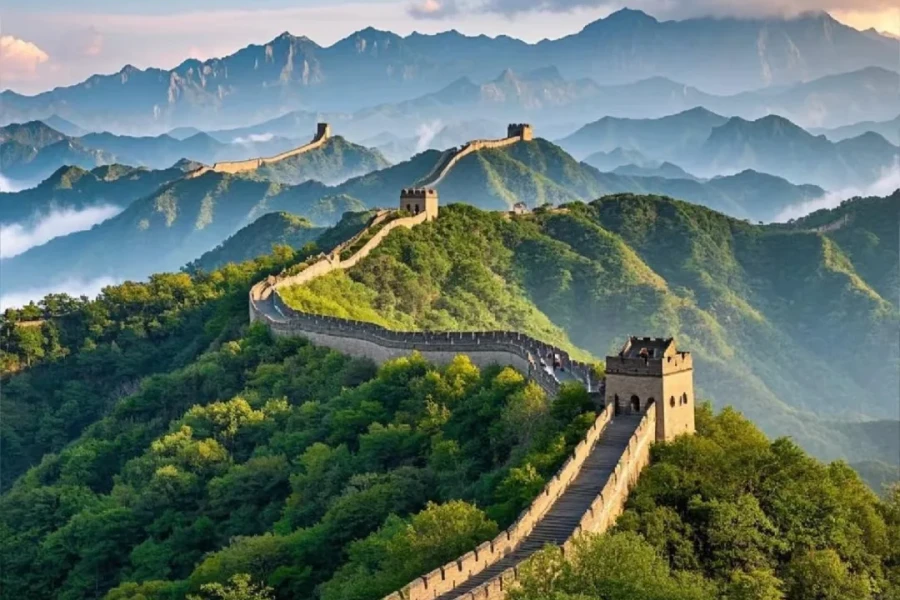
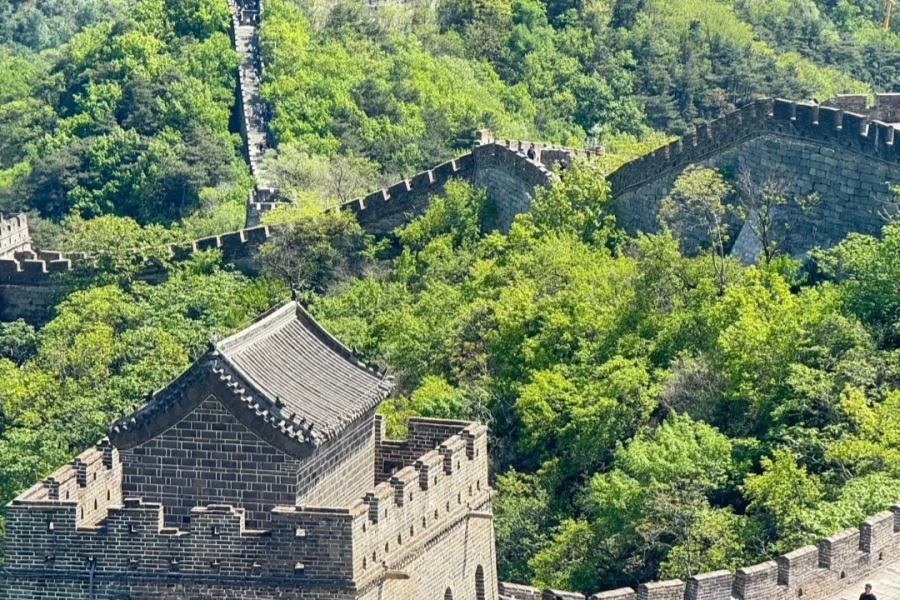
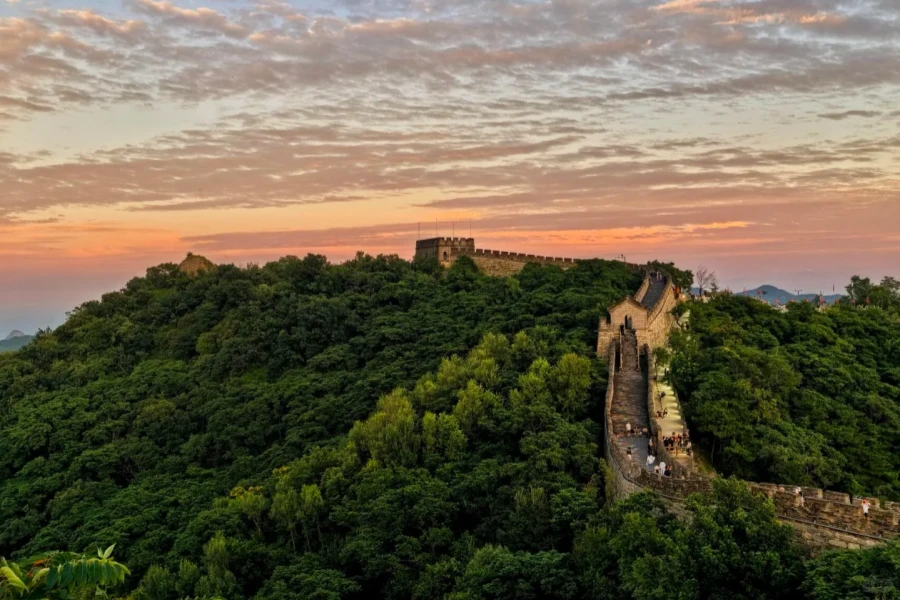
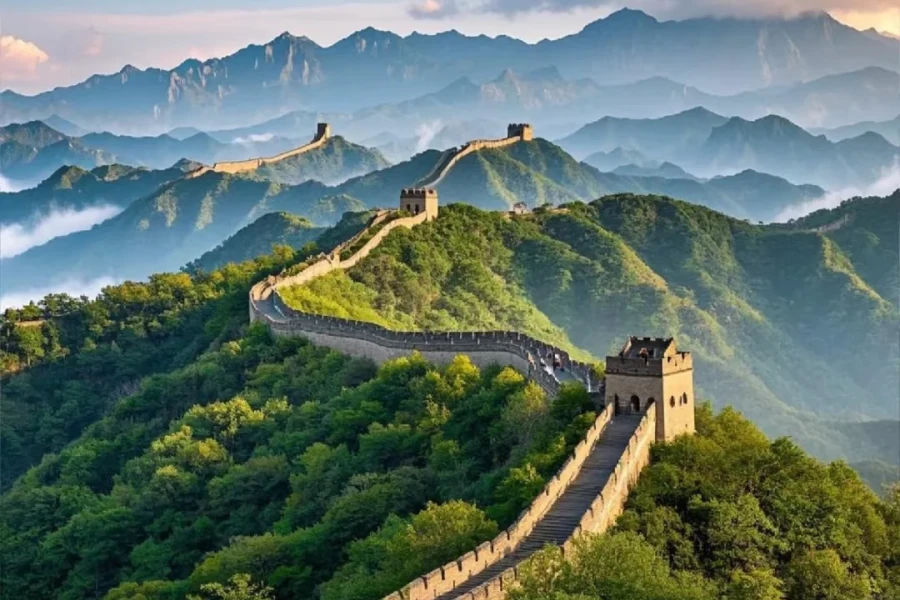
The natural landscape of Mutianyu Great Wall is unique due to its extremely high vegetation coverage (over 96%), earning it the reputation of "the Great Wall living in the forest".
Forest and Pine Waves: A Breathing Green Great Wall
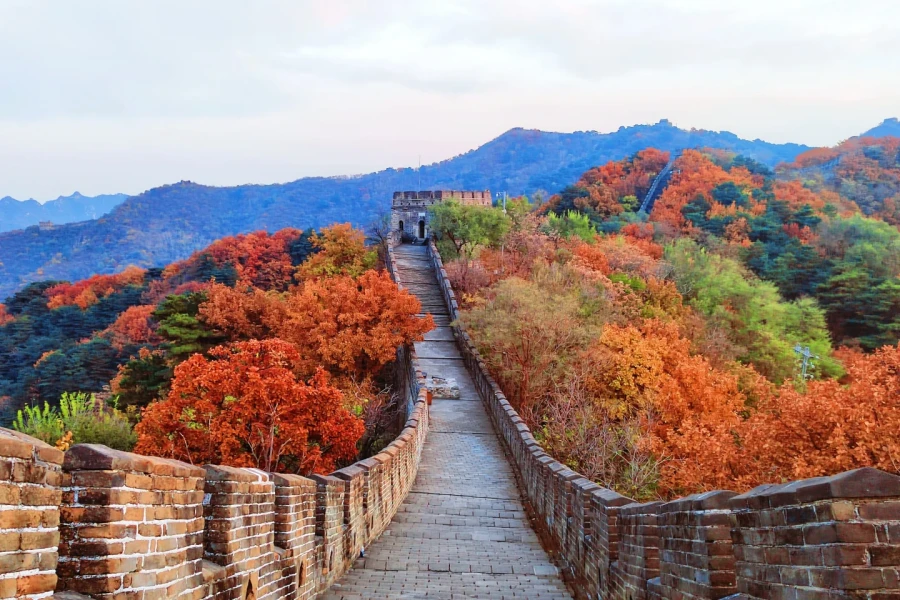
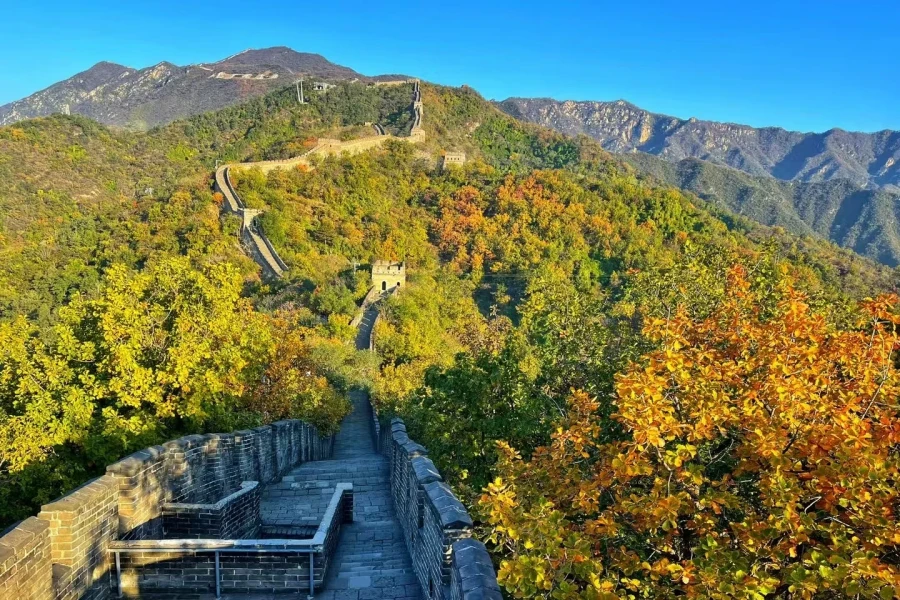
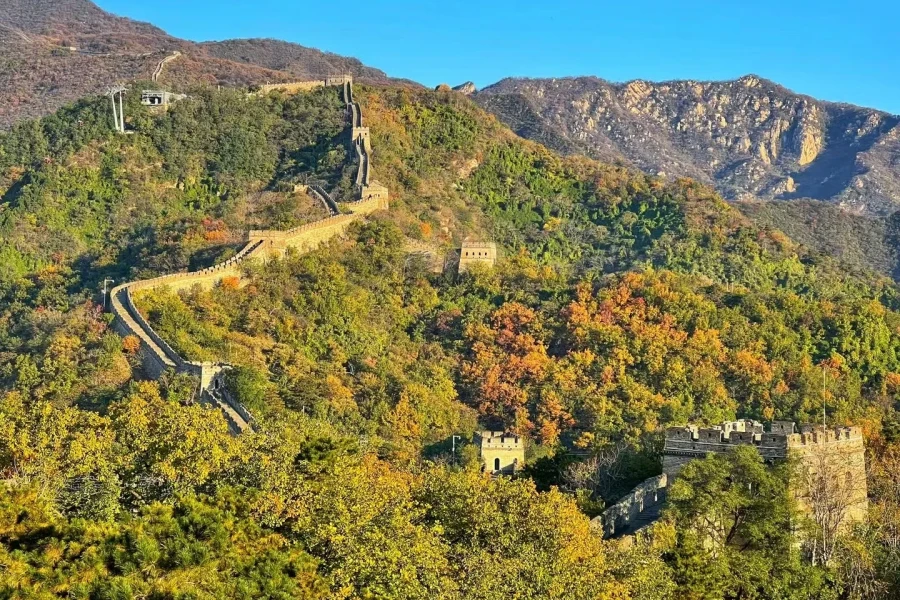
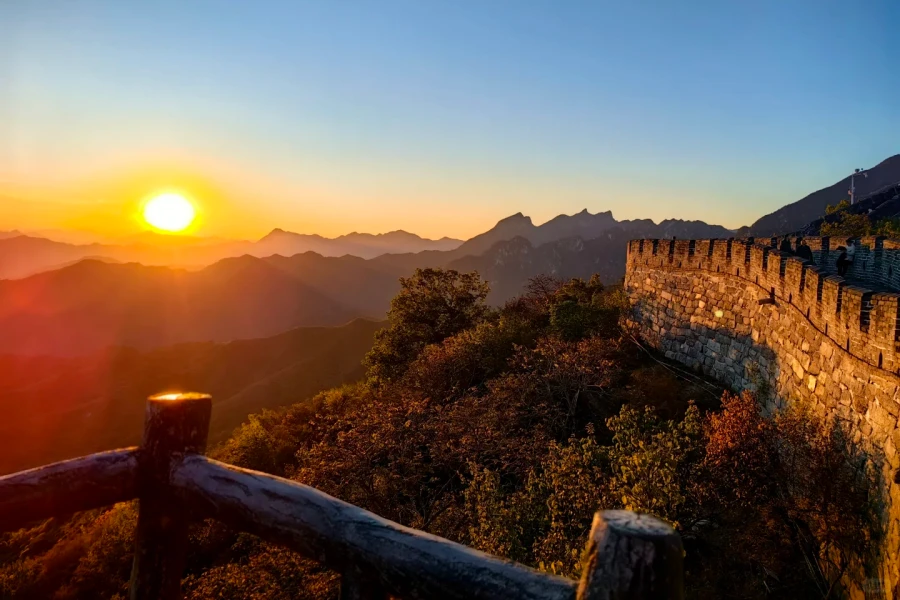
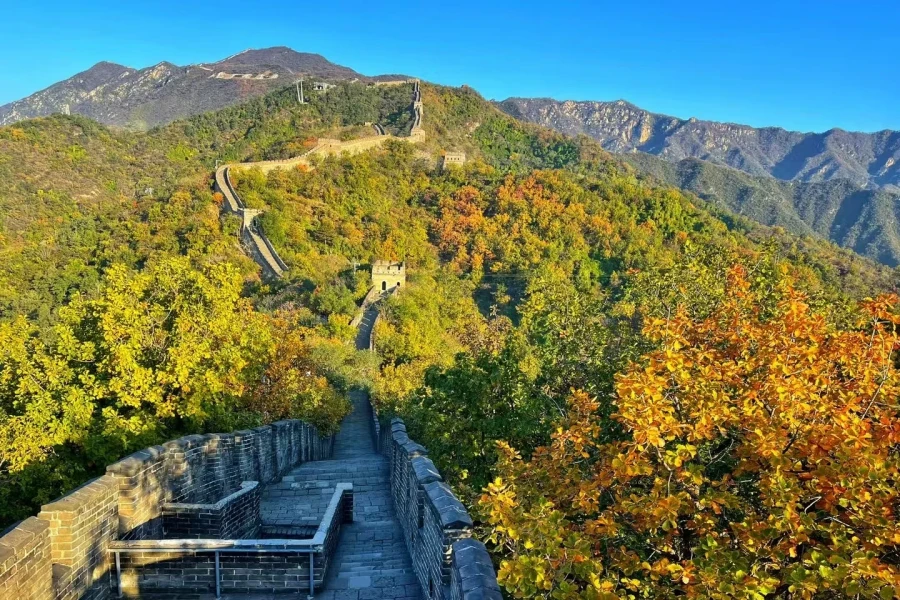
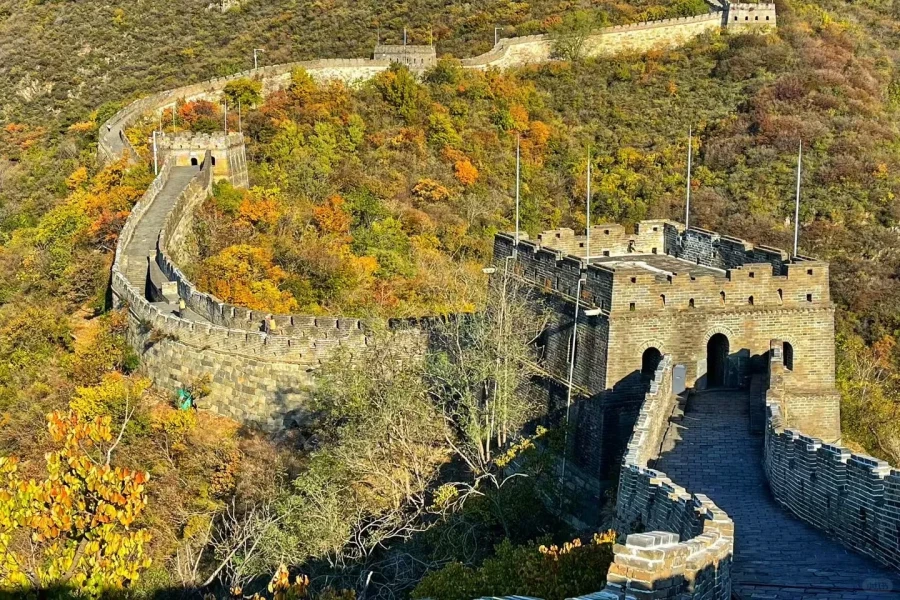
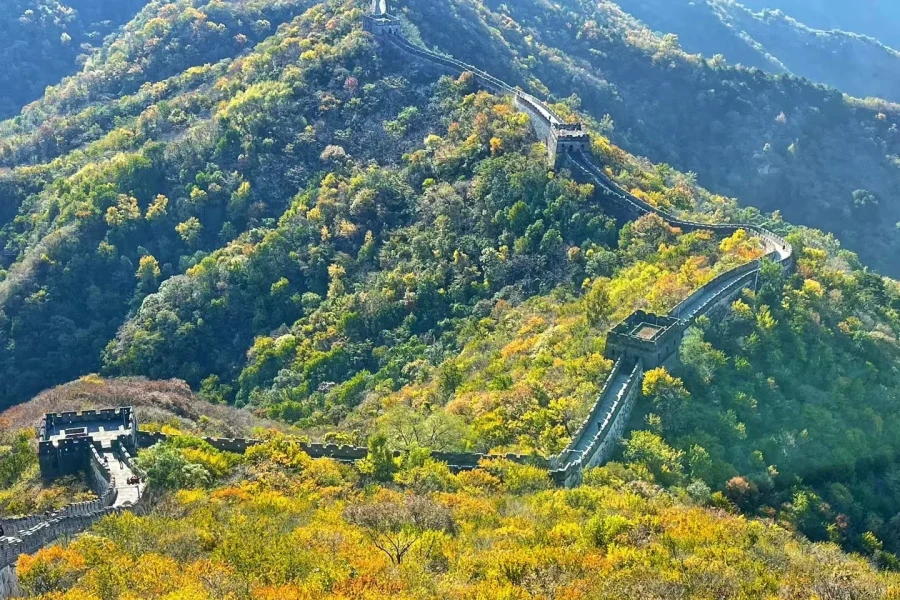
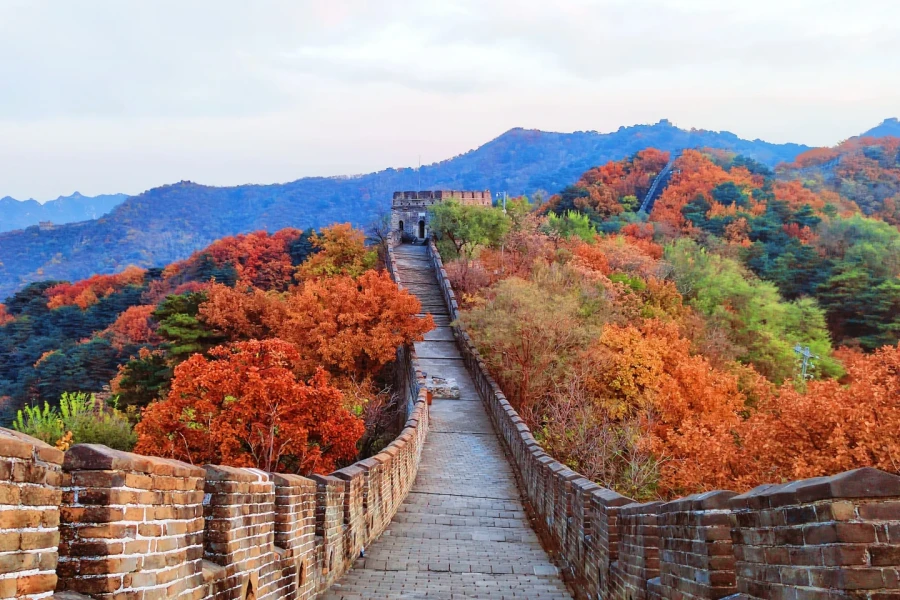
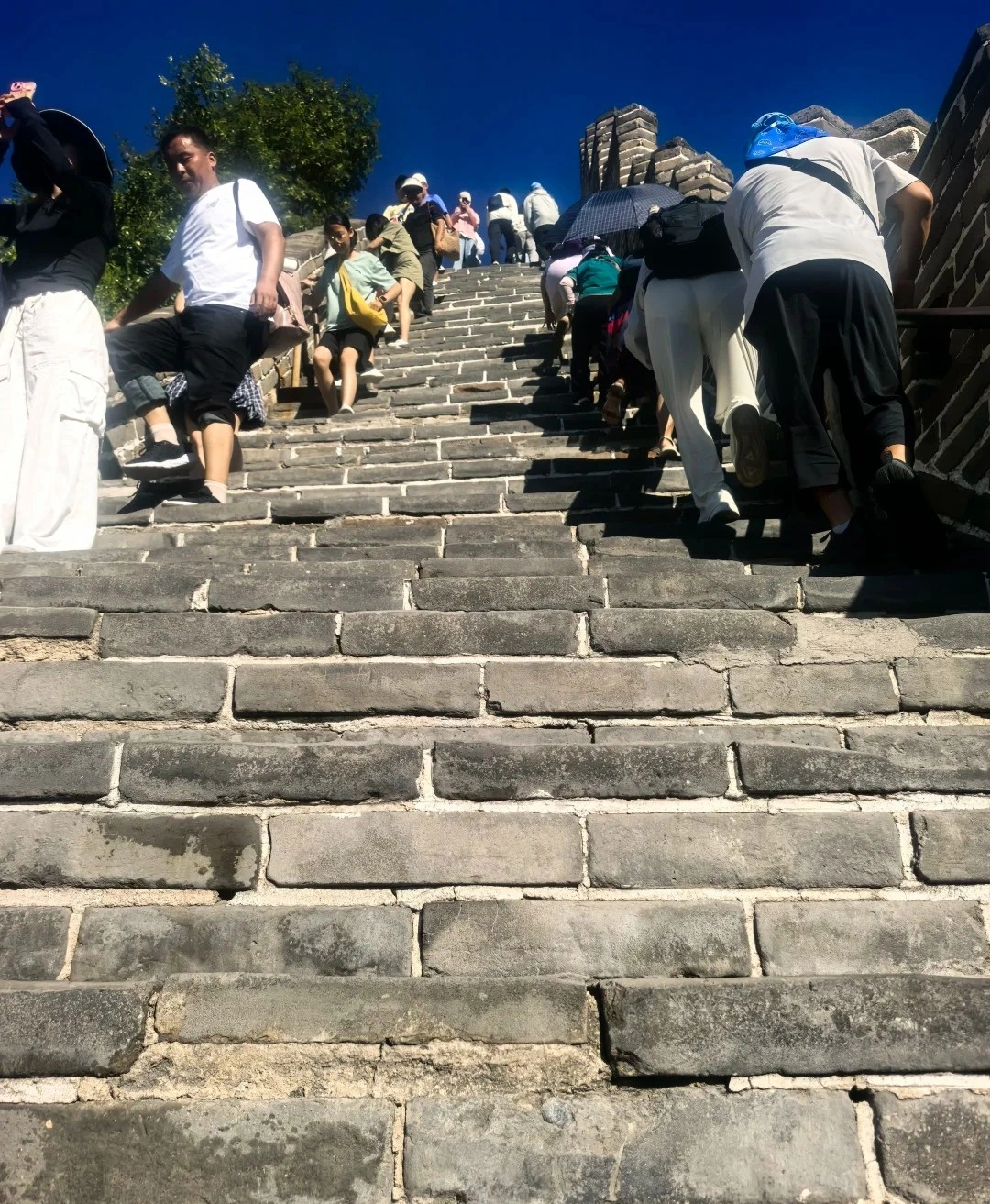
Unlike many sections of the Great Wall built on mountain ridges with exposed rocks, the Mutianyu Great Wall and its surrounding mountains are covered by dense forests, mainly composed of trees such as Chinese pine, Chinese cypress, oak, and maple. In spring, wildflowers bloom in vibrant colors, creating a lively scene; in summer, the mountains are lush and green, resembling a winding green dragon; in autumn (late October to early November), the forests are ablaze with color, with fiery red leaves, making it the golden season for photography; in winter, snow blankets the ancient pines, creating a striking contrast of black and white, a true northern landscape. Hiking through it is like climbing in a natural oxygen bar.
Steep peaks and towering mountains: the natural foundation of the Great Wall
The Great Wall follows the contours of the mountains, built along ridges at altitudes of 400 to 1000 meters. The terrain is undulating, especially the section from "Dajiaolou" to "Niujiaobian," where the slope is extremely steep, fully demonstrating the construction philosophy of "adapting to the terrain and using natural defenses to build a fortification." In foggy weather, the Great Wall appears and disappears in the sea of clouds, resembling a fairyland.
Humanistic craftsmanship – the pinnacle of defensive art in the era of cold weapons
Every brick in this city and every watchtower here is a masterpiece of ancient Chinese military engineering.
The watchtowers are densely packed and ingeniously constructed.
- Along the main section, which is only 5,400 meters long, stand 23 hollow watchtowers, with an average spacing of only about 100 meters, making it the densest section of the Great Wall. The watchtowers are diverse in form, mostly two-story structures, with the lower level for troop storage and the upper level for observation and combat. The passageways are distributed in a "well" shape, making them fully functional. Among them, the Zhengguantai (watchtower No. 4) is the most unique, consisting of three hollow watchtowers standing together in one, forming a rare "three-tower-in-one" structure, which is the defensive core of Mutianyu Pass.
"Jiankou" and "Eagle Soaring Upside Down": Perilous and Spectacular Scenes
- Extending westward from Mutianyu Great Wall are the Jiankou Great Wall and the "Eagle Flying Upside Down" section, renowned for their perilousness (this section is an unrestored wild section of the Great Wall; it should be viewed from a distance and should not be climbed without permission). The mountainside is as if cleaved by a knife and axe, and the wall climbs along the almost vertical ridge. Even eagles must fly upside down to pass through, vividly illustrating the Great Wall's extraordinary danger.
Double-sided fortifications and outposts
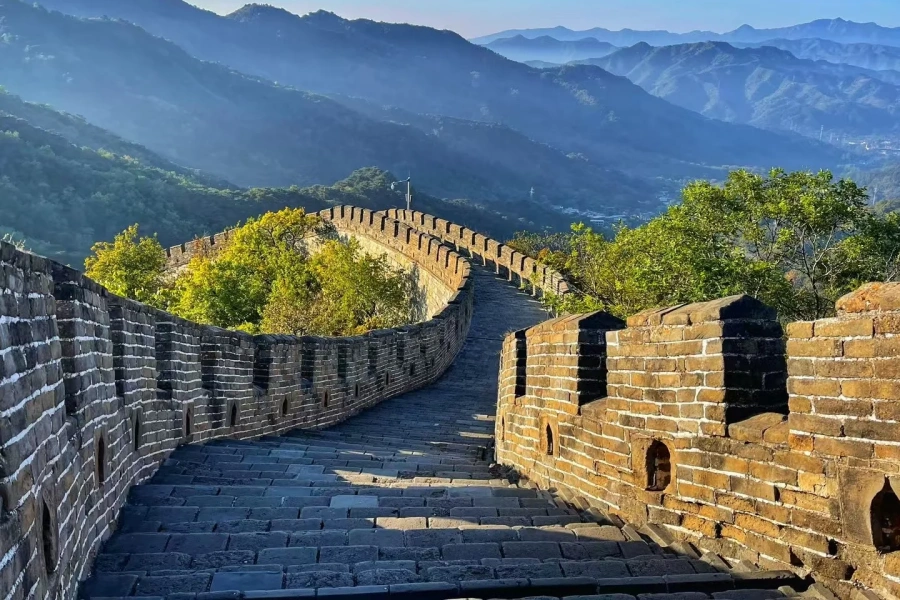
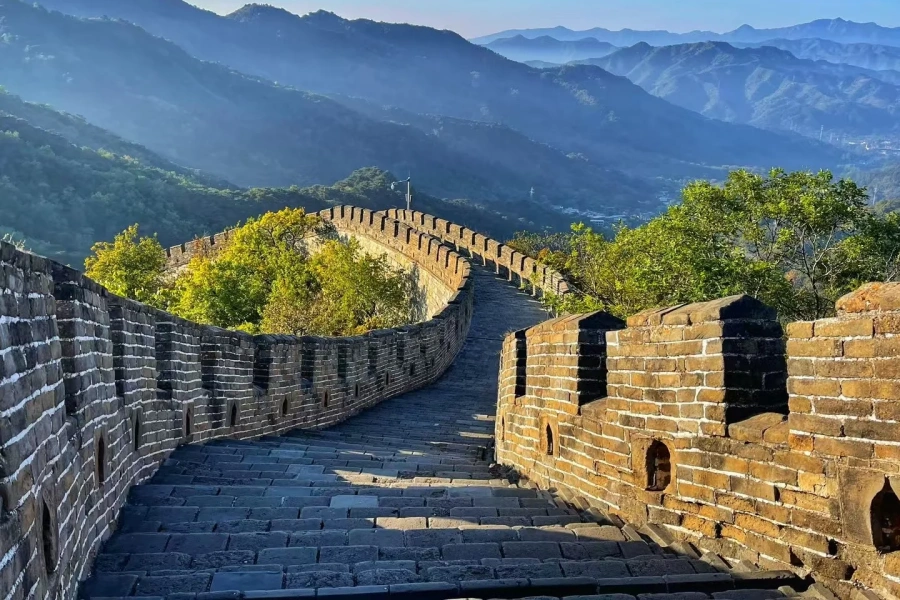
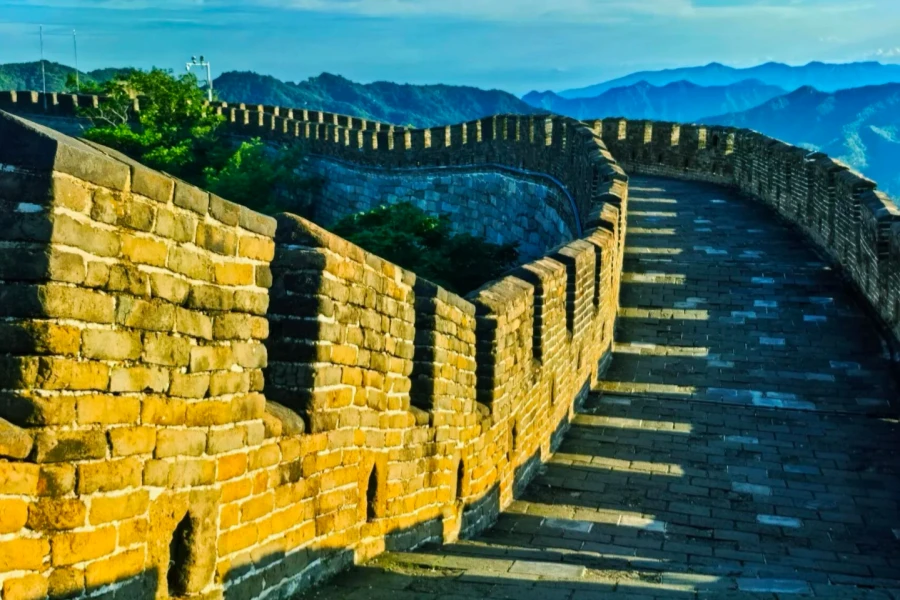
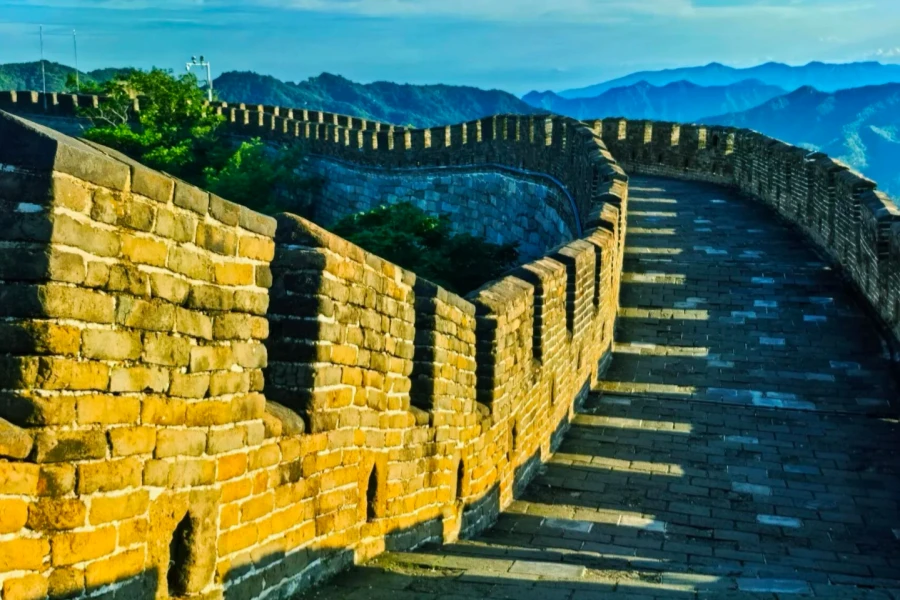
A notable feature of the Mutianyu Great Wall is the presence of crenellations on both sides. This means that defenders could fire at enemies from both flanks simultaneously, doubling the defensive capability—a rarity among sections of the Great Wall in China. Furthermore, in addition to the main wall, "branch cities" extending to strategically important locations in the mountains were built, forming a deep defensive system.
Photography Tips:
Classic panoramic shooting positions are located at the upper cable car station or near the No. 14 watchtower, offering a panoramic view of the Great Wall winding through towering mountains and verdant pines and cypresses to the west.
The autumn season is limited to late October, and the section from watchtower 18 to 20 offers the chance to capture the stunning autumn colors of the Great Wall surrounded by colorful mountains and forests.
The architectural details focus on the brick and stone textures, arched structures, observation holes, and firing holes of the watchtower, allowing one to feel the texture of history.
Portrait silhouettes taken at sunset, against the backdrop of city walls and watchtowers, create a strong sense of atmosphere.