The ingenious layout - the profound etiquette and rhythm of the courtyard
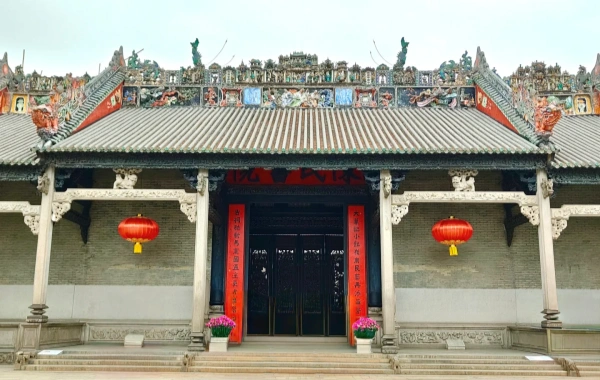
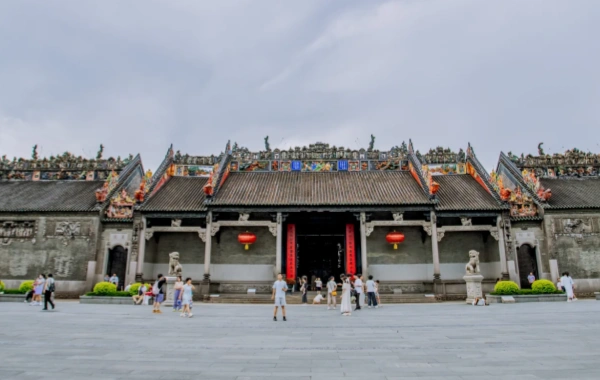
Chen Clan Ancestral Hall follows the typical architectural pattern of Lingnan ancestral halls, yet perfectly integrates rigorous ritual systems with vivid variations.
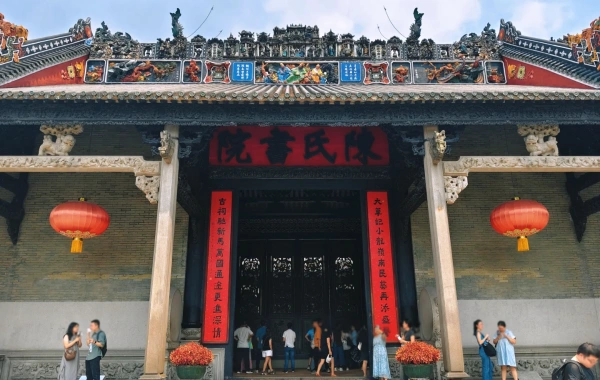
- Three Entrances and Three Routes, Nine Halls and Six Courtyards: The architectural complex faces south, with the "Gathering Virtuous Hall" as its center. It extends in depth along the central axis, forming three main sections, and symmetrically extends outwards on both sides to form three corridors, creating a grand layout of "three corridors and three sections". There are a total of nine halls and six courtyards, cleverly connected through Qingyun Lane and corridors, with a well-organized spatial sequence and deep courtyards, reflecting the ethical ideology of central symmetry and clear hierarchy in traditional Chinese architecture.
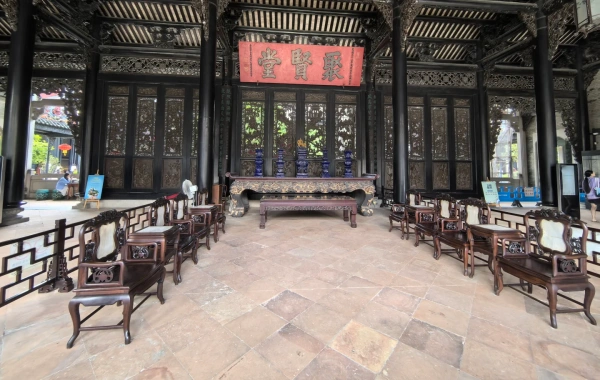
- The majesty of the Juxian Hall: Located in the central main hall, the "Juxian Hall" is the core of the entire temple. Standing at a height of 14.5 meters, it is towering, spacious, and imposing. The stone-carved platform and iron-cast ornamental railings in front of it are masterpieces that blend Chinese and Western elements, making them particularly remarkable.
Humanistic craftsmanship - A visual symphony of "seven-character" decoration
Chen Clan Ancestral Hall is known as the "pearl of Lingnan architectural art", with its core lying in its exquisite architectural decoration, which can be described as the "seven masterpieces" embodying the culmination of Guangdong folk decorative craftsmanship.
- Three carvings (wood carving, brick carving, stone carving):
- Woodcarving: The double-sided hollowed-out wooden screen door, which is the first to enter the hall, is one of the treasures of the town temple. The carving is intricate and the story is rich in layers. The woodcarving themes on the beam frame, camel hump, and partition screen cover a wide range, from historical allusions to auspicious patterns. The carving technique is skillful and lifelike.
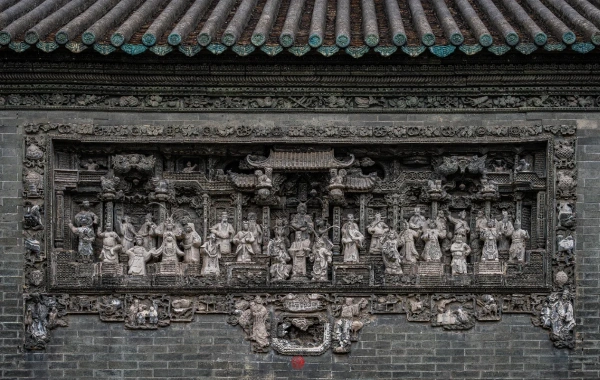
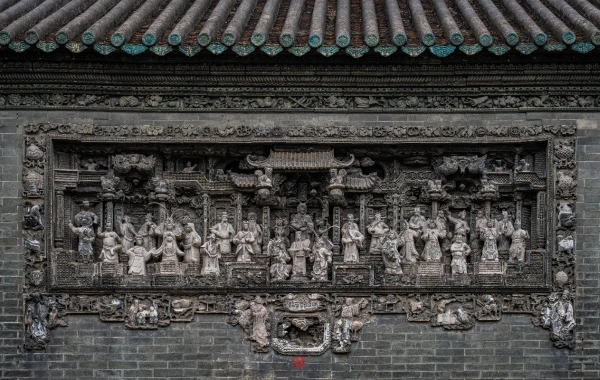
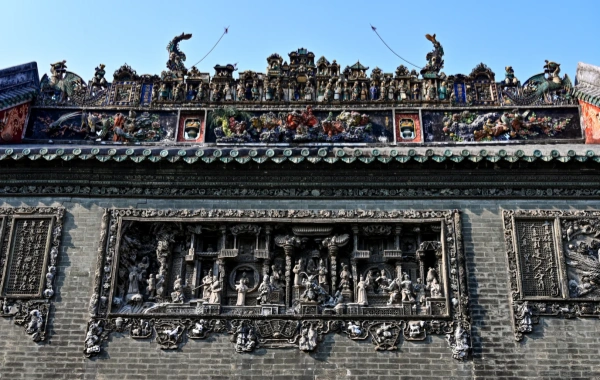
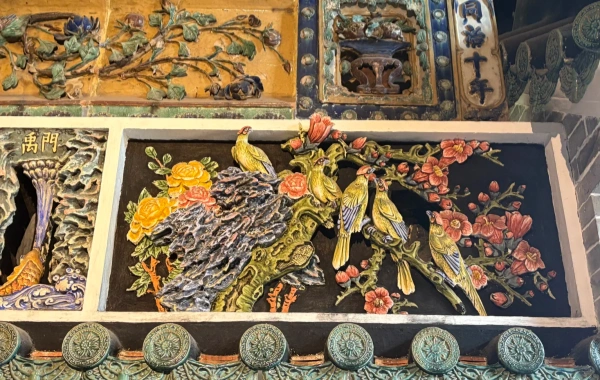
- Brick carving: Six large-scale brick carvings on the walls on both the east and west sides of the main entrance, such as "The Gathering of the Outlaws of the Marsh" and "Phoenixes Among the Wutong, Apricot Trees, and Willows", are grand in scale, with vivid expressions of characters and distinct architectural layers. They are hailed as rare works of modern brick carving.
- Stone carvings: They are found throughout the column bases, railings, and platforms. The baluster tops on the platform railings are carved with various fruits, symbolizing the prosperity of offspring and continuous growth, combining artistic value with entertainment.
- Two types of plastic arts (ceramic sculpture, plaster sculpture):
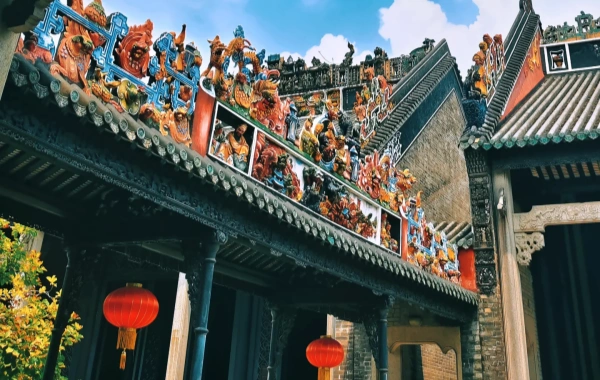
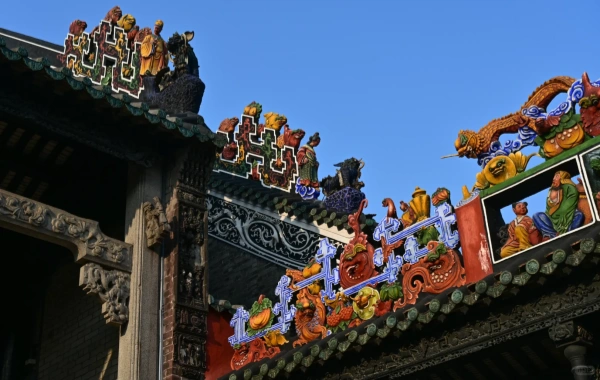
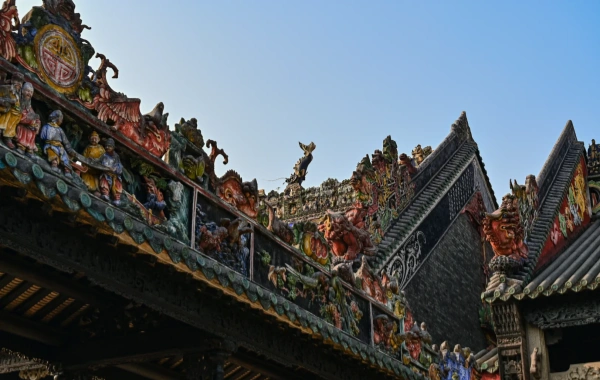
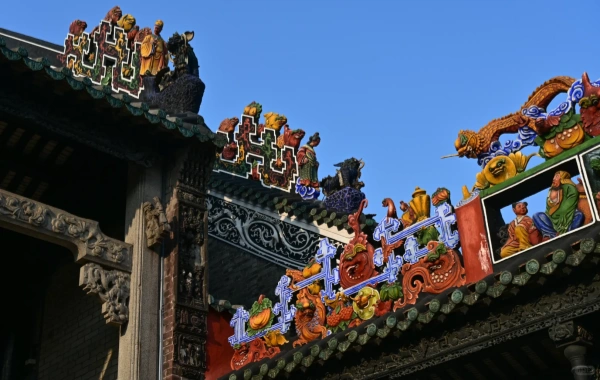
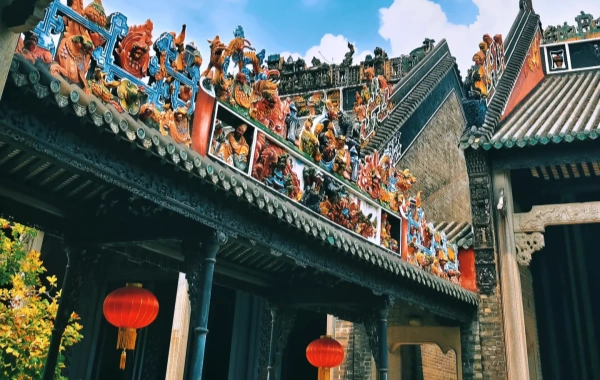
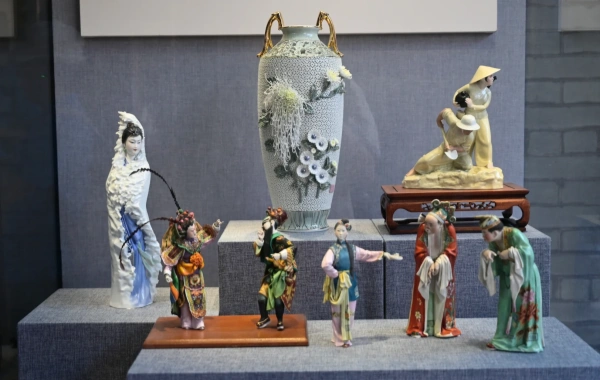
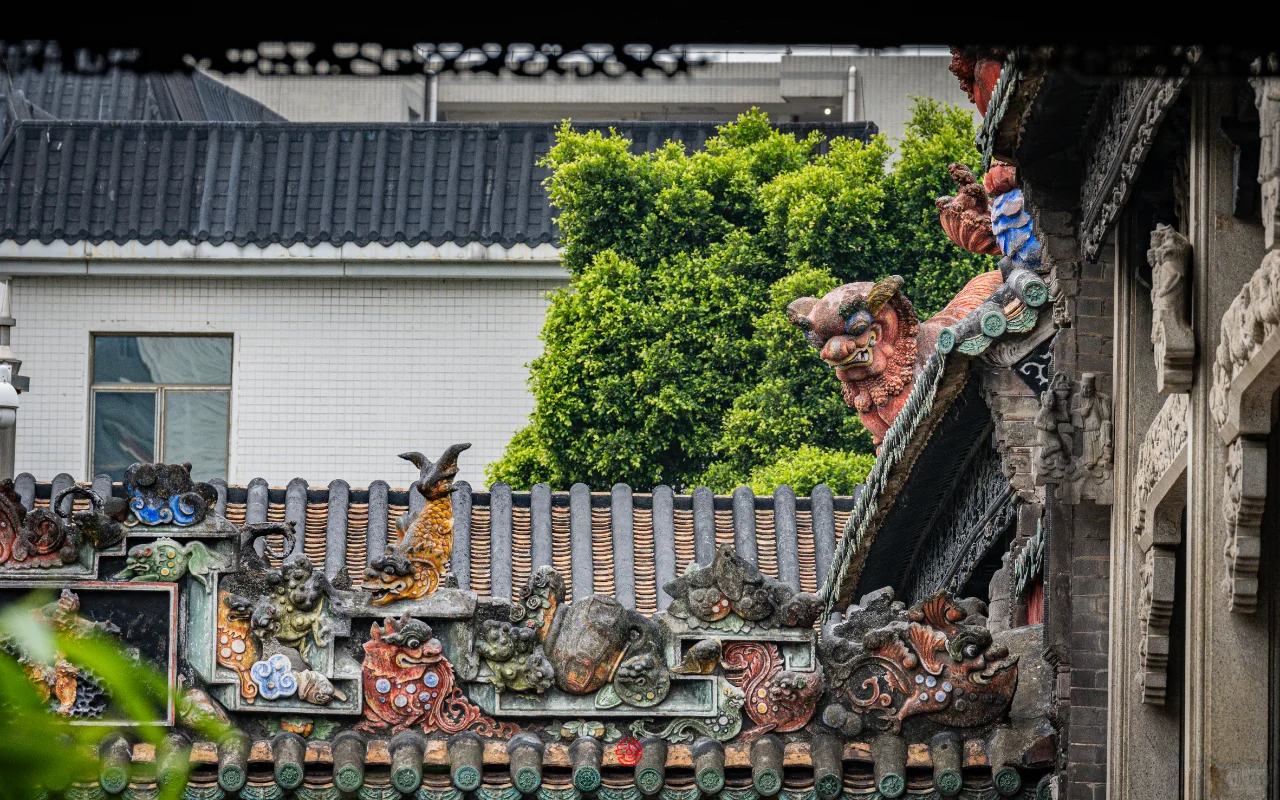
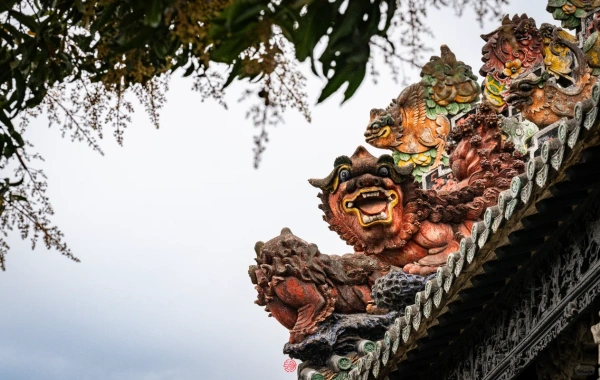
- Pottery sculptures: On the ridges of all the halls, there stand pottery sculptures made of tiles fired in Shiwan, Foshan. These tiles, stretching endlessly, depict numerous opera characters, rare birds, and auspicious beasts, all in vibrant colors. Under the blue sky, they form a splendid aerial art gallery.
- Plaster sculptures: The plaster sculptures on the ridges, eaves corners, and top of the gable are more three-dimensional and exaggerated, with themes often being auspicious patterns. The museum regularly conducts maintenance on the plaster sculptures, with the most recent maintenance covering an area of 1,285 square meters, demonstrating the scale of the work and the meticulous care taken in their preservation.
- One casting (copper and iron casting) and one painting (color painting):
- Copper and Iron Casting: The iron-casting grilles inlaid in the platform railings feature exquisite patterns, combining Western casting techniques with traditional Chinese motifs. They are a typical example of the fusion of Chinese and Western cultures.
- Painting: Although the paintings on the beams and the arch of wooden architecture have been around for a century, some of the colors are still faintly discernible, creating a magnificent visual effect together with the richly colored sculptures.
> Photography and Viewing Tips:
Macro perspective: Standing in the courtyard and looking back, one can capture the "Chen's Academy" plaque, as well as the tiered roofs and ridges of the tiles.
Micro-level detail camera positioning:
1. First entrance hall: A double-sided hollowed-out wooden screen door is photographed from above, with light used to highlight its transparency and layered design.
2. Platform in front of Juxian Hall: Focus on the melon and fruit capitals on the stone-carved railings and the iron-cast openwork railing panels.
3. Under the corridor: Take a photo of the exquisite wood carvings on the beam and camelback under the eaves.
4. Use a telephoto lens: Capture the vivid expressions and details of the ceramic figurines on the distant roof ridges.
Special reminder: Flash photography may be prohibited in certain indoor exhibition areas. Please pay attention to the signs.