Natural and Architectural Marvels—The"Inverted-Dipper"Tomb Mound and the Millennial Tableau of"The Green Tomb's Hazy Hue"
The natural and architectural landscape of Zhaojun's Tomb presents an eternal symphony of rammed earth,deep-grey hues,and poetic sentiment.
The Green Tomb:A Millennial Vigil of a 33-Meter,"Inverted-Dipper"Rammed-Earth Mound
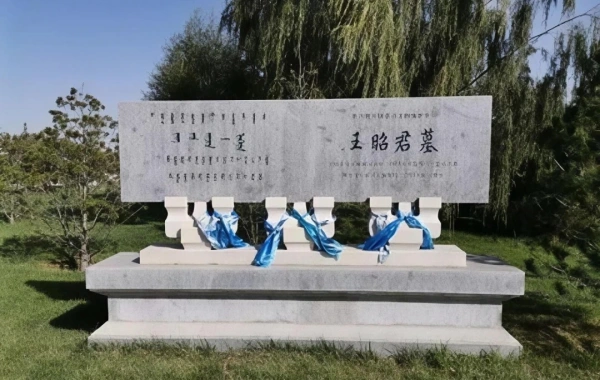
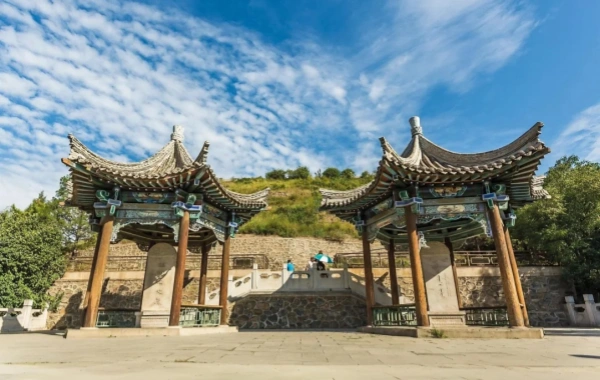
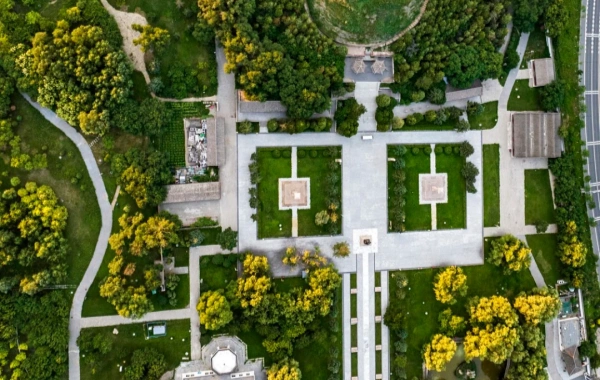
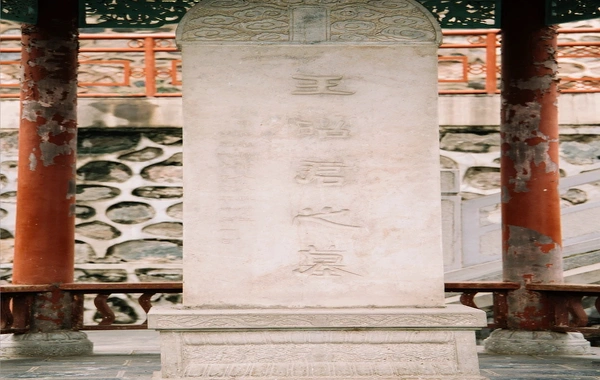
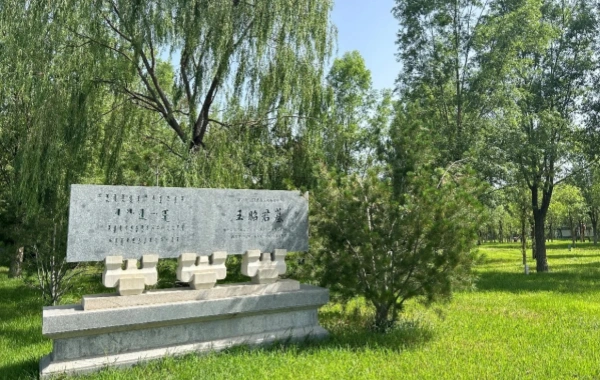
The earthen mound of Zhaojun's Tomb stands 33 meters high with a base area ofapproximately 1.3 hectares.Shaped like an inverted dipper,it is a massive artificial mound constructed from rammed earth,bearing striking structural similarities to the imperial mausoleums of the Han Dynasty found in the Central Plains region.The tomb structure itself was built using rammed-earth techniques,making it one of the largest Han Dynasty tombs in China.As one ascends the wide,stone-paved steps,a mid-level platform reveals two hexagonal pavilions topped with pointed roofs;within each pavilion stands a stele carved from white marble,bearing the inscription"Tomb of Wang Zhaojun"in both Mongolian and Chinese scripts.Additional pavilions are situated on the second-tier platform and atop the very summit of the tomb mound.Standing atop the tomb mound and gazing into the distance,one beholds the rugged,winding contours of the Yin Mountains and the flat plains crisscrossed by fields and paths;the grass on the tomb grows lush and green,while ancient trees reach toward the heavens.The scenery surrounding Zhaojun’s Tomb is delightful;bathed in the light of dawn or the glow of sunset,the landscape of the burial site seems to undergo constant transformation.Local folklore claims that Zhaojun’s Tomb changes its appearance three times a day—"at dawn it resembles a mountain peak,at noon a bell,and at dusk a crouching beast"—a legend that further enhances the mystique of this solitary grave situated beyond the Great Wall.In the Mongolian language,Zhaojun’s Tomb is known as"Temür Uul,"meaning"Iron Fortress,"a name that underscores its symbolic significance as an indestructible bastion.
The Spirit Way and Stone Statuary:Guardians Spanning a Millennium
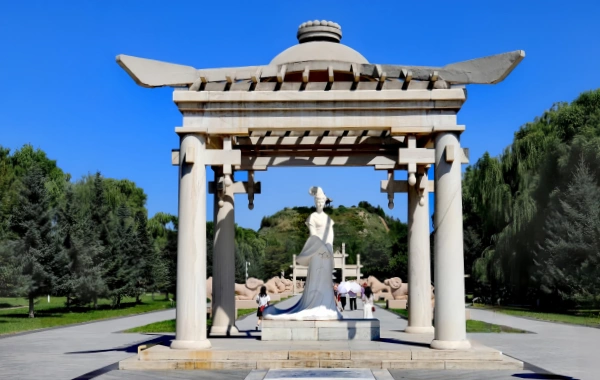
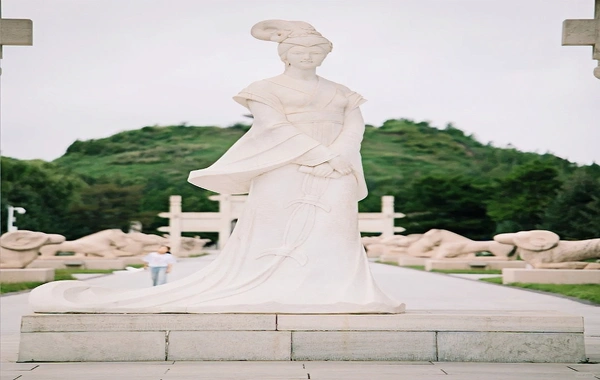
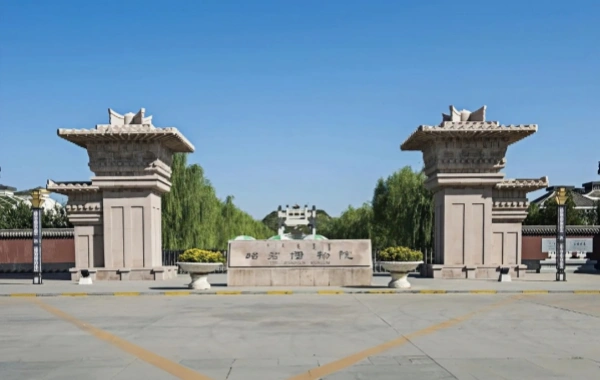
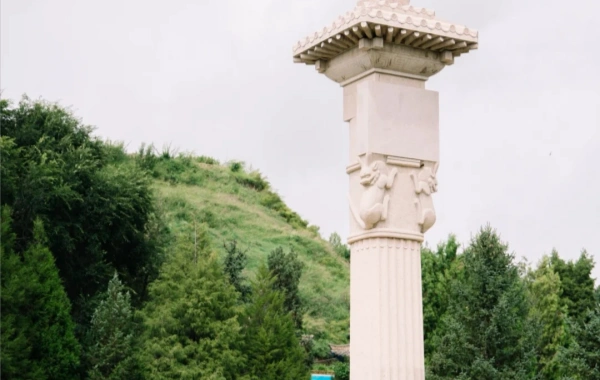
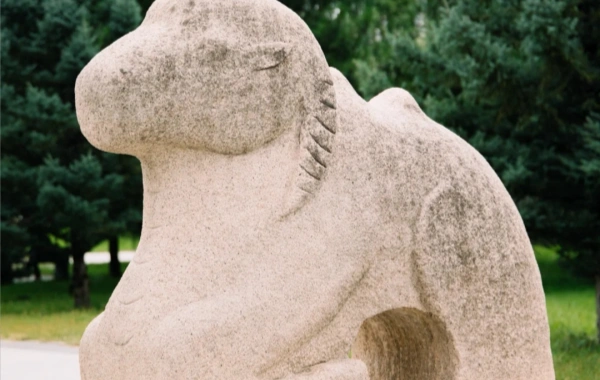
Upon entering the Zhaojun Tomb complex,one follows the Spirit Way—a ceremonial path running from south to north—along which are arranged,in succession,the Dong Biwu Stele,a stone statue of Zhaojun,the"Qingzhong"(Green Tomb)Memorial Archway,and the Bronze Statue of the Peace Marriage.Flanking the Spirit Way,rows of stone statuary stand in solemn vigil:the stone horses and tigers,rendered in the style of the Han Dynasty,exude an air of majestic authority,while the stone deer and sheep—evocative of the grasslands—appear gentle and serene,as if the tomb-guarding soldiers and the nomadic herdsmen of a thousand years ago were standing side by side to safeguard the peace of this land.
Inscribed upon the Dong Biwu Stele is a Qijue(seven-character quatrain)poem titled Visiting Zhaojun’s Tomb,penned by Comrade Dong Biwu during his inspection of the site in 1963.The poem reads:"Zhaojun’s legacy endures through the ages;her vision in forging peace between the Han and the Hu was truly profound.While scholars and poets may vent their varied sentiments,their mere manipulation of words and ink is ultimately in vain."Behind this poetic stele stand seven additional stone tablets,erected throughout history to extol Zhaojun’s virtues and achievements.
The Bronze Statue of the Peace Marriage:Huhanye and Zhaojun Riding Side-by-Side
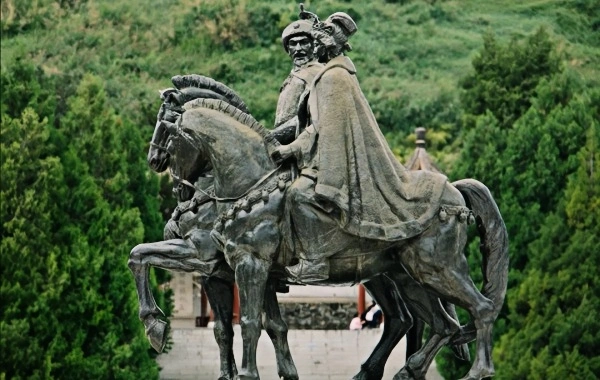
Standing directly in front of the poetic stele is a monumental bronze sculpture depicting Chanyu Huhanye and Wang Zhaojun riding side-by-side.Standing 3.95 meters tall and weighing 5 tons,the statue is rendered with lifelike realism;the two noble steeds stand close together,while Zhaojun and the Chanyu wear expressions of serene contentment—a scene in which the tender spirit of the grasslands and the heroic grandeur of the frontier are harmoniously fused.Cast in 1987,this bronze statue has since become one of the most iconic landmarks of Zhaojun’s Tomb.
>Photography Tip:Ascend to the summit of the"Qingzhong"(Green Tomb)mound to enjoy a panoramic view of the Yin Mountains.The lighting is most favorable during the morning or late afternoon hours,offering the perfect opportunity to capture a magnificent tableau of the"winding Yin Mountains and the plains crisscrossed by fields."Dusk marks the golden hour for capturing the scenic beauty of"Sunset over the Cypress Trees,"a time when the Green Mound appears particularly mysterious under the glow of the slanting sun.The Elder Dong Stele and the Bronze Statue of the Peace Bride serve as excellent subjects for documentary photography focused on cultural heritage.
Humanistic Ingenuity:The Xiongnu History Museum and the Exhibition on Peace Bride Culture
The Xiongnu History Museum:The World’s First Specialized Museum of Xiongnu Culture
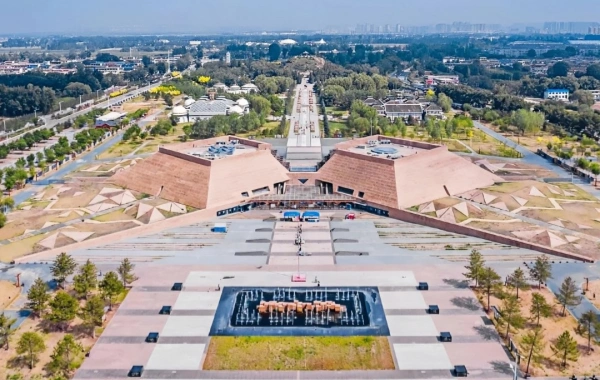
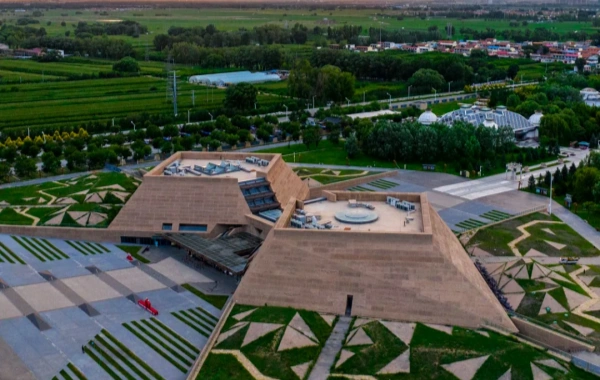
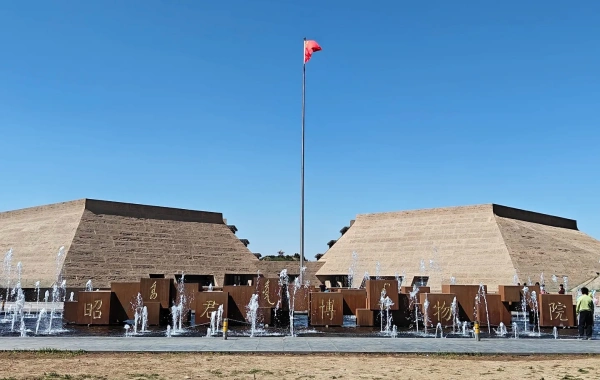
The Xiongnu History Museum is currently the only specialized museum in the world dedicated to systematically and scientifically presenting and disseminating the historical and cultural evolution of the Xiongnu people.Officially opened to the public in 2017,the museum complex spans a total architectural area ofover 15,000 square meters.Viewed from above,the entire structure resembles two pyramids connected by a central walkway,forming the Chinese character for"Harmony"(He)—a design that perfectly encapsulates the core spirit of Zhaojun culture.
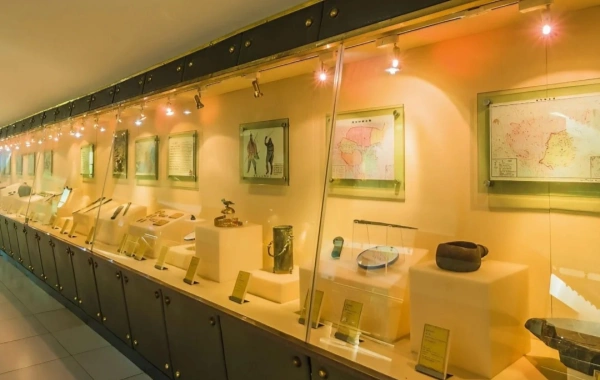
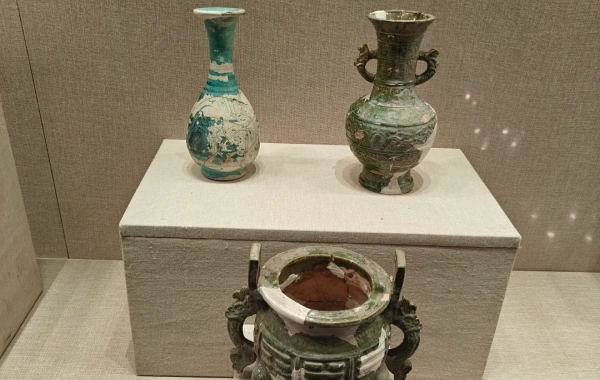
The museum houses two major permanent exhibitions:"The History and Culture of the Xiongnu"and"Zhaojun’s Journey Beyond the Great Wall."The exhibitions are divided into four thematic units:"The Rise of the Xiongnu,""The Xiongnu and the Central Plains,""Xiongnu Economy and Culture,"and"The Xiongnu’s Influence on Later Generations."The collection features over 2,600 artifacts(or sets of artifacts)with distinct Xiongnu characteristics,gathered from regions along China’s northern Great Wall cultural belt—including Gansu,Shanxi,Shaanxi,and Inner Mongolia.Through a diverse array of mediums—including oil paintings,dioramas,sculptures,and historical documents—the museum vividly portrays the glorious history and brilliant culture of the world's first nomadic empire of the steppes.
The Museum of Ancient Chinese Peace Bride Culture:A Historical Corridor Spanning a Millennium of"Heqin"
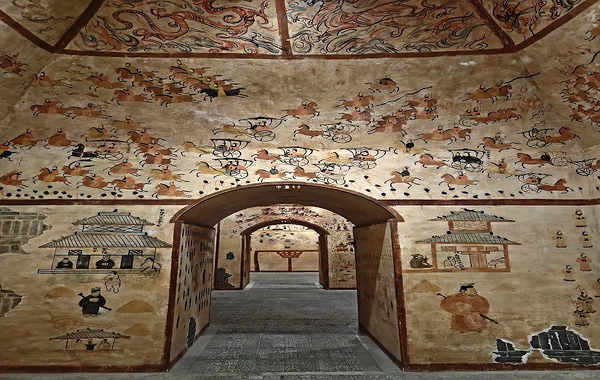
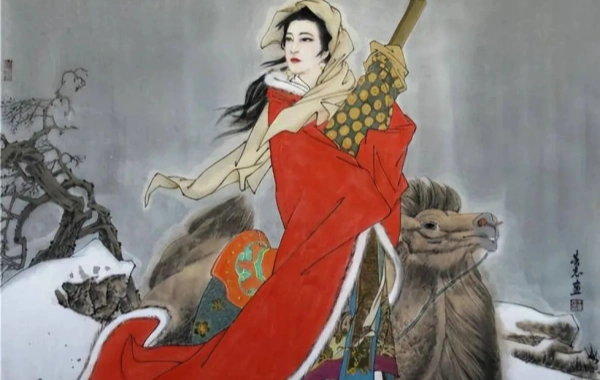
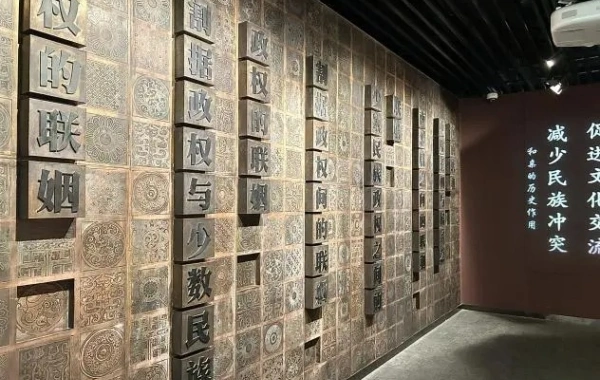
With Zhaojun’s journey beyond the Great Wall(Zhaojun Chu Sai)serving as its central narrative thread,the Museum of Ancient Chinese Peace Bride Culture offers a comprehensive exploration of the historical context and cultural significance of China’s ancient"Peace Bride"(Heqin)policy.The museum displays portraits,murals,and wax figure dioramas depicting Zhaojun at various stages of her life.Upon entering the exhibition hall,visitors are greeted by a monumental sculpture and mural of Zhaojun cradling a pipa(Chinese lute).With her features exuding grace and serenity,and her fingertips gently brushing the strings,she appears to be in the midst of a melody—a song left unfinished,yet one that has resonated through the ages for a thousand years.Exquisitely crafted wax figures recreate scenes of daily life within a Xiongnu encampment;with wisps of cooking smoke drifting upward and the faint strains of pastoral songs lingering in the air,visitors are transported back two millennia to the heart of the vast desert wilderness.Zhaojun’s Hometown and the 5D Cinema:An Immersive Journey Through Time
The scenic area also features a recreation of Zhaojun’s Hometown and a"Zhaojun’s Journey to the Frontier"5D Cinema.The"Hometown"section faithfully recreates the scenery of Wang Zhaojun’s birthplace in Zigui,Hubei,while the 5D Cinema employs cutting-edge technologies—such as holographic projection and motion-sensing seats—to immerse visitors in the magnificent epic of Zhaojun’s historic journey to the frontier.Interactive elements—including holographic projections of flying wild geese and digital displays tracing the route of her diplomatic marriage—further transport visitors back to that turbulent and awe-inspiring era.
The Grand Chanyu’s Tent:A Magnificent Recreation of the Steppe Royal Court
The Grand Chanyu’s Tent stands as the scenic area’s most evocative architectural tribute to the steppe culture,serving as a faithful recreation of the council tent used by the Xiongnu Chanyu(Supreme Ruler).The interior is adorned with traditional artifacts of the nomadic steppe peoples,offering visitors the opportunity to watch live performances and experience firsthand the majestic grandeur of the steppe royal court.