Po Lin Monastery: A Century-Long Journey of Zen Cultivation in the "Southern Buddhist Realm"

Po Lin Monastery: A Century-Long Journey of Zen Cultivation in the

Overview: A Buddhist Sanctuary Within a Century-Old Monastery

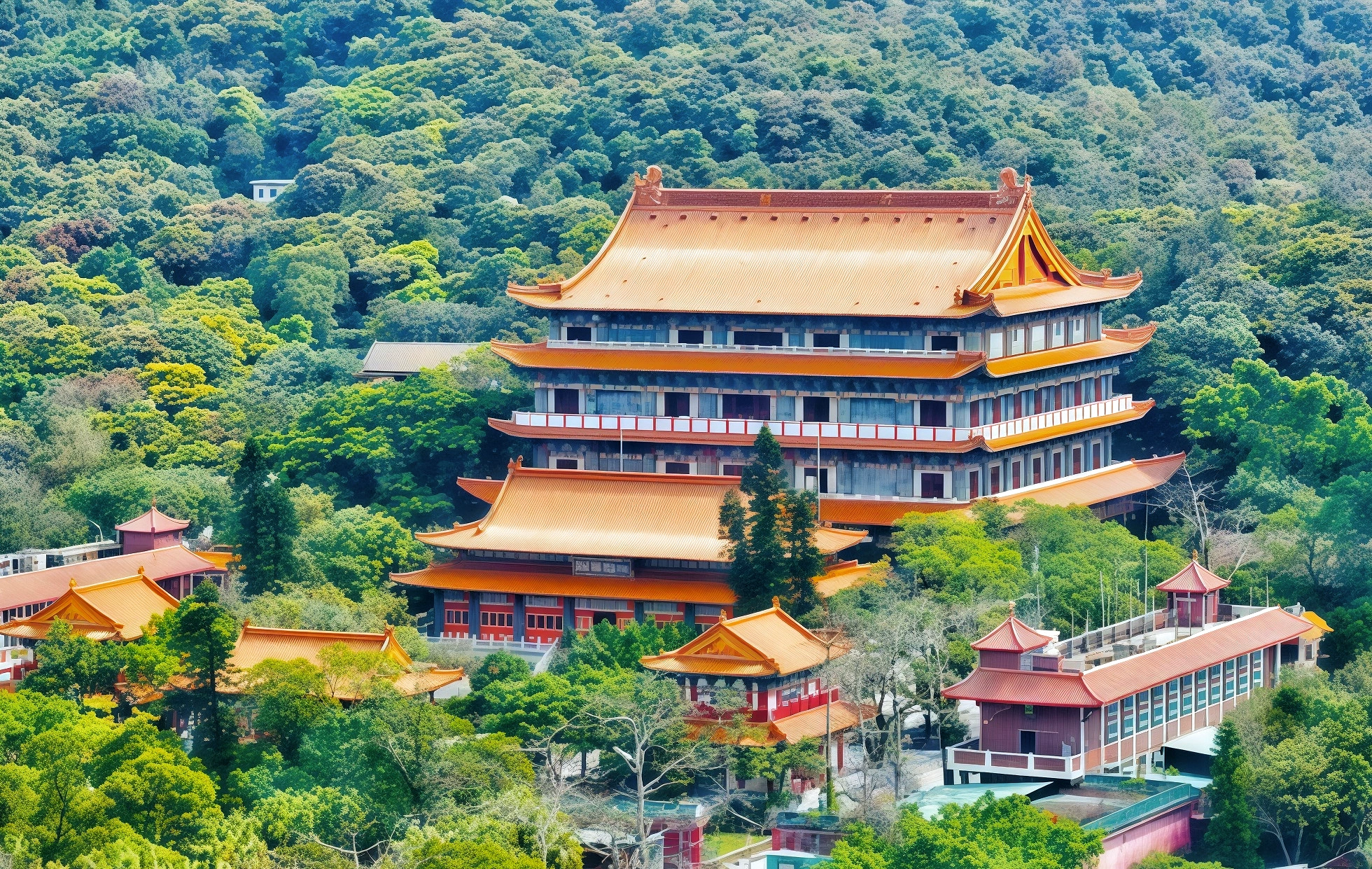
Po Lin Monastery is situated atop the Ngong Ping Plateau on Lantau Island, Hong Kong. It stands as a Buddhist sanctuary far removed from the hustle and bustle of the secular world.

Key Highlights at a Glance

- Distinguishing Titles: The "Southern Buddhist Realm" / Foremost of Hong Kong's Four Major Zen Monasteries

- Core Experiences: Paying homage to the Tian Tan Buddha, visiting the Hall of Ten Thousand Buddhas.

- Suggested Visit Duration: Half a day to one full day; can be combined with a scenic aerial journey via the Ngong Ping 360 Cable Car.

- Address: Ngong Ping Plateau, Lantau Island, Hong Kong.

  • Po Lin Monastery: A Century-Long Journey of Zen Cultivation in the
  • Po Lin Monastery: A Century-Long Journey of Zen Cultivation in the
  • Po Lin Monastery: A Century-Long Journey of Zen Cultivation in the
  • Po Lin Monastery: A Century-Long Journey of Zen Cultivation in the

Origins: From a Century-Old Hut to the "Southern Buddhist Realm"

Furong Ancient Town Furong Ancient Town Furong Ancient Town Furong Ancient Town

The Founding Name—From "The Great Thatched Hut" to Po Lin Monastery

The name "Po Lin Monastery" translates to "Precious Lotus," symbolizing the purity and enlightenment central to Buddhist philosophy. Yet, the beginnings of this century-old monastery were remarkably humble.

In 1906 (the 32nd year of the Guangxu reign of the Qing Dynasty), three Zen masters—Da Yue, Dun Xiu, and Yue Ming—traveled a great distance from Jinshan Temple in Zhenjiang, Jiangsu Province, to reach Ngong Ping on Lantau Island, Hong Kong. At that time, transportation on Lantau Island was extremely underdeveloped, leaving the area largely isolated and self-contained. Upon observing the site—a plateau nestled amidst towering peaks and encircled by mountains—the three masters recognized it as an ideal setting for a spiritual retreat. Undeterred, they cleared the overgrown wilderness to construct, first, a small stone chamber, and subsequently, a large thatched hut, thereby establishing a spiritual sanctuary open to practitioners from all directions. Subsequently, wandering monks from all directions, drawn by the temple's growing reputation, arrived to cultivate mountain vegetables and install ritual implements, thereby establishing a communal monastic lifestyle where "every grain is shared equally." This humble thatched hut was initially known simply as the "Great Thatched Hut."

In 1924, Venerable Jixiu—a monk hailing from Jinshan Temple—accepted the earnest invitation of the resident monastic community to assume the role of Abbot. He formally named the spiritual sanctuary "Po Lin Zen Monastery." Emulating the Zen traditions of Jinshan Temple—characterized by intensive meditation practice in winter and scriptural study in summer—Venerable Jixiu laid the foundational framework for Po Lin Zen Monastery as a fully-fledged monastic institution. Subsequently, Venerable Fake succeeded him as the second Abbot; under his leadership, various halls—including the Hall of Skanda, the Hall of Maitreya, and the Main Shrine Hall (Mahavira Hall)—were successively completed.

The Path to Revival: From Thatched Hut to the "Southern Buddhist Realm"

The century-long journey of Po Lin Zen Monastery stands as a Buddhist epic—a testament to the steadfast preservation of faith and the dedication to propagating the Dharma for the benefit of all sentient beings:

- Founding of the Thatched Hut (1906): Three Zen masters—Dayue, Dunxiu, and Yueming—traveled from Jinshan Temple in Zhenjiang, Jiangsu Province, to Ngong Ping on Lantau Island, where they erected a thatched hut and established an open sanctuary for monks from all traditions.

- Formal Establishment of the Monastery (1924): Venerable Jixiu assumed office as the first Abbot, formally designating the sanctuary as "Po Lin Zen Monastery." Emulating the Zen traditions of Jinshan Temple, he established the institutional norms and regulations for the monastic community.

- Expansion of Temple Halls (from the 1930s): Various structures—including the Hall of Skanda, the Hall of Maitreya, and the Main Shrine Hall—were constructed in succession, thereby establishing the architectural layout of the monastery as it stands today.

- Transmission of Precepts and Dharma Propagation (from 1936): Initially, Po Lin Zen Monastery joined forces with Castle Peak Monastery and Ling Wan Monastery to conduct precept-transmission ceremonies on a rotating basis. Later, Po Lin Zen Monastery assumed sole responsibility for organizing these events; to date, it has successfully hosted twenty-five grand ceremonies for the transmission of Buddhist precepts.

- Completion of the Giant Buddha (1993): The Tian Tan Buddha (Giant Buddha) was formally completed and consecrated. As the world's tallest outdoor seated bronze Buddha statue, it transformed Po Lin Zen Monastery into a world-renowned Buddhist pilgrimage site. - Hall of Ten Thousand Buddhas (2014): With the completion of the Hall of Ten Thousand Buddhas—which enshrines over ten thousand Buddha statues—Po Lin Monastery has evolved into a comprehensive Buddhist sanctuary that seamlessly integrates Buddhist culture, landscape gardening, and sculptural art.>> [Weizhou Island]

Must-See Wonders: A Symphonic Poem of Nature and Humanity

Furong Ancient Town Furong Ancient Town Furong Ancient Town Furong Ancient Town Furong Ancient Town

Nature's Masterpiece—A Picturesque Vista Upon a Highland Pure Land

The Ngong Ping Plateau, where Po Lin Monastery is situated, is a uniquely blessed and spiritually resonant locale on Lantau Island.

A Zen-Inspired Pure Land Embraced by Mountains

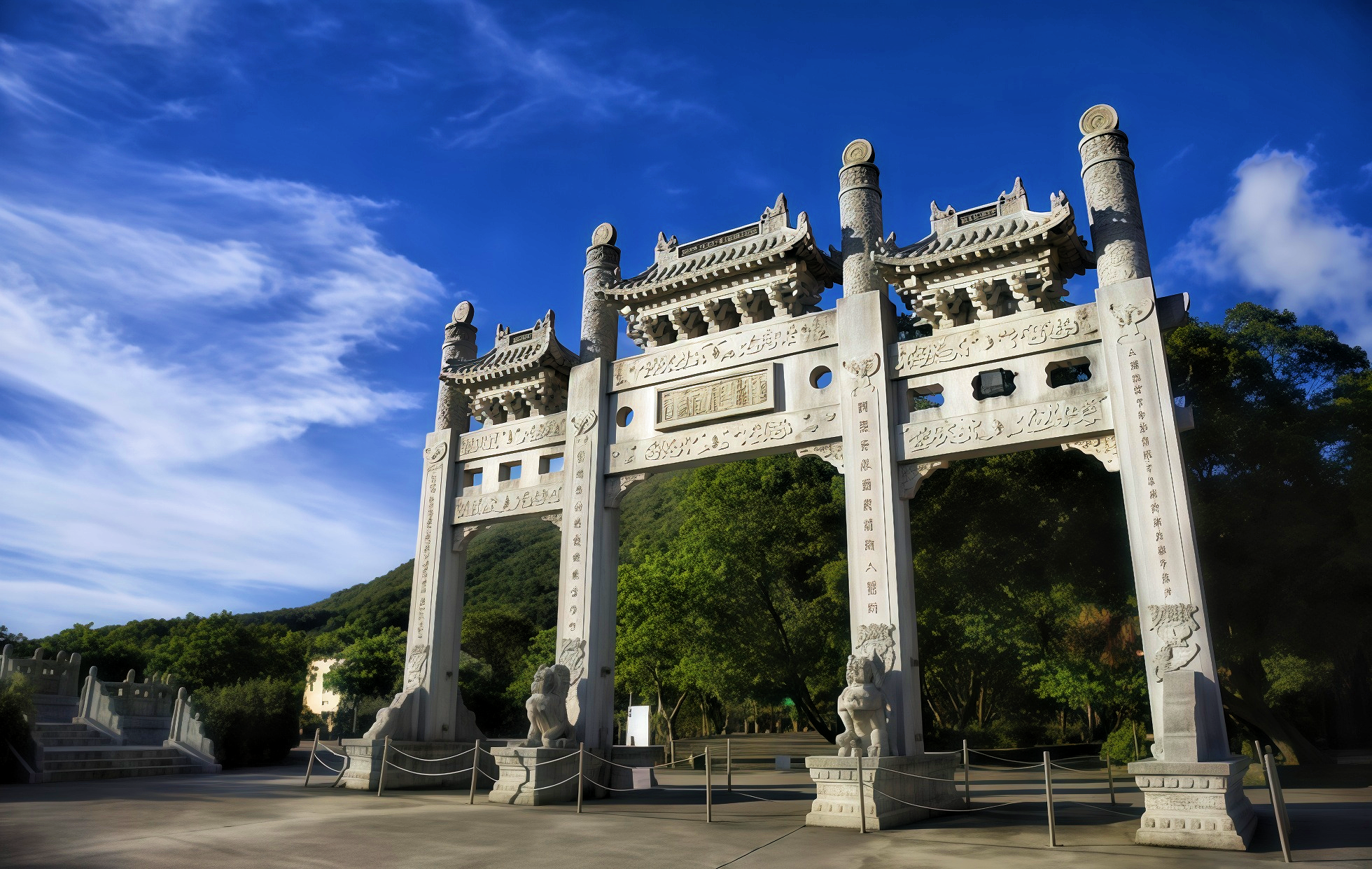
Po Lin Monastery sits on the Ngong Ping Plain in central Lantau Island, at an elevation of approximately 400 meters, nestled between Lantau Peak (Fung Wong Shan) and Sunset Peak (Yi Ling Shan). From this vantage point, one can gaze out at Lantau Peak—standing at 934 meters, it is Hong Kong’s second-highest mountain and an exceptional spot for watching the sunrise. Surrounded on all sides by undulating mountain ranges, the monastery’s entrance is flanked by iconic landmarks: to the left stand the Tian Tan Buddha (atop Muk Yue Peak) and the Lotus Pagoda, while to the right rise Lotus Hill and Lion Rock—truly a scenic gem of Lantau Island. When shrouded in swirling mists, the entire monastery appears to float ethereally in the sky, evoking an immediate sense of transcendence and detachment from the mundane world.

A "Breathing" Plateau: A Fresh, Secluded Sanctuary Beyond the City

The Ngong Ping Plateau lies far removed from the hustle, bustle, and dust of Hong Kong’s urban center, boasting crisp, fresh air and lush, verdant vegetation. Lantau Peak and Sunset Peak act as natural barriers, effectively shielding this sanctuary from the disturbances of the secular world. In the early morning hours, as mist drifts through the mountain valleys, the chirping of birds and the resonant tolling of temple bells intertwine to create a celestial symphony of sound. It is an ideal destination for "forest bathing"—immersing oneself in nature to cleanse and rejuvenate the spirit.

Human Ingenuity—A Century-Old Pantheon of Buddhist Art

The significance of Po Lin Monastery lies not merely in the serene tranquility of its natural surroundings, but equally in the rich legacy of Buddhist architectural art and cultural heritage it has accumulated over more than a century.

The Tian Tan Buddha: A Colossal Bronze Guardian of Hong Kong

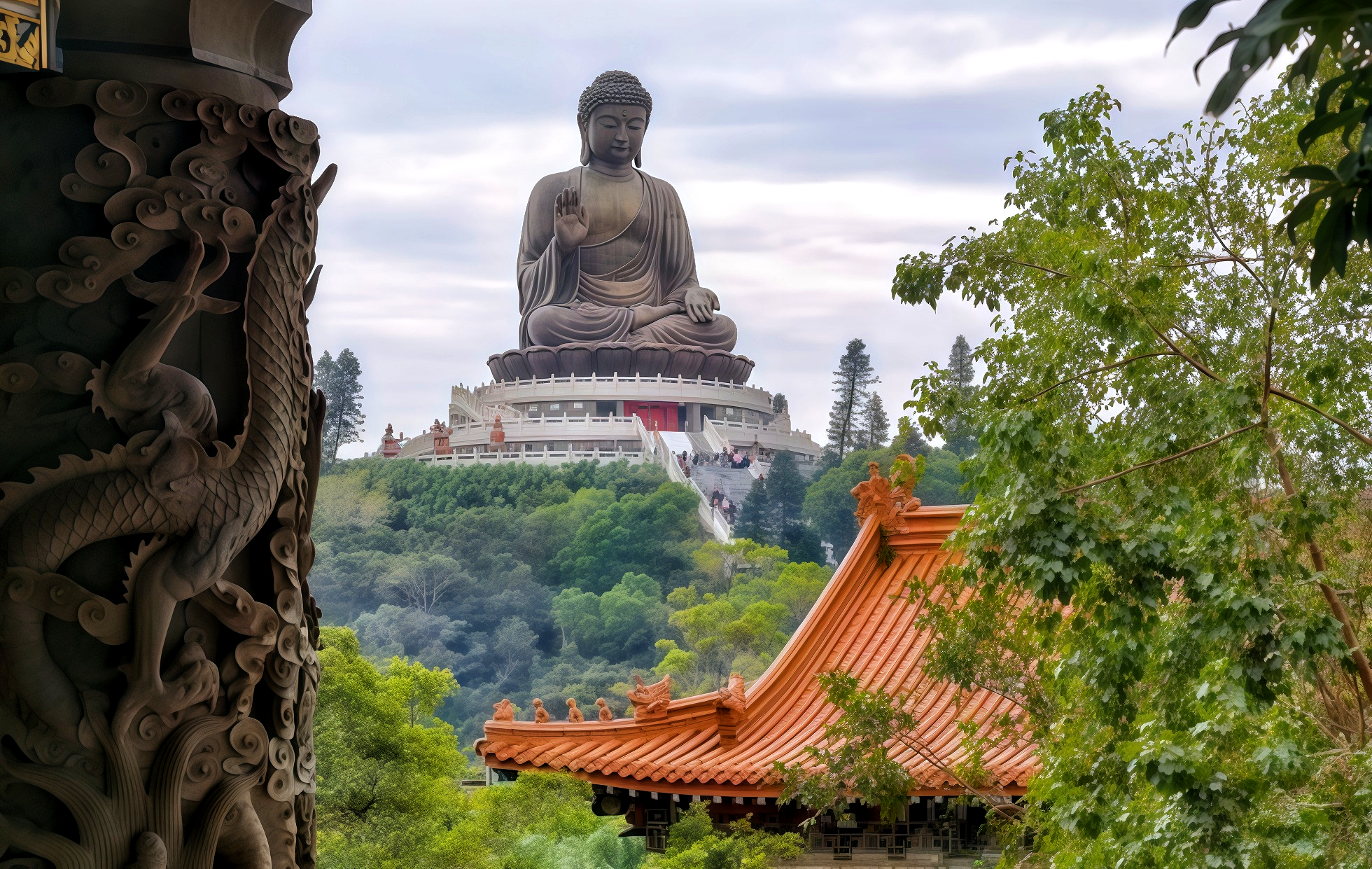
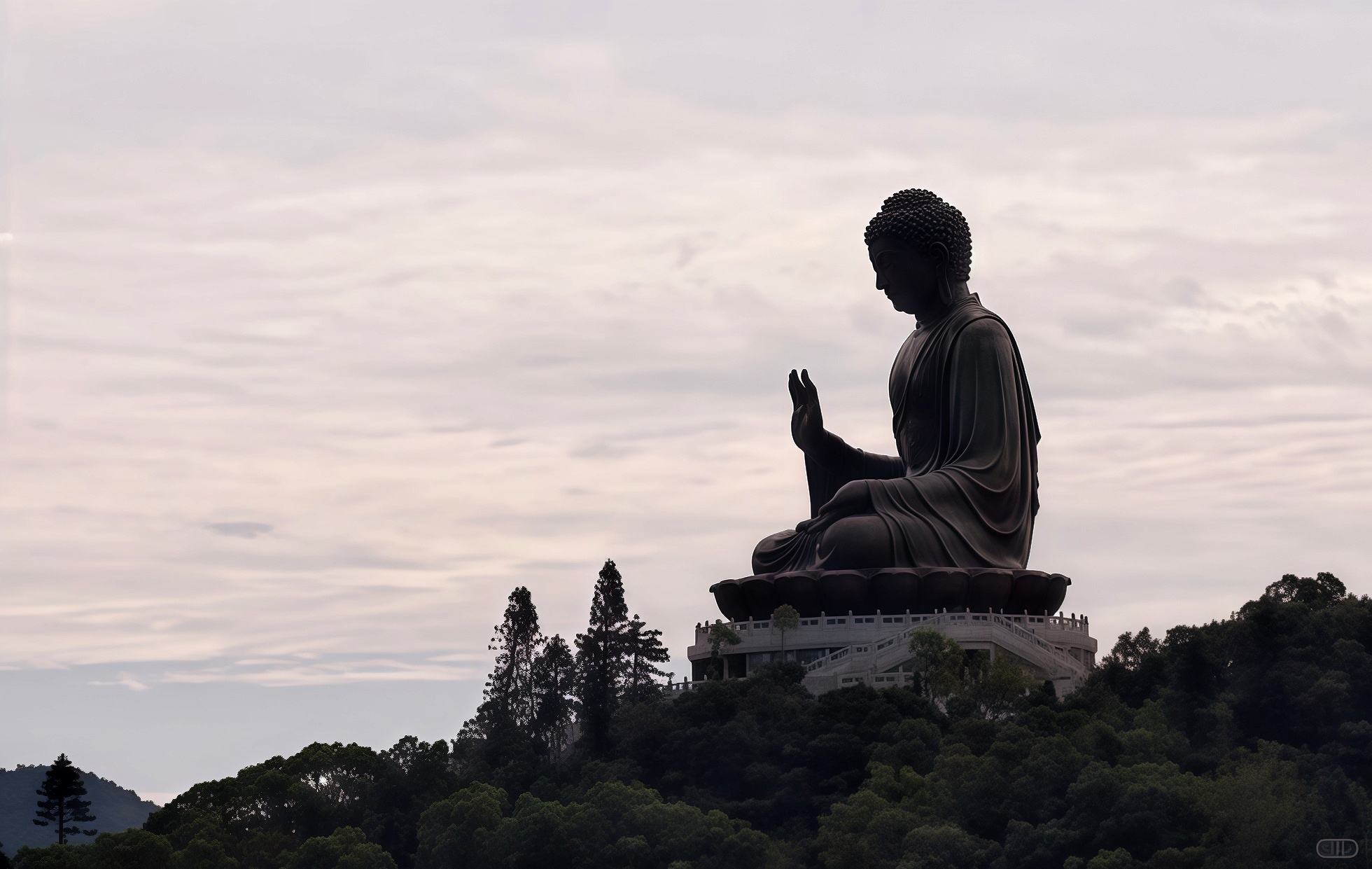
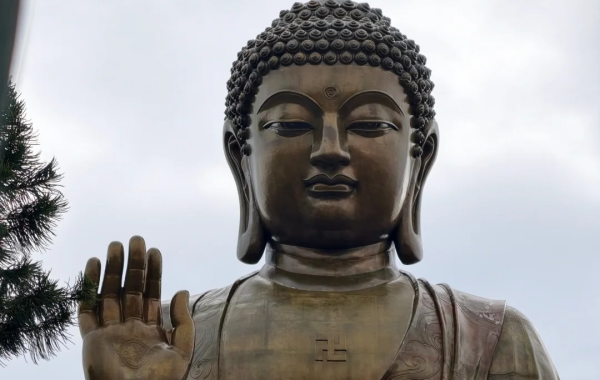
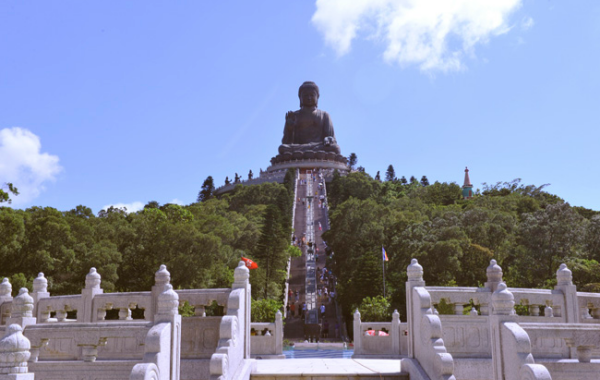
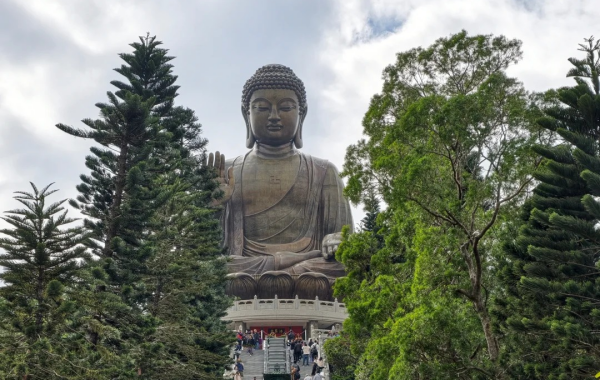
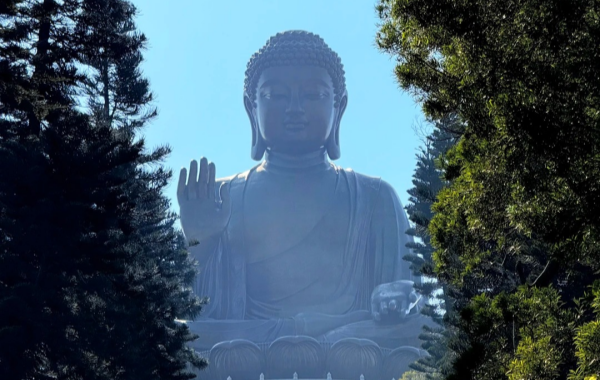
The Tian Tan Buddha stands as one of the most iconic landmarks not only of Po Lin Monastery but of Hong Kong as a whole. This bronze seated statue of Sakyamuni Buddha sits majestically atop Muyu Peak at an elevation of 482 meters. Standing 34 meters tall and weighing over 250 metric tons, it is composed of 202 bronze panels and ranks as the world's tallest outdoor seated bronze Buddha. The Big Buddha was inaugurated and consecrated on December 29, 1993. Commissioned by Po Lin Monastery, the project cost over HK$60 million and was designed and fabricated by the China Aerospace Science and Technology Corporation—a true masterpiece representing the perfect fusion of Buddhist art and modern technology.

The Buddha's facial features were modeled after the Vairocana Buddha at the Longmen Grottoes, while the drapery and head ornaments were inspired by the Sakyamuni Buddha statues at the Dunhuang Grottoes, thereby embodying the sculptural characteristics of the golden age of Buddhism during the Sui and Tang dynasties. The statue's left hand forms the Varada Mudra (Wish-Granting Gesture)—with fingers pointing downward and palm facing outward—symbolizing the fulfillment of the prayers of all sentient beings. Its right hand forms the Abhaya Mudra (Fearlessness Gesture), signifying the Buddha's boundless compassion and vow to deliver sentient beings from suffering by bestowing upon them fearlessness and inner peace. The three-tiered base beneath the Big Buddha houses exhibition halls containing precious Buddhist relics, including a genuine relic (sarira) of the Buddha himself. Inside, a large bell—controlled by a computer system—strikes once every seven minutes, totaling 108 strikes; this ritual symbolizes the "alleviation of the 108 afflictions" that trouble the human mind.

Visitors must ascend a flight of 268 stone steps to reach the foot of the Big Buddha. As one looks upward along the ascent, the statue's solemnity and benevolence inspire a profound sense of awe and reverence.

The Hall of Ten Thousand Buddhas: A Magnificent Modern Buddhist Sanctuary

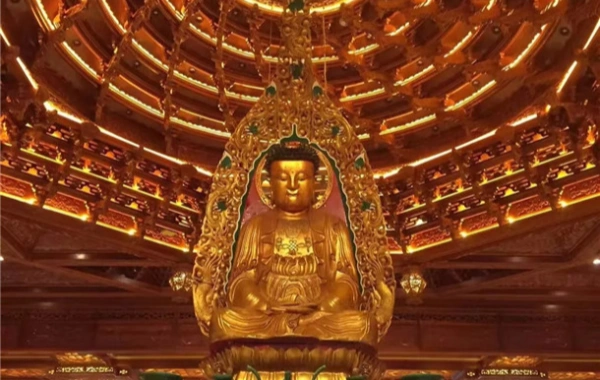
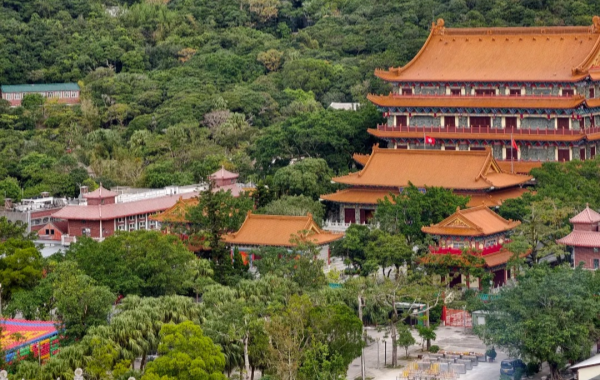
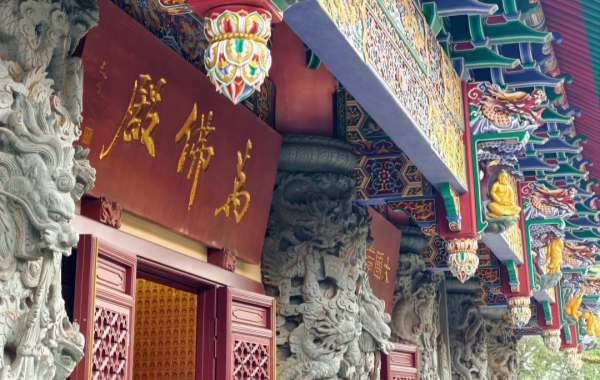
The Hall of Ten Thousand Buddhas (Wan Fo Bao Dian) stands as one of the most solemn and magnificent structures within Po Lin Monastery, having been completed in 2014. The interior of the hall enshrines over ten thousand miniature Buddha statues, the largest among which are the Five Dhyani Buddhas. The hall also showcases exquisite Buddhist artworks—including intricate murals and wood carvings depicting the life of the Buddha—that exemplify traditional Chinese craftsmanship. With the completion of the Hall of Ten Thousand Buddhas, Po Lin Monastery has evolved into a comprehensive Buddhist sanctuary that seamlessly integrates Buddhist culture, landscaped gardens, and sculptural art, providing a sacred space capable of accommodating over a hundred devotees for worship. 

The Hall of the Great Hero & The Hall of Skanda: The Essence of Traditional Architecture

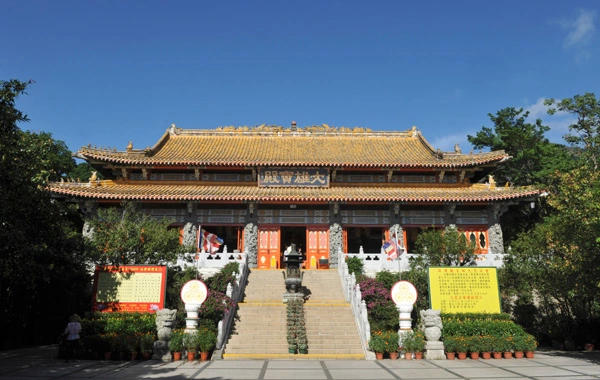
The Hall of the Great Hero (Daxiong Baodian) features a double-eaved xieshan (hip-and-gable) roofline and spans seven bays in width. Its roof is adorned with chiwen (mythical dragon-fish finials), while its perimeter is encircled by octagonal stone pillars carved with motifs of clouds and dragons. Housed within the hall are the Buddhas of the Three Ages—representing the past, present, and future lives—flanked on either side by the Eighteen Arhats. The interior railings and balustrades feature intricate openwork carvings highlighted with gold leaf; the ceiling is painted with images of Feitian (celestial beings) and complemented by vibrantly colored dougong (bracket sets), creating a magnificent and spectacular atmosphere. Located on the lower level of the Hall of the Great Hero is the Hall of the Arhats, a designated venue for Dharma lectures and ordination ceremonies. This hall enshrines the Bodhisattvas Guanyin, Manjushri, and Samantabhadra, and is surrounded by statues of five hundred Arhats.

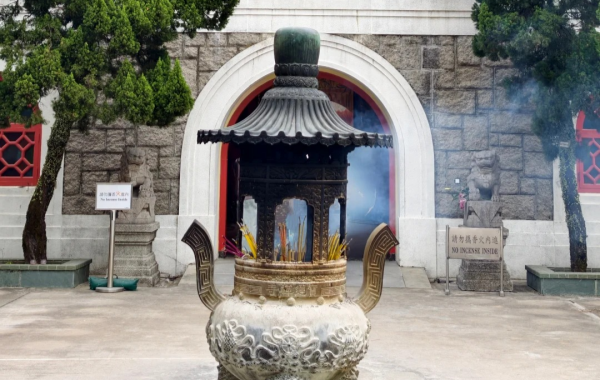
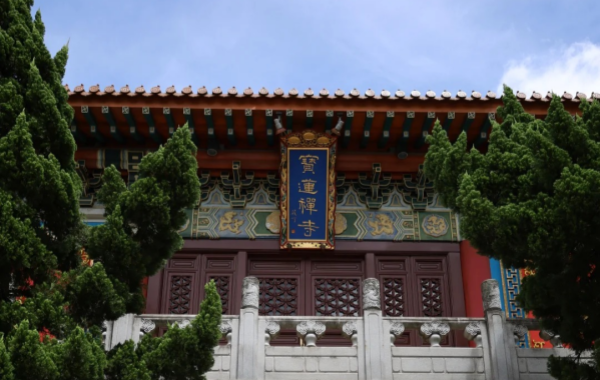
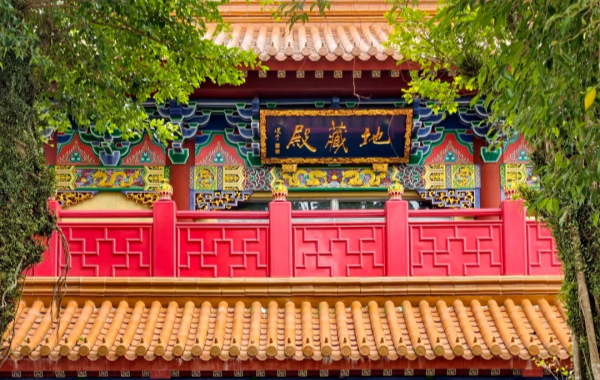
The Hall of Skanda (Weituo Hall) is situated to the left of the Mountain Gate. It features a single-eaved xieshan roof and rises two stories high. Its doors and windows are painted in a deep vermilion lacquer; the lower level is constructed with walls of white granite, while the upper level features a stone-carved ambulatory. The hall enshrines Skanda Bodhisattva, the guardian deity of Buddhist monasteries.

The Wisdom Path: A Serene Space of Art and Philosophy

The Wisdom Path is located near Po Lin Monastery, accessible via a leisurely 15-minute walk. Completed in 2005, it is a large-scale outdoor installation that seamlessly blends philosophy with art. The calligraphy featured in the installation was donated by the internationally renowned sinologist, Professor Rao Zongyi. The site consists of 38 massive rosewood pillars—each standing 8 to 10 meters tall and 1 meter wide—arranged in an "∞" (infinity) symbol formation, symbolizing the eternal continuity of life. Each pillar is inscribed with a passage from the Mahā Prajñā Pāramitā Hṛdaya Sūtra (The Heart Sutra), utilizing the Chinese translation originally rendered by the Tang Dynasty monk, Master Xuanzang. Notably, the 23rd pillar is deliberately left blank to convey the concept of "Emptiness" (Śūnyatā) central to the Heart Sutra—a design choice that aligns perfectly with Professor Rao's philosophy that "only within a state of luminous emptiness can one truly embrace wisdom." Also known as the "Path of Wisdom," this site offers visitors a tranquil sanctuary where they may stroll amidst the pillars, experiencing a profound sense of spiritual serenity and enlightenment.

Monastery Vegetarian Cuisine: A Dining Experience of Compassion and Mindfulness

Within Po Lin Monastery lies a small vegetarian restaurant offering meat-free dishes personally prepared by the resident monks. From steamed dumplings to stir-fried vegetables, every dish is crafted using fresh ingredients and infused with the Buddhist principles of compassion and mindfulness. This dining experience not only nourishes the body but also aligns with the lifestyle of kindness and non-violence advocated by Po Lin Monastery.

> Photography Tips:

> The best angle for photographing the Tian Tan Buddha is a low-angle frontal shot, which highlights the statue's solemnity and grandeur;

> Shooting the Buddha against the backdrop of Phoenix Mountain from the mid-slope of Wooden Fish Peak creates a visually rich, layered composition;

> The golden interior decorations of the Hall of Ten Thousand Buddhas are best captured as a panoramic shot using a wide-angle lens;

> The "∞" (infinity) arrangement of the wooden steles at the Wisdom Path is ideal for aerial photography, though local drone regulations must be strictly observed.

Core Experiences: An Immersive Journey to a Buddhist Sanctuary

Furong Ancient Town Furong Ancient Town Furong Ancient Town

Five Must-Do Activities to Unlock the Complete Po Lin Monastery Experience

1. Pay Homage to the Tian Tan Buddha

- Timing: It is recommended to visit in the morning when the light is soft and the crowds are thinner.

- Experience: Climb the 268 stone steps to gaze up at the 34-meter-tall bronze seated Buddha, and feel a profound spiritual resonance.

- Must-See: The genuine relics of the Buddha (Sarira) enshrined within the exhibition hall at the base of the statue.

2. Savor a Monastery Vegetarian Meal

- Key Highlight: The vegetarian cuisine is one of the signature experiences at Po Lin Monastery.

- Experience: Taste vegetarian dishes personally prepared by the monks and immerse yourself in the dietary culture of Buddhism.

- Must-Order: Stir-fried seasonal vegetables, vegetarian dumplings, and tofu-based dishes.

3. Walk the Wisdom Path

- Experience: Stroll amidst 38 giant wooden steles, absorbing the wisdom and tranquility of the Heart Sutra.

- Suggestion: Set aside 30 minutes for a mindful walk to fully appreciate the Zen spirit of this "Path of Wisdom."

4. Take a Ride on the Ngong Ping 360 Cable Car

- Key Point: The Ngong Ping 360 is the most convenient and scenic way to travel to the Po Lin Monastery.

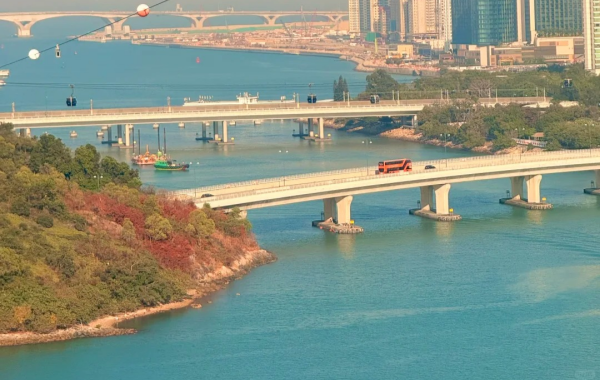
- Experience: The journey takes approximately 25 minutes, offering panoramic views of Hong Kong International Airport, the South China Sea, and the majestic mountain landscapes of Lantau Island along the way.

- Highlight: The "Crystal Cabin" features a transparent glass bottom, allowing you to look down and admire the scenery of the mountains and sea directly beneath your feet.

5. Watch the Sunrise from Lantau Peak (Fung Wong Shan)

- Experience: Ascend to the summit of Lantau Peak (Fung Wong Shan)—standing at an elevation of 934 meters—in the early morning hours to witness Hong Kong's most breathtaking sunrise.

- Recommendation: It is advisable to stay overnight in advance at the YHA Youth Hostel in Ngong Ping, then set out on the hike up the mountain at 4:00 AM.

Suggested Itineraries

Half-Day "Essential Pilgrimage" Tour (Ideal for those with limited time):

Depart from Tung Chung in the morning via the Ngong Ping 360 Cable Car (approx. 25 mins) → Upon arrival at Ngong Ping Village, walk to the Po Lin Monastery (approx. 10 mins) → Pay homage to the Tian Tan Buddha (Big Buddha) and visit the exhibition halls located within its pedestal (approx. 1 hour) → Visit the Main Shrine Hall of the Great Hero (Daxiong Baodian) and the Hall of Skanda (Weituo Dian) (approx. 30 mins) → Enjoy a vegetarian lunch at the monastery's vegetarian restaurant (approx. 45 mins) → Walk to the Wisdom Path (approx. 15 mins) and take a leisurely stroll to soak up the Zen atmosphere (approx. 30 mins) → Return to Ngong Ping Village and take the cable car back to Tung Chung.

IntoTravelChina Tip: We recommend purchasing your Ngong Ping 360 Cable Car tickets online in advance to save time by avoiding queues. One-Day "Deep Immersion" Tour (Recommended):

Morning: Depart from Tung Chung via the Ngong Ping 360 Cable Car, admiring the scenic landscapes of Lantau Island along the way → Arrive at Ngong Ping and visit the Ngong Ping Village → Pay homage to the Tian Tan Buddha (Big Buddha) and visit the exhibition hall located within its pedestal → Visit the Grand Hall of the Great Hero, the Hall of Skanda, and the Hall of Ten Thousand Buddhas to gain a deeper understanding of Buddhist architectural art → Noon: Enjoy a vegetarian lunch at the Po Lin Monastery Vegetarian Restaurant, experiencing the unique dietary culture of Buddhism → Afternoon: Walk to the Wisdom Path (Heart Sutra in the Woods), strolling along this "Path of Wisdom" to contemplate the philosophy and tranquility of the Heart Sutra → Return to Ngong Ping Village to browse for Buddhist souvenirs or local specialty gifts (optional) → Evening: Take the cable car back to Tung Chung, bringing your day-long journey of spiritual serenity to a close.

IntoTravelChina Advantage: We can book fast-track tickets for the Ngong Ping 360 Cable Car on your behalf, arrange seamless transport connections, and provide detailed commentary on Buddhist culture as well as guidance on the best photography spots.

> Professional Guides: IntoTravelChina offers fully customized itineraries, including a dedicated private guide, transportation, and activity arrangements, ensuring a worry-free and deeply immersive travel experience. >> [Consult for Customization Now]

Comprehensive Travel Guide: Transport, Seasons, and Practical Tips

Furong Ancient Town Furong Ancient Town Furong Ancient Town

How to Get There: A Guide to Seamless Connections

Po Lin Monastery is situated on the Ngong Ping Plateau on Lantau Island and is easily accessible. Below are the primary methods for reaching the site:

- Via Ngong Ping 360 Cable Car (Highly Recommended): Walk from Exit B of the MTR Tung Chung Station to the Tung Chung Cable Car Terminal, then take the Ngong Ping 360 Cable Car to Ngong Ping Station. The ride takes approximately 25 minutes; upon disembarking, it is just a 10-minute walk to Po Lin Monastery. This is the most convenient method and offers the greatest sightseeing value, allowing you to enjoy panoramic views of Lantau Island's mountains and coastline during the journey.

- Via Bus: From the Tung Chung Bus Terminus, take Lantau Bus Route 23 directly to Ngong Ping (journey time: approx. 50 minutes). Alternatively, take a ferry from Central Pier 6 to Mui Wo, then transfer to Lantau Bus Route 2 bound for Ngong Ping. While the journey takes longer, it offers the opportunity to experience the rustic countryside scenery of Lantau Island. - From Hong Kong City Center: Take the MTR to Tung Chung Station, then transfer to one of the transportation methods mentioned above. From the Hong Kong West Kowloon High-Speed Rail Station, transfer to the MTR to Tung Chung Station (approx. 40 minutes); from Hong Kong International Airport, take the Airport Express to Tsing Yi Station, then transfer to the MTR to Tung Chung Station (approx. 30 minutes).
Important Return Reminder: The Ngong Ping 360 Cable Car operates from 10:00 AM to 6:00 PM on weekdays, and from 9:00 AM to 6:30 PM on weekends and public holidays. It is recommended to allow ample time for your return journey. If you miss the last cable car, you may take Lantau Bus Route 23 to return to Tung Chung.

Best Time to Visit

Po Lin Monastery is a delightful destination in any season, though its atmosphere varies throughout the year. The best times to visit are autumn and winter.

- Golden Autumn (Oct–Nov): The skies are clear, visibility is high, and the Big Buddha and surrounding mountain scenery appear particularly majestic against the backdrop of a blue sky.

- Winter (Dec–Feb): Temperatures are cool and pleasant; occasional swirling mists transform the monastery grounds into a mystical, fairyland-like setting.

- Spring (Mar–May): Flora and greenery are lush, and the climate is mild, though occasional foggy days may affect visibility.

- Summer (Jun–Aug): It is hot and rainy, yet after a rainfall, the mist-shrouded landscape of Lantau Island takes on a unique and poetic charm.

Special Festival Note: During the Buddha's Birthday (the 8th day of the 4th lunar month), Po Lin Monastery hosts a grand "Bathing of the Buddha" ceremony and various celebratory events—one of the largest Buddhist festivals held in all of Hong Kong.

Accommodation Options

Accommodation options in the immediate vicinity of Po Lin Monastery are limited; the following are recommended choices:

- YHA Ngong Ping SG Davis Youth Hostel (Top Pick):

- Experience: Situated on the Ngong Ping Plateau, it is just a 5–10 minute walk to Po Lin Monastery, the Tian Tan Buddha, and the Wisdom Path, making it the ideal choice for experiencing the tranquil mornings and starry nights of Ngong Ping. Facing Sunset Peak, the hostel also offers a superb vantage point for watching the sunrise.

- Rates: Dormitory beds start at approximately HK$150; private double rooms start at HK$380; camping options are also available (starting at HK$320).

- Best For: Backpackers, hiking enthusiasts, and travelers seeking an immersive experience of Ngong Ping's spiritual serenity.

- Tung Chung Area Hotels:

- Experience: A wide range of options is available, from budget-friendly inns to five-star hotels. With convenient transportation links, this area is ideal for travelers planning to visit other attractions across Lantau Island.

- Recommendations: Novotel Citygate Hong Kong, The Silveri Hong Kong - MGallery, etc.

- Best For: Travelers who wish to enjoy full hotel amenities and require convenient access for airport transfers.

- Mui Wo / Pui O Areas:

- Experience: Located in the coastal villages of southern Lantau, these areas offer a selection of guesthouses and holiday rentals set in a peaceful, secluded environment.

- Best For: Travelers who love seaside scenery and plan to explore the attractions of southern Lantau Island.

IntoTravelChina Accommodation Booking Tips:

We strongly recommend booking your accommodation at least one month in advance—even earlier during public holidays. Due to its prime location, beds at the YHA Ngong Ping SG Davis Hostel often sell out well in advance. By booking through us, you gain access to real-time room availability and can bundle your accommodation with transportation and attraction tickets for a comprehensive itinerary—often securing exclusive package discounts. Simply tell us your budget and preferences, and we will help you find the perfect "pilgrim's home" for your journey. >> [Consult for Customization Now]

Extended Journeys: A Loop Tour of Lantau Island's Highlights

Furong Ancient Town

Po Lin Monastery is by no means the end of your journey, but rather the perfect starting point for exploring the wonders of Lantau Island.

- Classic 1-Day Loop Itinerary: Tung Chung (Ngong Ping 360 Cable Car) → Ngong Ping Village → Po Lin Monastery (Tian Tan Buddha, Main Shrine Hall) → Wisdom Path → Return to Tung Chung. This is an essential journey that seamlessly blends aerial sightseeing, Buddhist pilgrimage, and contemplative Zen walks.

- 2-Day Nature Exploration Loop: Day 1: Po Lin Monastery (Tian Tan Buddha, Hall of Ten Thousand Buddhas, Wisdom Path) → Check-in at YHA Ngong Ping SG Davis Youth Hostel → Day 2: Early morning hike up Lantau Peak to watch the sunrise → Trek to Tai O Fishing Village (experience the charm of a traditional water village) → Return to Tung Chung. This nature exploration tour is tailor-made for outdoor enthusiasts.

- 3-Day Cultural Roots Loop: Po Lin Monastery (Buddhist Culture) → Tai O Fishing Village (Traditional Fishing Village Charm) → Tung Chung Battery (Qing Dynasty Military Ruins) → Hong Kong Disneyland (Modern Entertainment). This is an immersive journey that delves deep into the diverse cultural tapestry of Lantau Island.

Partner with IntoTravelChina to Embark on Your Exclusive Pilgrimage

Furong Ancient Town

The story of Po Lin Monastery is one of a century-long steadfast commitment to faith, the preservation of Buddhist art, and a vow to propagate the Dharma and benefit all sentient beings. IntoTravelChina specializes in crafting immersive, personalized, and hassle-free travel experiences across China. Our travel experts can assist you with:

- Tailor-Made Itineraries: Designing the perfect route—customized to your interests and schedule—that encompasses Po Lin Monastery and the highlights of Lantau Island.

- One-Stop Service: Handling all arrangements, including transportation transfers, accommodation bookings, cable car tickets, and activity reservations.

- Exclusive Experiences: Arranging accompaniment by expert guides on Buddhist culture, providing tips on the best times for photography, organizing vegetarian meals at the monastery, and more.

Let your journey to Po Lin Monastery be more than just sightseeing—let it be an immersive spiritual baptism and a profound cultural exploration.

> Start Planning Your Journey Now

> We invite you to contact our professional travel consultants; we will provide you with a personalized itinerary proposal and quotation within 24 hours. >> [Consult for Customization Now]

What Our Clients Say?

Based on 10,000+ traveler reviews

...
Daniel Dorothea
Canada
Reviewed on April 29,2025
Shopping on Nanjing Road in Shanghai was just amazing! It's truly the "First Commercial Street of China", where tradition and modernity blend perfectly. You can find awesome souvenirs and experience the trendy vibes in cool stores. The neon lights at night are just spectacular, shining bright like Times Square in New York. The food here is incredible too. I had a feast for my taste buds. Shanghai, I'll definitely be back!
Destination(s): Shanghai
Date of Experience: May 08,2024
...
...
Elvis Eva
Canada
Reviewed on June 20,2025
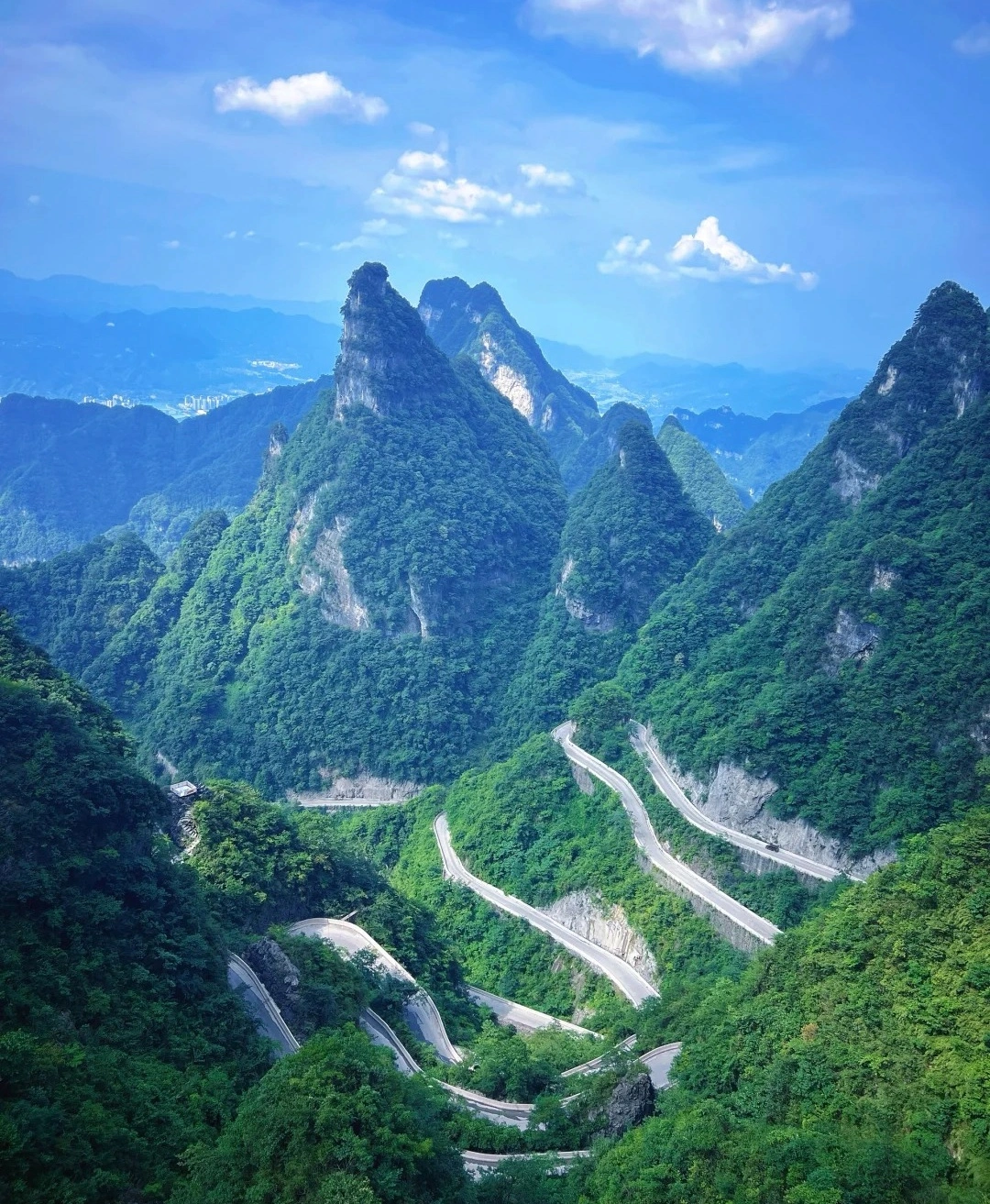
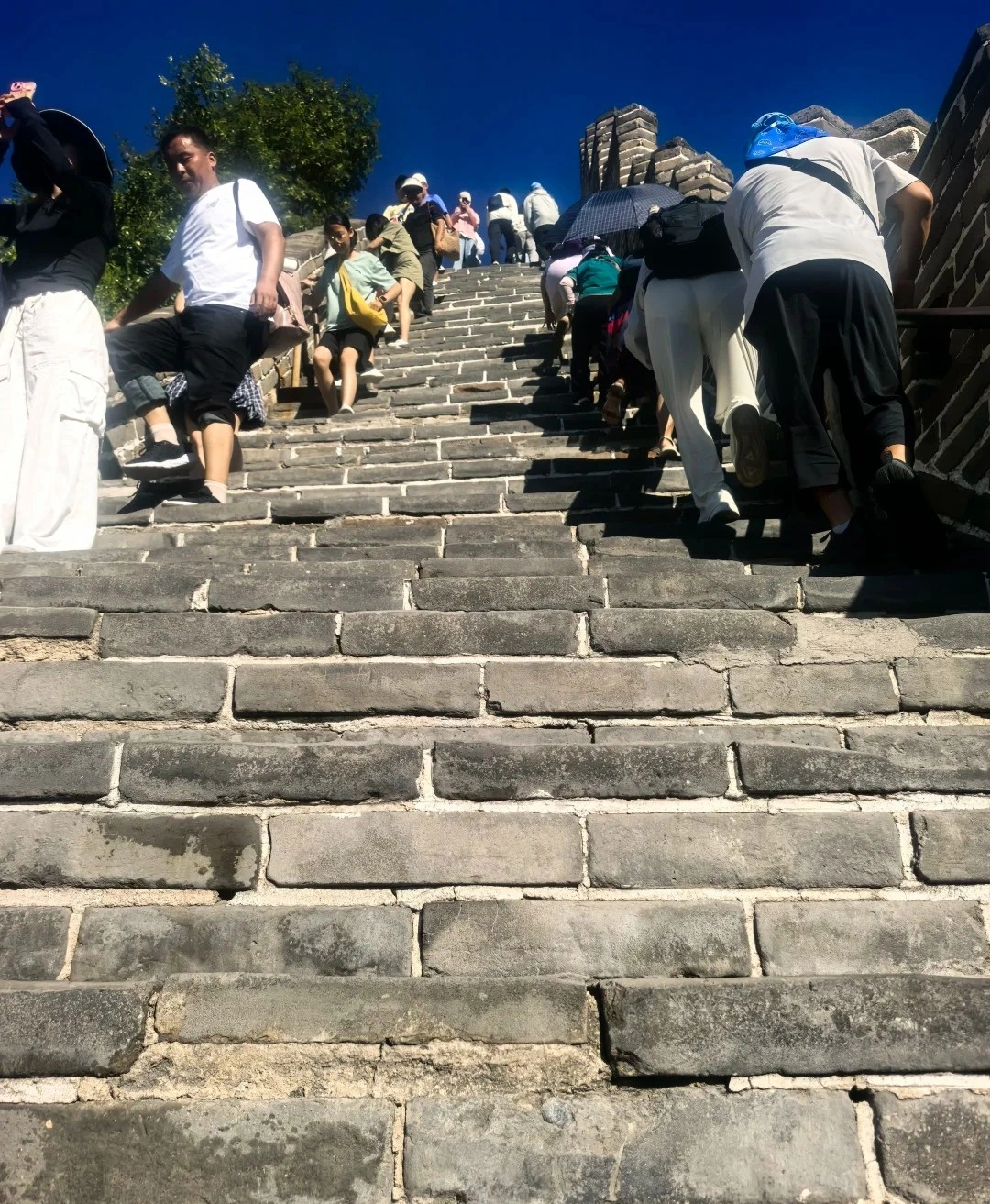
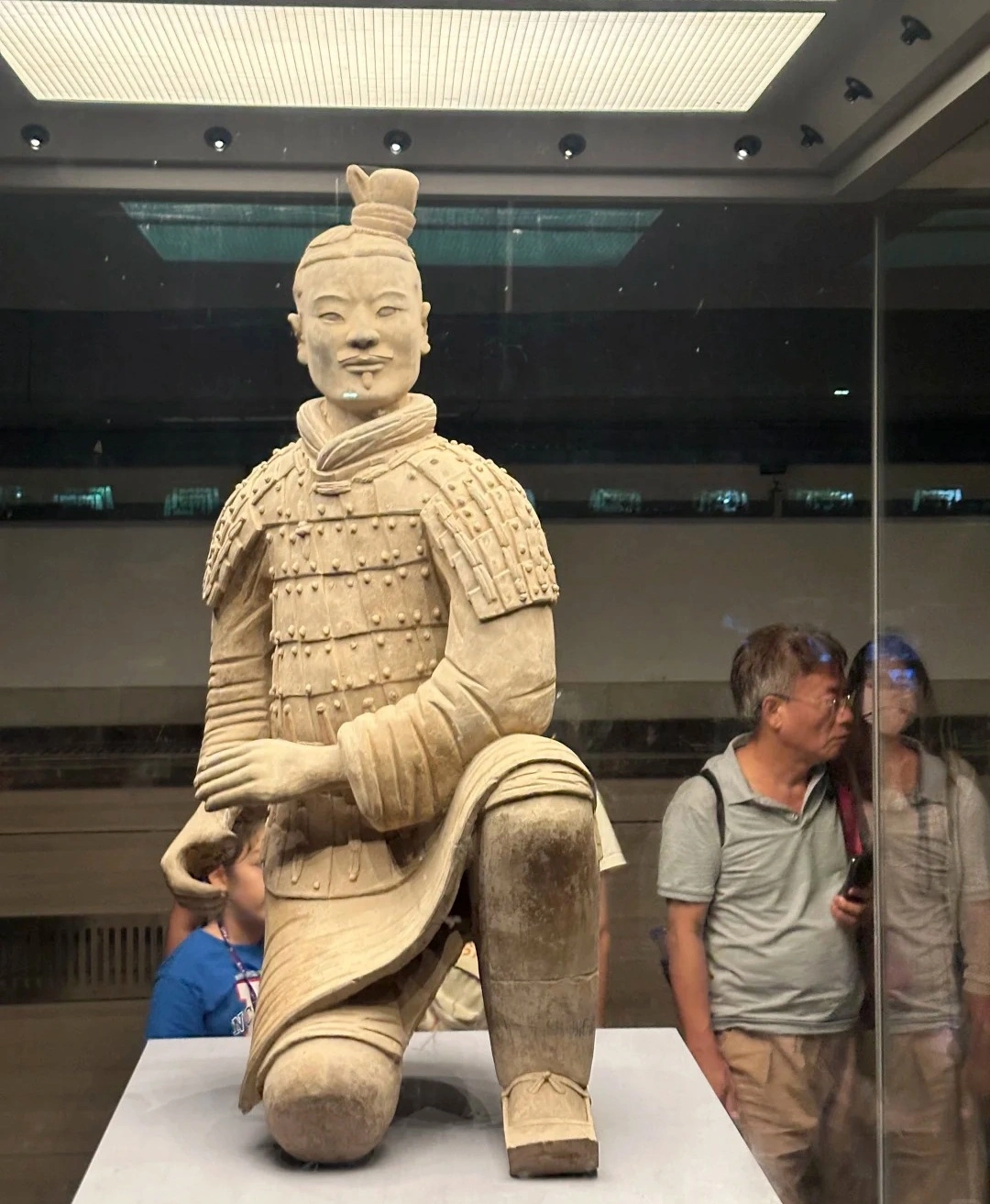
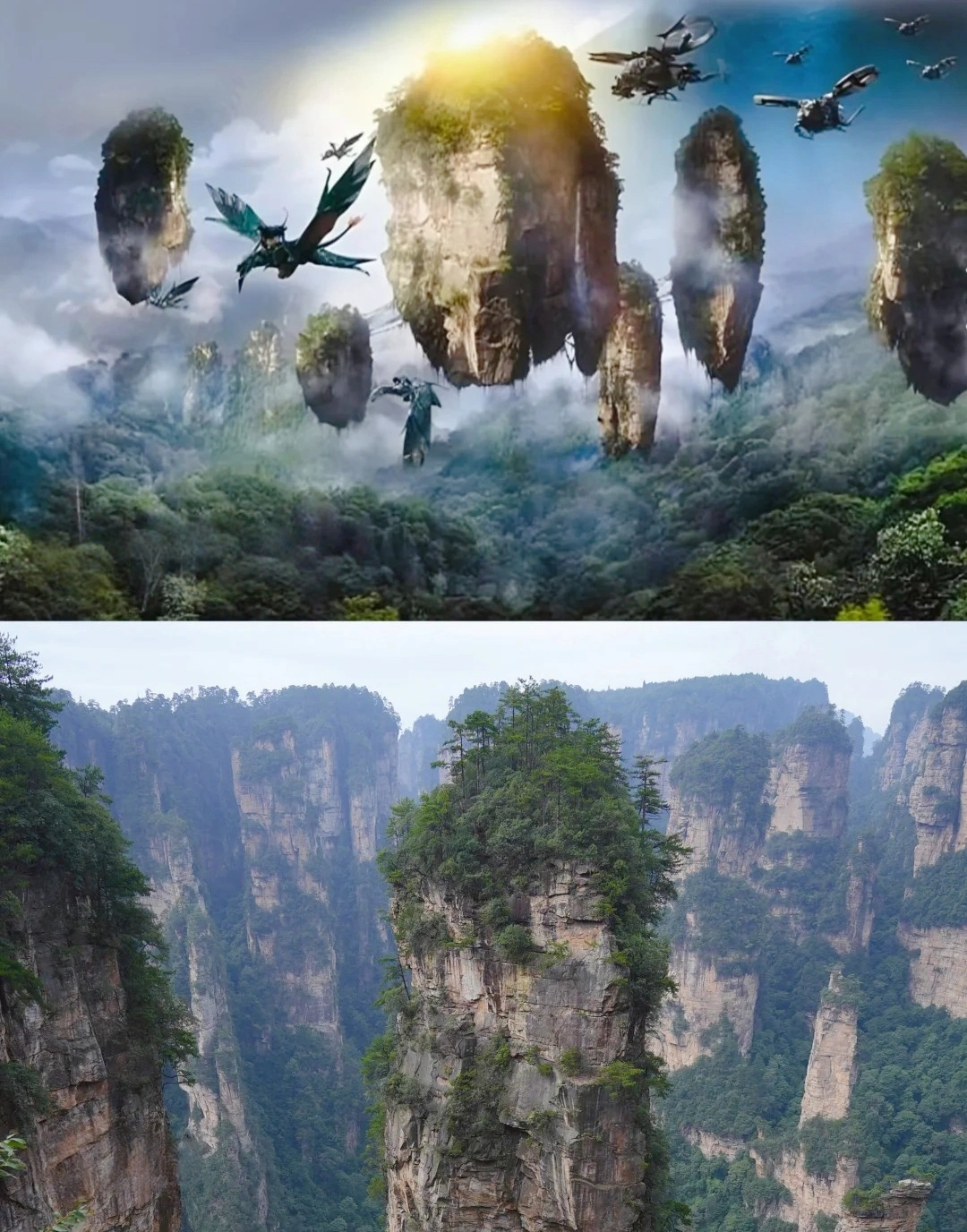
As a solo traveler from Canada, I was nervous about navigating China alone—but this 11-day tour was PERFECT! From hiking the Great Wall at sunrise (Day 3) to gasping at the Terracotta Army (Day 5), every day delivered ‘pinch-me’ moments. The real showstopper? Zhangjiajie’s Avatar Mountains (Day 7)! Our guide made the stone pillars come alive with stories. Massive thanks for handling all logistics—bullet train tickets, entry passes, car! And the 4-star hotels surprised me.
Destination(s): Beijing Xian Zhangjiajie Shanghai
Date of Experience: June 02,2025
... ... ...
...
Simon
America
Reviewed on May 29,2025
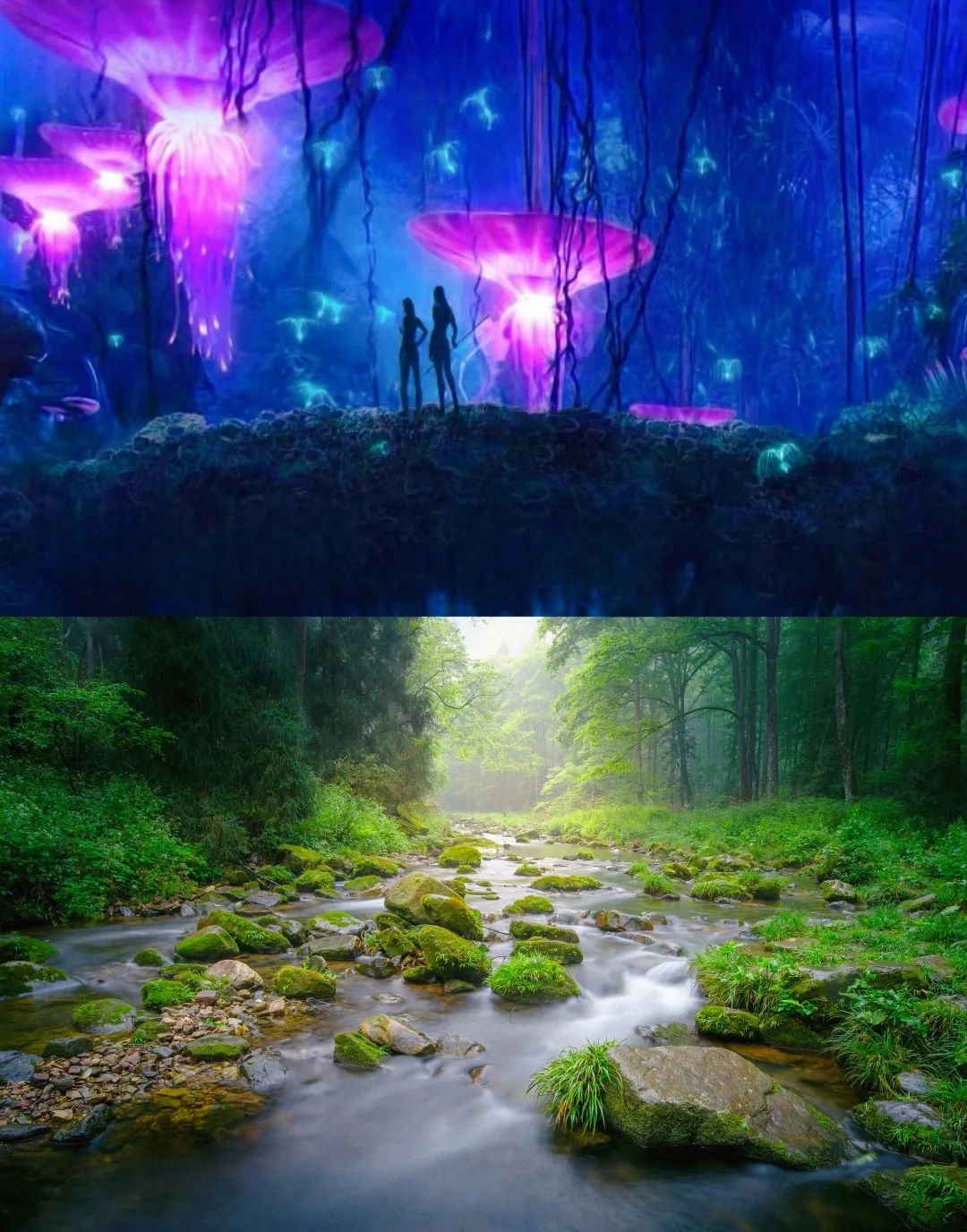
Our 2-day Zhangjiajie tour was beyond spectacular! As someone who’s visited Beijing and Shanghai for work, this trip revealed China’s wild, magical heart. Day 1 in Zhangjiajie National Forest Park felt like stepping onto Pandora—I’m a huge Avatar fan, and Yuanjiajie’s floating peaks left me breathless. The misty pillars and lush valleys like pure movie magic! Then came Fenghuang Ancient Town, we eat dinner beside the thundering waterfall. It seems Unreal! The night views of stilt houses glowing over the river were straight from a fairy tale. For fellow Avatar lovers and adventure seekers: Don’t miss this bucket-list experience! 10/10 would return. A Well-Traveled Film Buff, May 2025
Destination(s): Zhangjiajie
Date of Experience: May 08,2025
... ...

Ask a Question

Question Summary (100 characters)
Details (optional) (2,000 characters)
Name
Country
Email