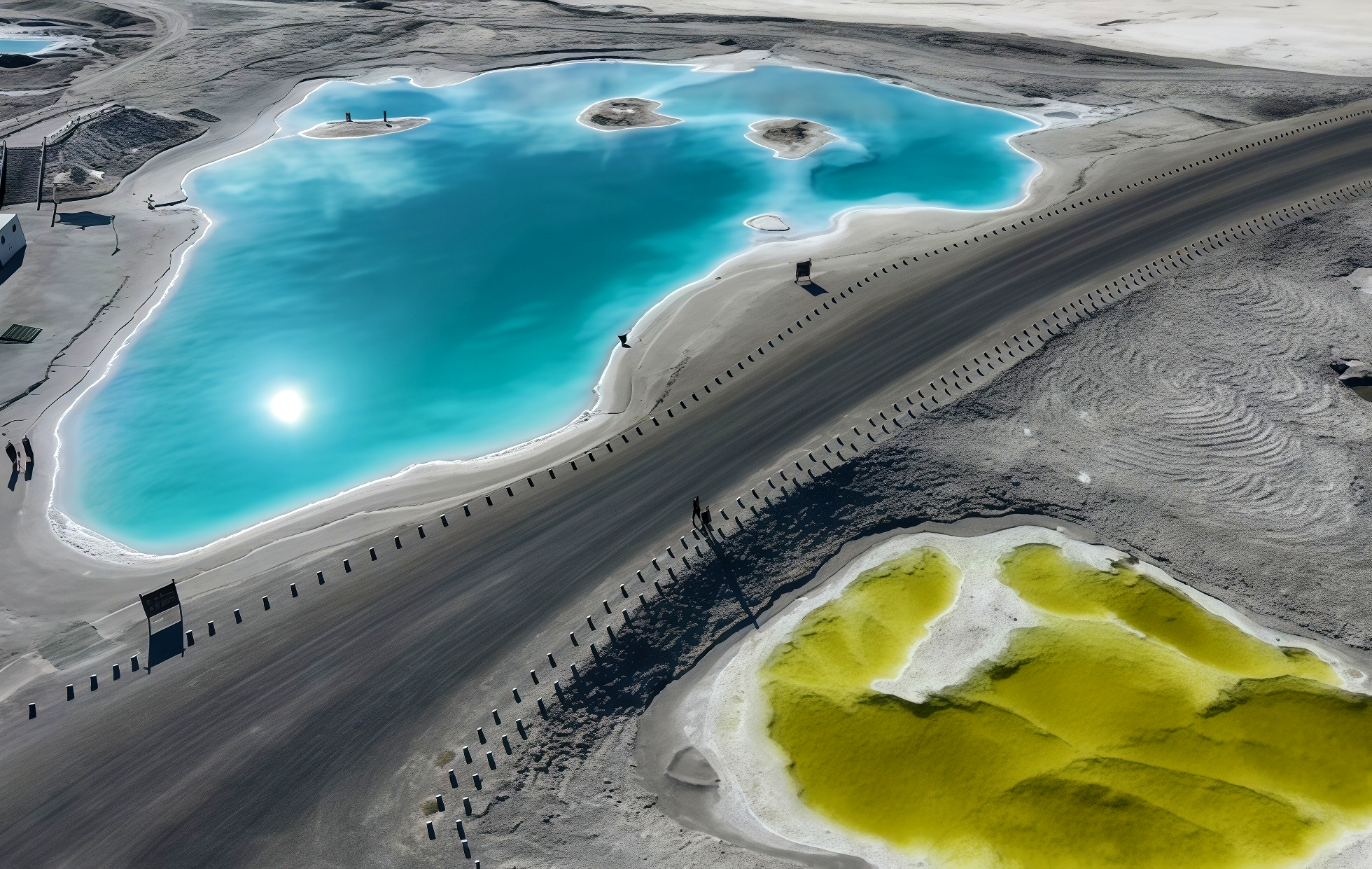
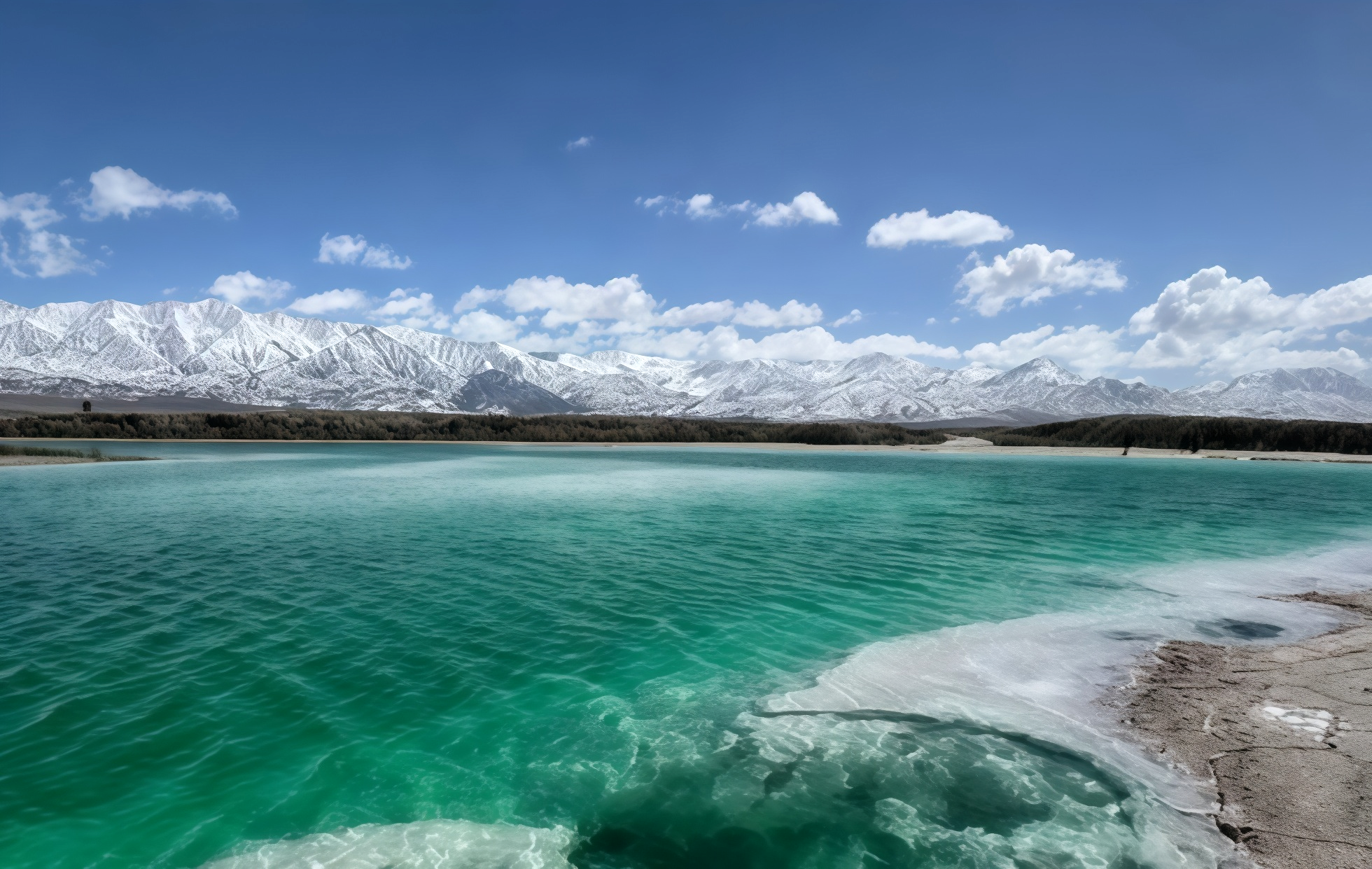
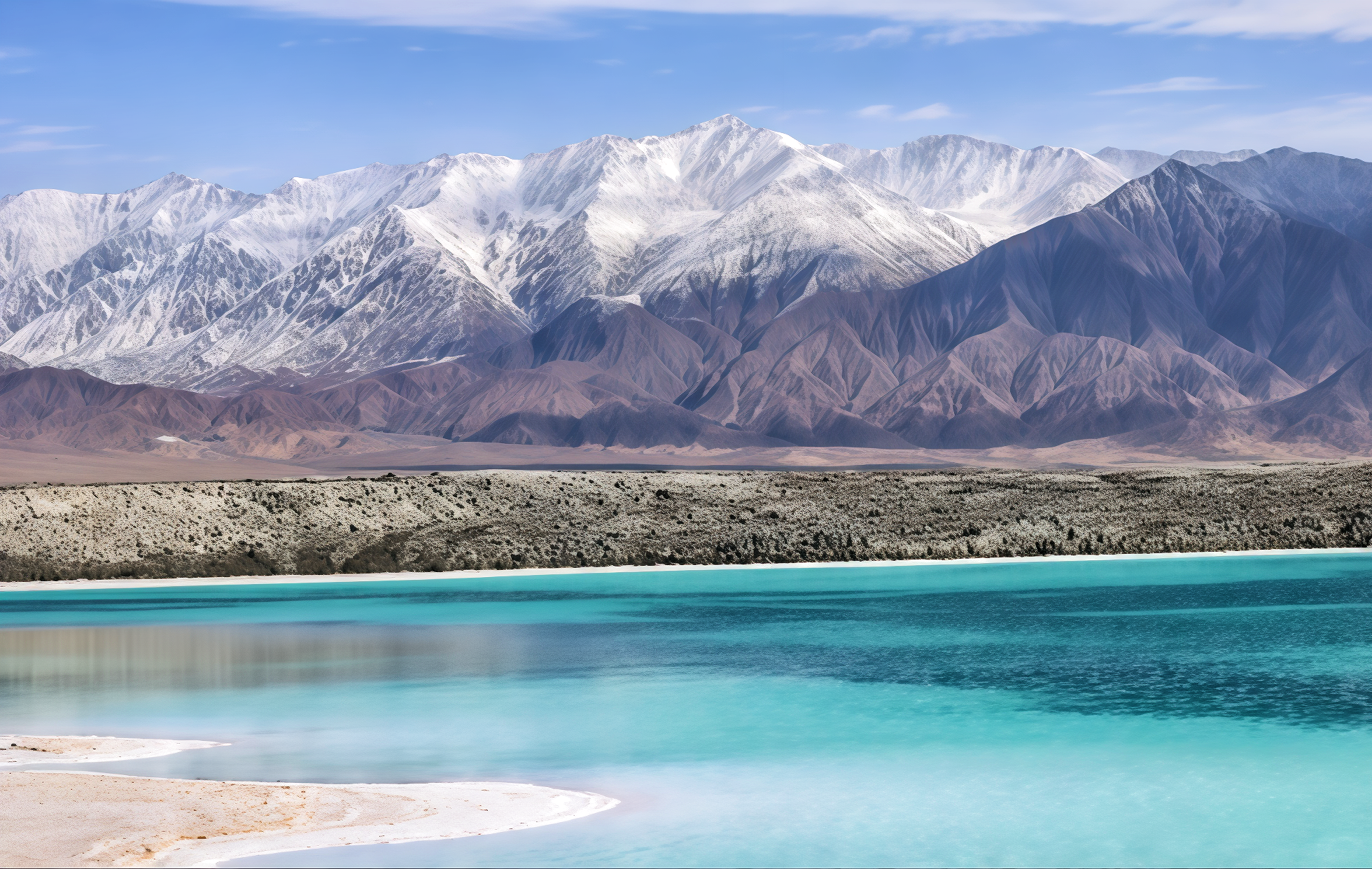
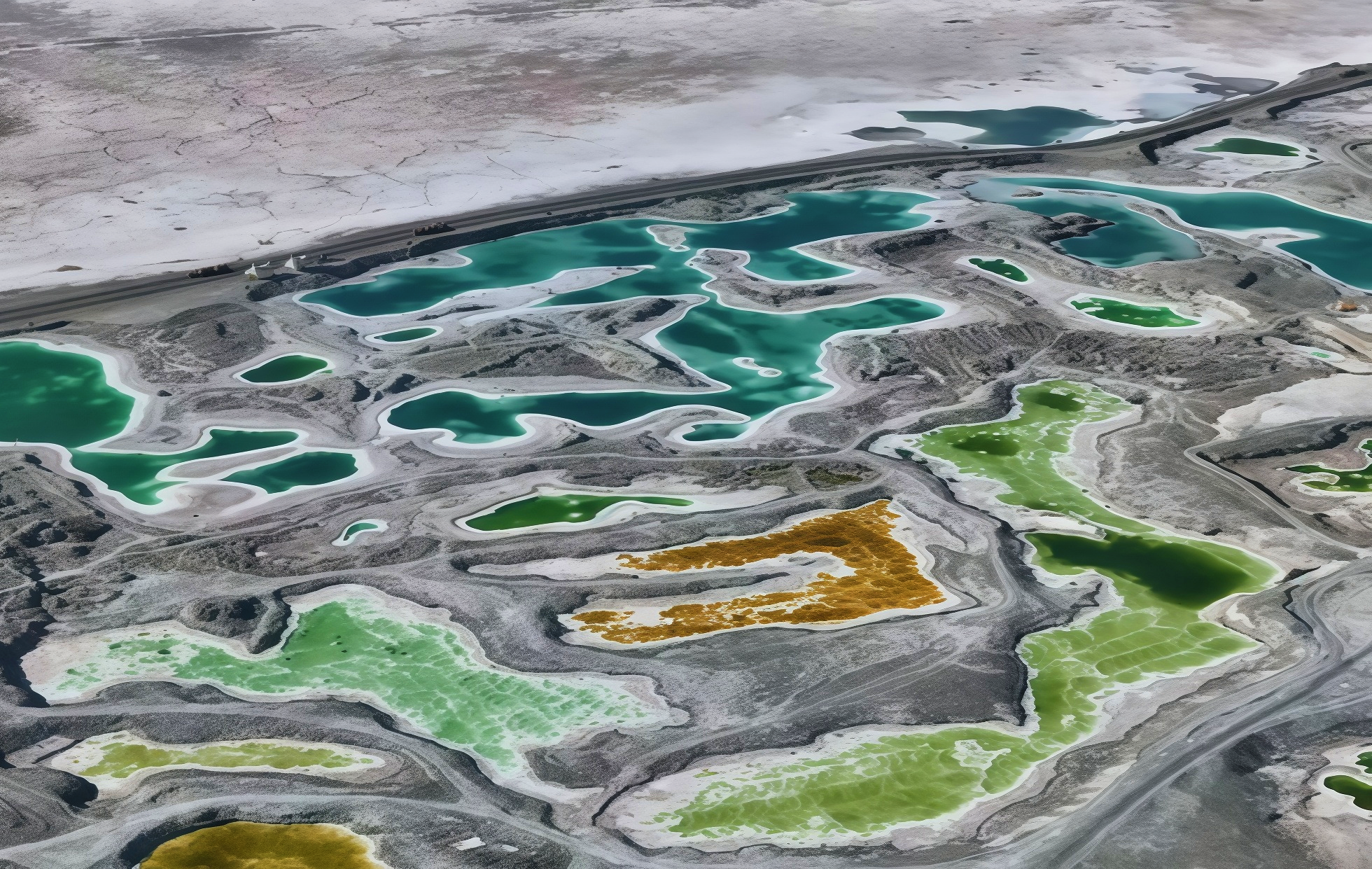
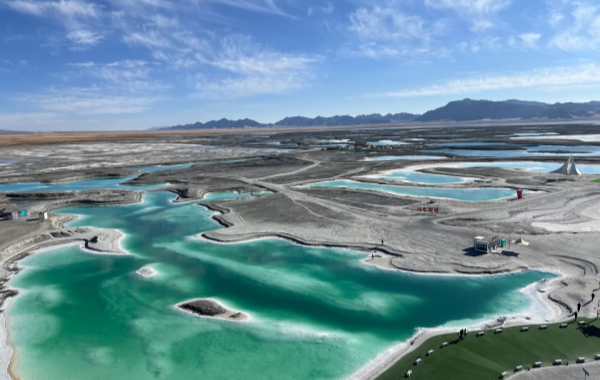
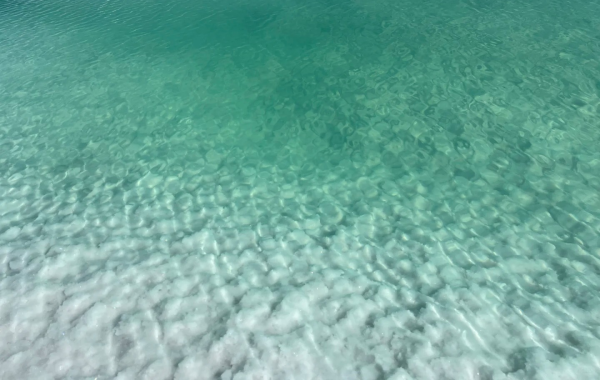
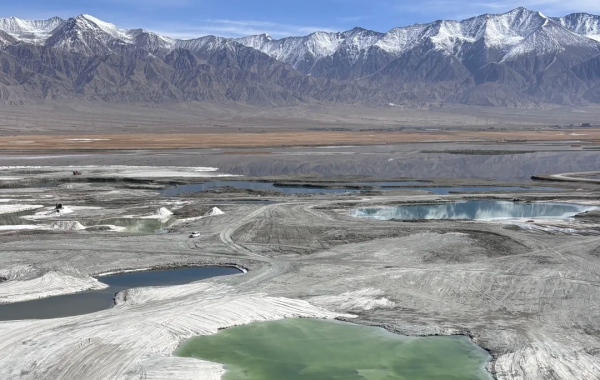
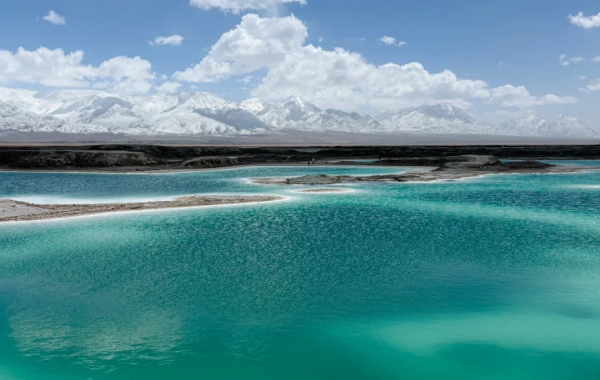
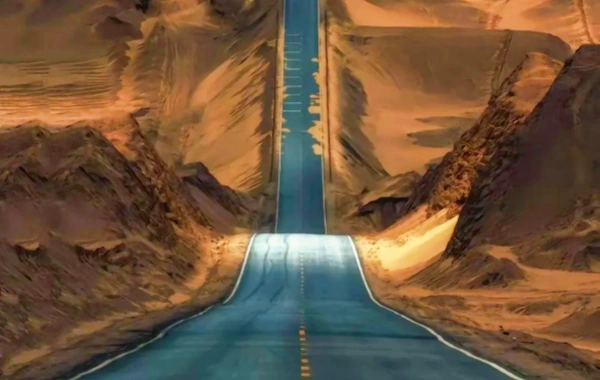
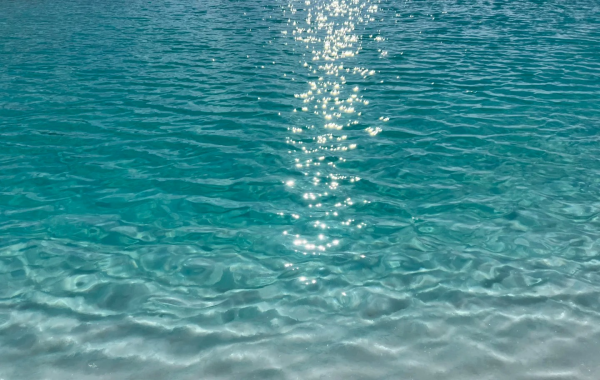
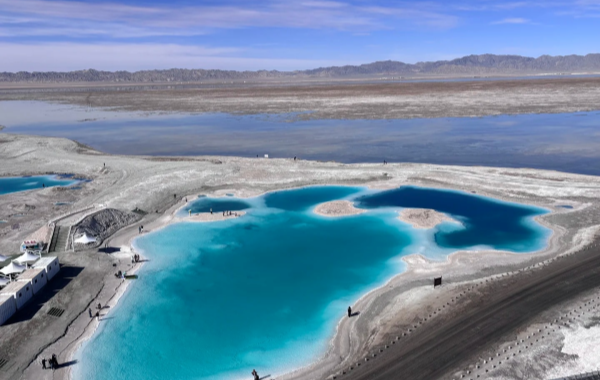
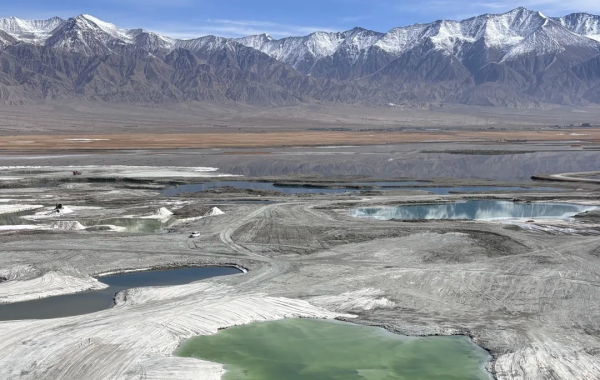
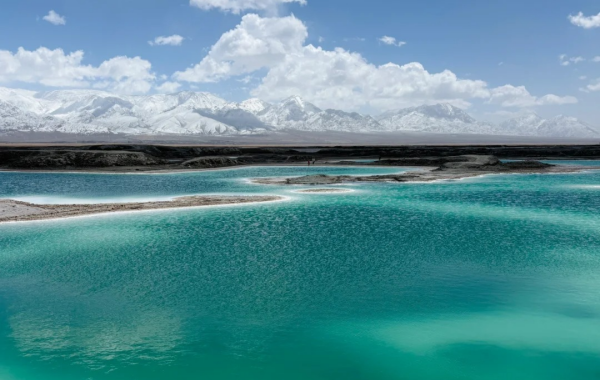
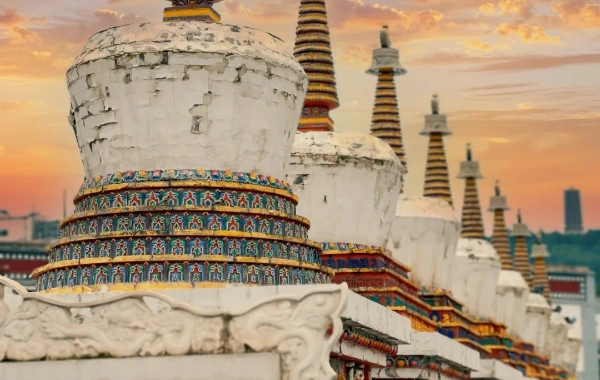
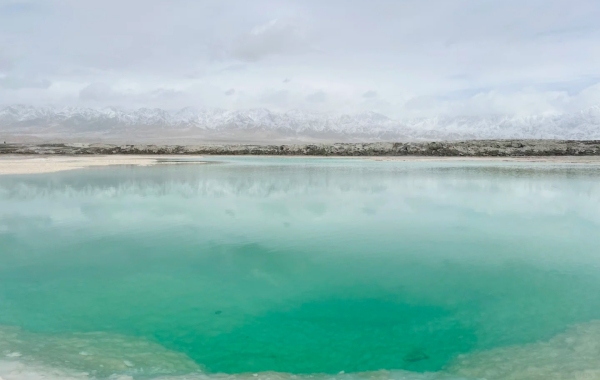
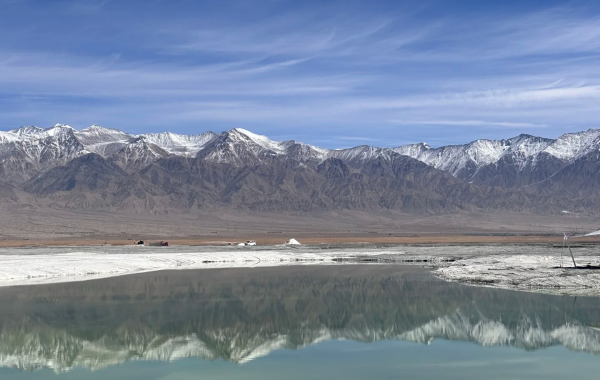
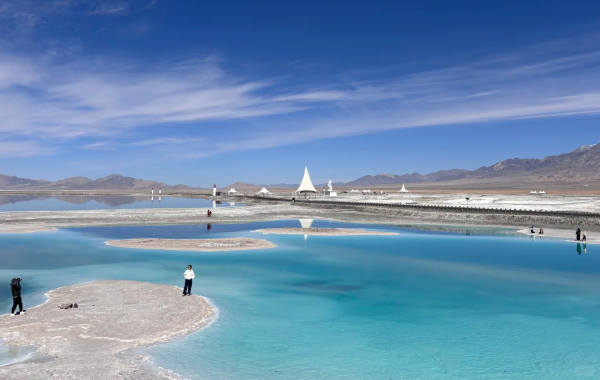
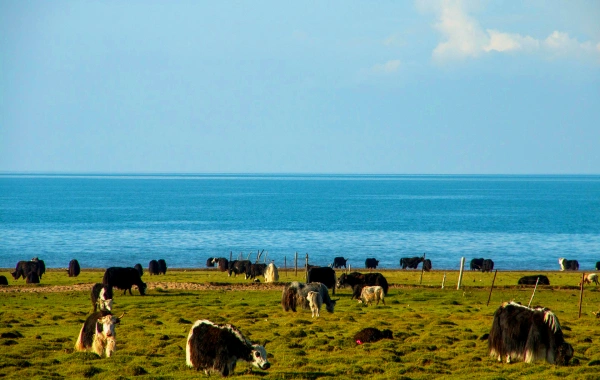
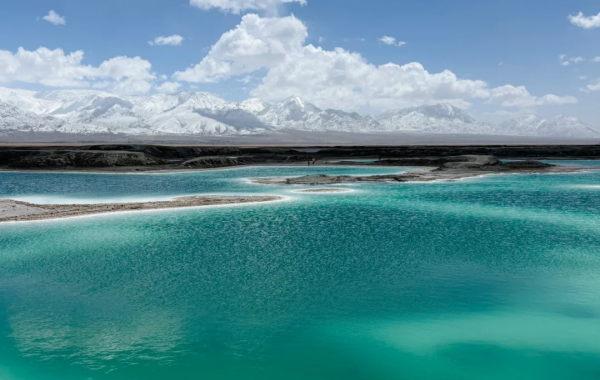
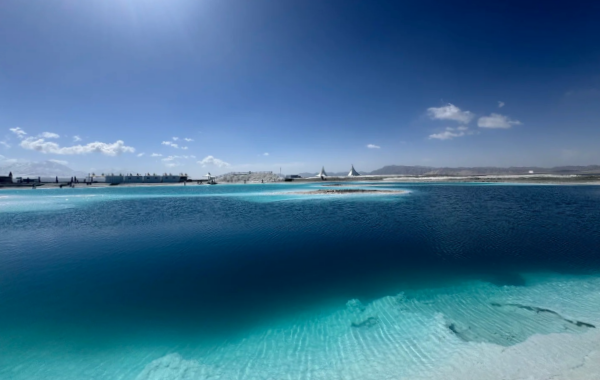
The true allure of Emerald Lake lies not in any single isolated attraction, but in the overwhelming visual impact of the entire salt lake cluster. It is as if God Himself tipped over a painter’s palette, spilling the world’s most dreamlike colors across its most desolate terrain.
Nature’s Masterpiece: A Symphony of Color—Where Minerals and Sunlight Dance
The Emerald Salt Pools (A Colorful Tour of Six Key Viewing Spots)
Emerald Lake is not a single body of water, but rather a complex of dozens of salt pools, each varying distinctly in shape and depth. The scenic area connects six distinct stations via a sightseeing mini-train, with each station boasting its own unique palette and character:
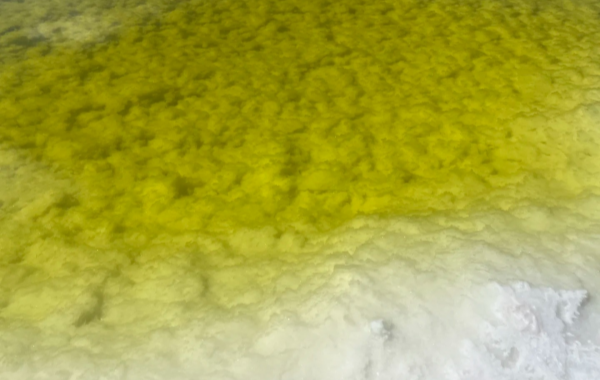
- Station 2 — The Most Colorful Starting Point: The very heart of the scenic area, encircled by undulating Yardang landforms. The lake here is expansive, with waters displaying a deep, emerald-green hue. Intersecting veins of salt lie beneath the surface—featuring snow-white, crystalline salt formations—where shades of blue, green, and yellow intertwine to create a spectacular backdrop; it is the perfect starting point for both aerial and portrait photography.
- Station 3 — The "Emerald Necklace": A cluster of over a dozen gourd-shaped salt pools linked closely together. Due to varying concentrations of magnesium ions, the water exhibits a gradient of colors ranging from mint green to peacock blue—a scene of refined elegance and tranquility.
- Station 4 — "Tiffany Blue" and the Heart-Shaped Lake: The water here is crystal-clear and translucent, with salt bridges winding across the surface like ribbons. The lake glows with a dreamy "Tiffany Blue" hue, earning it a reputation as the most photogenic spot in the entire park. This location also served as a filming site for the movie A Little Red Flower. Launch a drone to an altitude of 100 meters, and a perfectly formed heart-shaped lake instantly comes into view—a truly romantic spectacle.
- Station 5 — The Salt Lake Piano Photo Spot: A solitary white piano sits suspended in the center of the lake. Set against the backdrop of the vast salt flats and distant mountains, it evokes a sense of both solitude and elegance—an absolute must-capture scene for artistic and literary enthusiasts.
- Station 6 — White Salt Flats and Gradient Waters: Expansive stretches of white salt flats blanket the earth like a layer of frost or snow, creating a stunning contrast against the distant mountain ranges, blue skies, and drifting white clouds. As a gentle breeze sweeps across the surface, the lake transforms into a canvas of shifting gradients—displaying shades of grayish-white, pale green, deep blue, and dark emerald—resembling a sprawling watercolor masterpiece.
A Lake That Never Freezes
Due to the extremely high salinity of its waters—which significantly lowers the freezing point—Emerald Lake rarely freezes over, even during the depths of the cold winter season. In winter, the skies above Emerald Lake appear even bluer; the lake waters are as soft and crystal-clear as silk, while the salt flats become even more pristine and translucent, revealing a serene beauty entirely distinct from that of summer.
Masters of Light and Shadow: Colors That Shift with the Hour
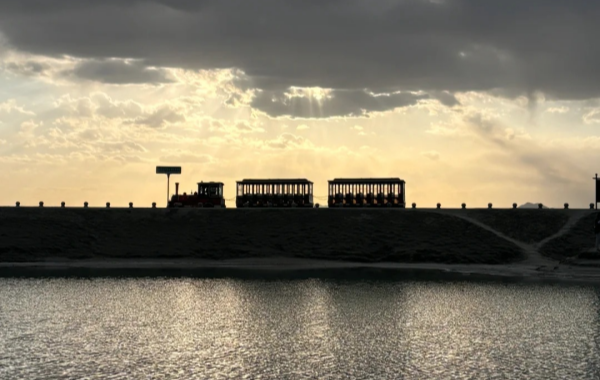
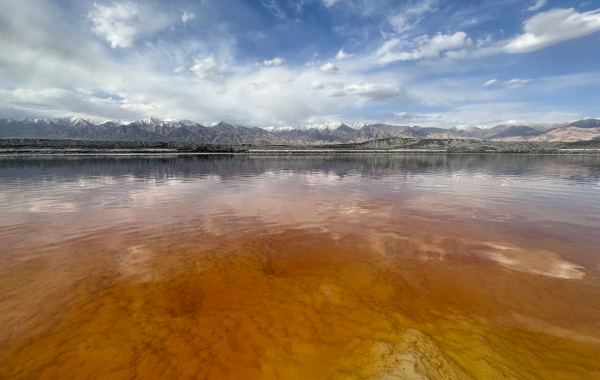
The colors of Emerald Lake are never static; they undergo a myriad of transformations depending on the weather, the time of day, and the viewer's perspective. Under a boundless clear sky, the reflection of blue skies and white clouds on the water creates the most vivid and translucent hues. When clouds drift overhead, the lake's waters instantly deepen in tone. As the sun sets, golden light spills across the surface, bathing the entire complex of salt lakes in a warm, orange-red glow. For this very reason, every visit to Emerald Lake presents you with a unique and one-of-a-kind masterpiece.
Cultural Touches—A Dialogue Between Industrial Heritage and Art Installations
The Scenic Mini-Train
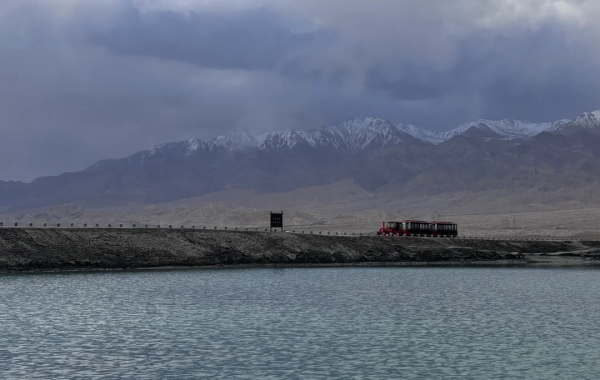
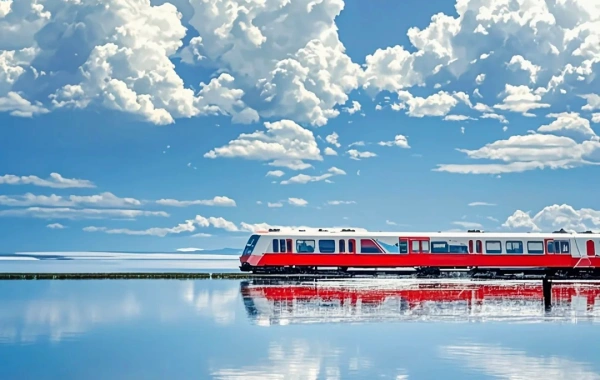
A vintage-style scenic mini-train operates within the Emerald Lake scenic area, featuring six stops that connect all the key attractions. Sitting aboard the slowly moving train, visitors watch as colorful salt pools glide past on either side, while the distant Yardang landforms and Gobi Desert stretch out before their eyes—an immersive sightseeing experience in its own right.
Transparent Glass Boats
Transparent glass boats have been placed in select salt pools, allowing visitors to venture out onto the water. Gliding across the emerald-hued surface, they create dreamlike reflections that appear to float in mid-air—an effect that, when captured via drone photography, evokes the sensation of being transported to the Maldives.
A Cinematic Check-in Spot
Located at Stop No. 4, the "Emerald Sea" consists of seven interconnected mining pits. Parked on the lakeshore stands a white piano—an iconic filming location for the movie A Little Red Flower. Today, it has become an indispensable frame in the camera roll of every visitor.
The White Piano
Perched in solitary splendor upon a salt flat in the heart of the lake, the white piano stands as Emerald Lake’s most poetic cultural landmark. Amidst the boundless Gobi Desert and the emerald waters, the piano stands in quiet stillness—as if waiting for a traveler to arrive and play a melody across the wilderness.
> Photography Tips:
> - Best Aerial Spots: Launch your drone from Station 4, ascending to an altitude of 100–120 meters, to perfectly capture the heart-shaped lake.
> - "Mirror of the Sky" Shots: Crouch down low—getting as close to the water's surface as possible—to shoot. The salt flats act as a natural reflector; with the lake mirroring the blue sky, white clouds, and distant snow-capped mountains, every casual snapshot becomes a stunning "Mirror of the Sky" masterpiece.
> - Best Lighting Times: From 9:00 AM to 11:00 AM, the light is soft and the lake's reflections are crystal clear. From 4:00 PM to 7:00 PM, the slanting rays of the setting sun bathe the lake in a golden glow, offering the highest color saturation.
> - Drone Regulations: The scenic area imposes a flight altitude limit of 120 meters; please observe all signage before taking off.