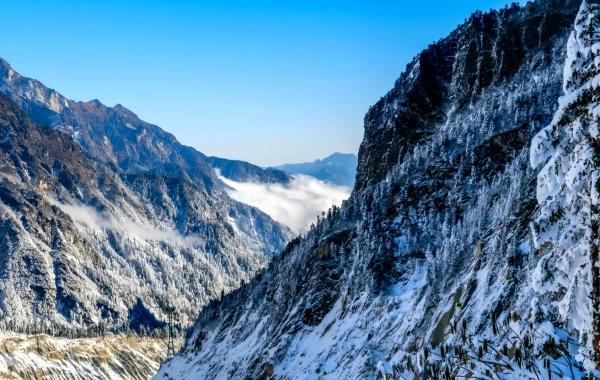
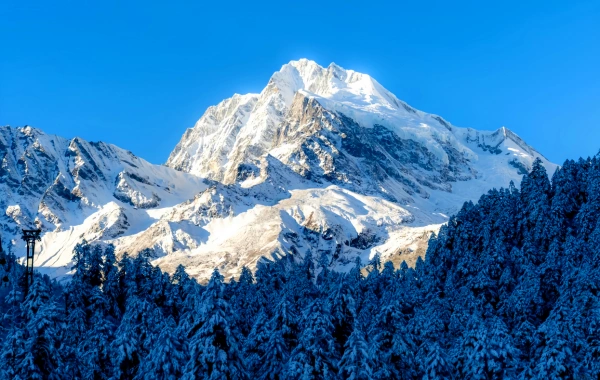
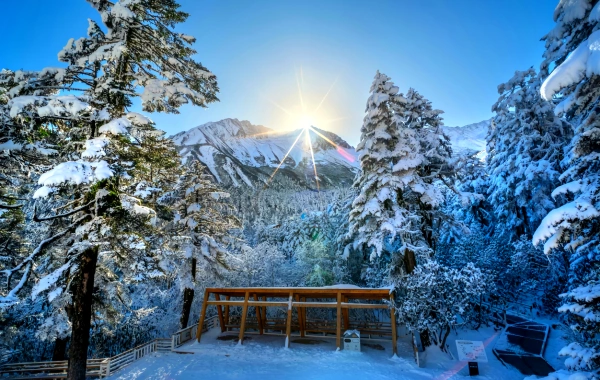
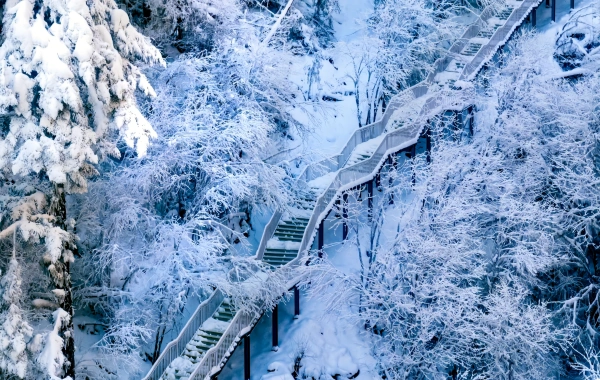
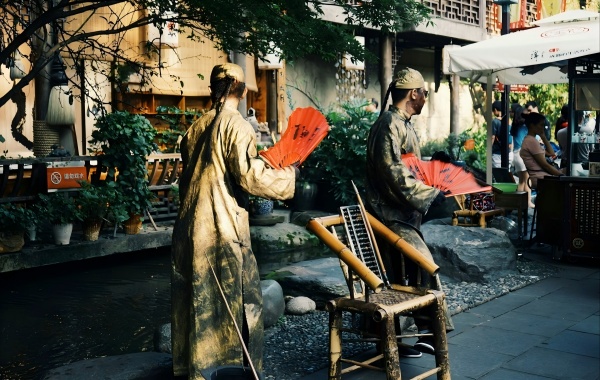
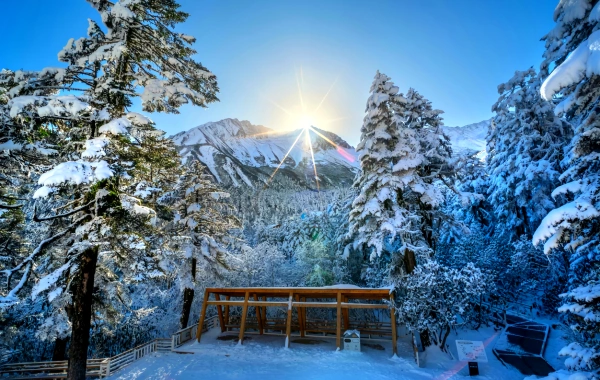
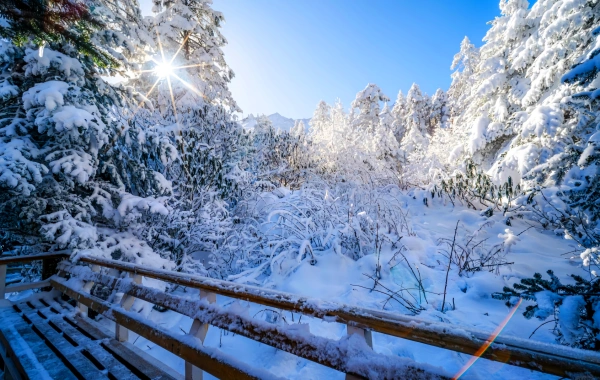
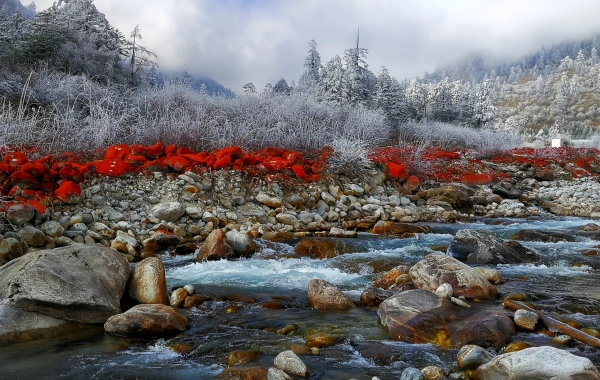
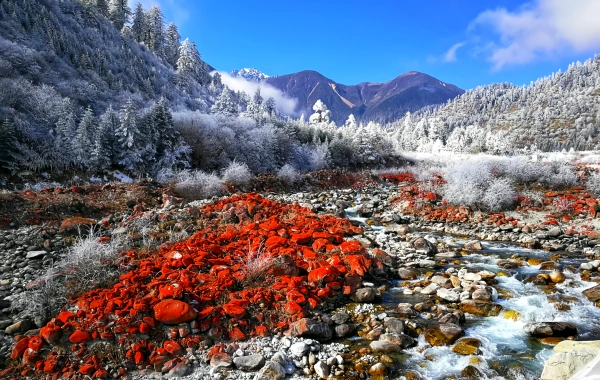
The charm of Hailuogou lies in its harmonious integration of extreme cold (glaciers) and extreme warmth (hot springs) in the same painting, while embellishing forests, snow capped mountains, and Tibetan culture, forming a grand symphonic poem.
Natural Creation - The Dance of Glaciers, Hot Springs, and Forests
Majestic Glacier: Flowing Solid Rivers
Hailuogou No.1 Glacier is its most magnificent chapter, with a total length of 14.7 kilometers and a tail end extending into the forest, which is rare in the world.
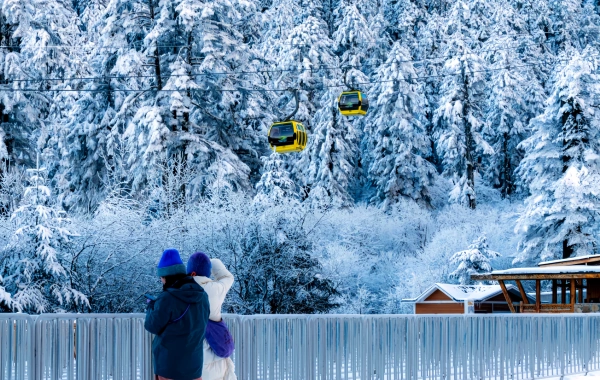
Da Bing Waterfall: This is the soul of a glacier, with a width of 1100 meters and a drop of 1080 meters, equivalent to a solid ice wall more than ten times larger than Huangguoshu Waterfall. It is like a giant wave frozen by time, collapsing and roaring all day long, shaking the valley with its sound, magnificent. Taking a cableway to overlook from the sky is the best way to feel its majestic momentum.
Glacier tongue: This is the part that ordinary tourists can come into contact with on foot. Walking on a gray white ice body covered with ice cracks, caves, glaciers, and mushrooms, with blue ice formed by centuries or even tens of thousands of years of compression beneath one's feet, as if strolling on another planet. The glaciers here are constantly melting and flowing, and the scenery is changing rapidly.
City Gate Cave: A natural ice arch formed at the end of a glacier tongue due to erosion by rivers beneath the ice. Under the crystal clear blue ice body, glaciers can be seen rushing out, which is a vivid portrayal of glacier vitality and an excellent photography spot.
Snowy hot springs: the passion surging from the earth
Contrasting with the coldness of the Wannian Glacier, there are hundreds of hot springs gushing out from underground, with water temperatures reaching over 90 ℃, making it the ultimate experience of "ice and fire duality".
Camp 2 Hot Springs (Real Glacier Hot Springs): Located in a glacier forest, multiple natural hot springs converge into a pool. In the winter when snow is flying everywhere, soaking in the steaming hot springs, looking up, you will see crystal clear glaciers and verdant fir trees. This scene is unique in the world.
Gongga Shentang Hot Spring (a well-equipped hot spring hotel): The outlet temperature reaches up to 88 ℃ and is rich in various minerals. After a day of hiking on the glacier, washing away one's fatigue here is the ultimate pleasure.
Rizhao Jinshan: The stunning appearance of Gongga Mountain
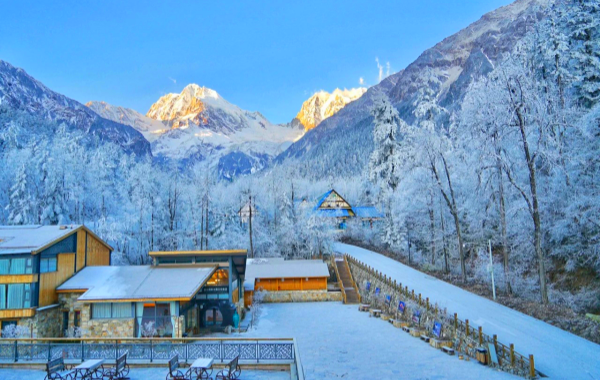
In the early morning, the rising sun cast its first ray of golden light onto the main peak of Gongga at an altitude of 7556 meters. The continuous peaks gradually turned from cold gray white to golden and orange red, finally illuminating the sky like a burning pyramid. This process is sacred and brief, and is the most unmissable "opening ceremony" in Hailuogou. The Jinshan Hotel at Camp 3 and the cableway terminal at Camp 4 are recognized as the best viewing points.
Primitive Forest: A Colorful Kingdom of Life
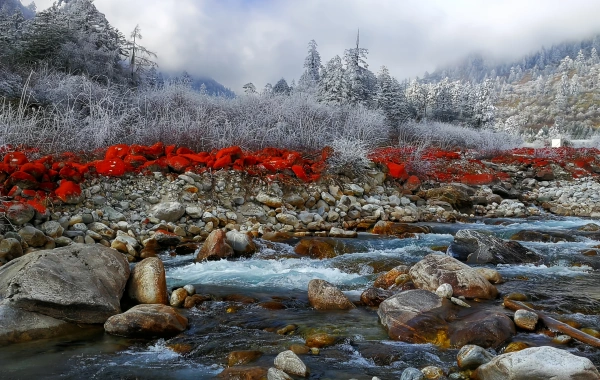
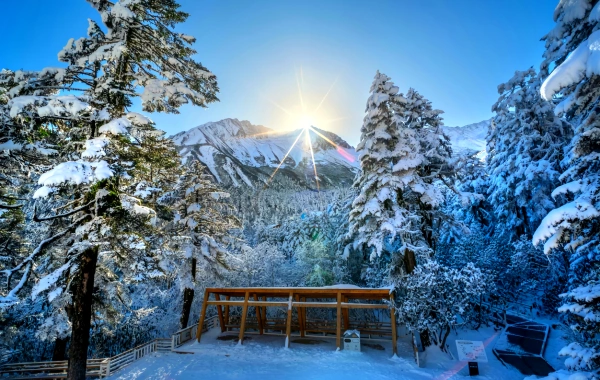
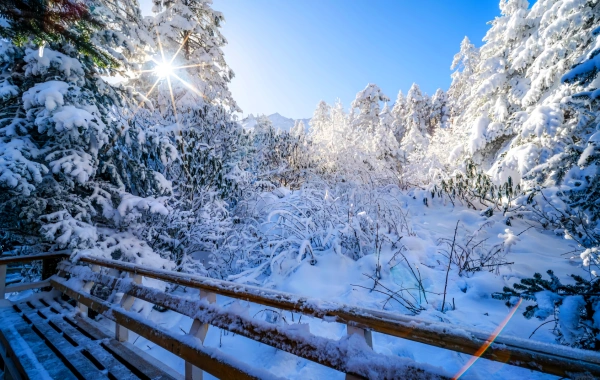
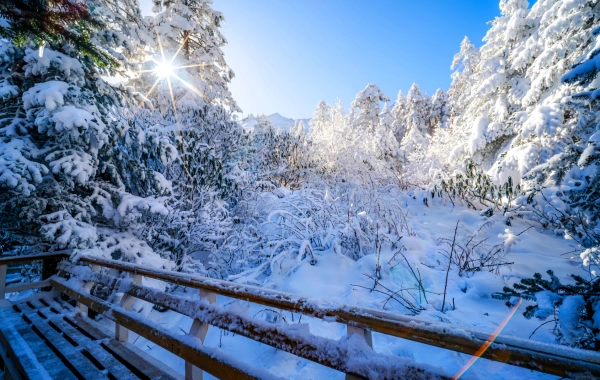
From an altitude of over 1000 meters to nearly 5000 meters, Hailuogou is vertically distributed with a complete plant belt. Walking through the primitive forest next to the glacier, towering ancient trees that require several people to embrace can be seen everywhere, with pine vines hanging on the trees. During spring and summer, alpine rhododendrons bloom in full bloom; In autumn, the layered forests are dyed and colorful.
Humanistic Craftsmanship - Red Memories on the Tea Horse Ancient Road
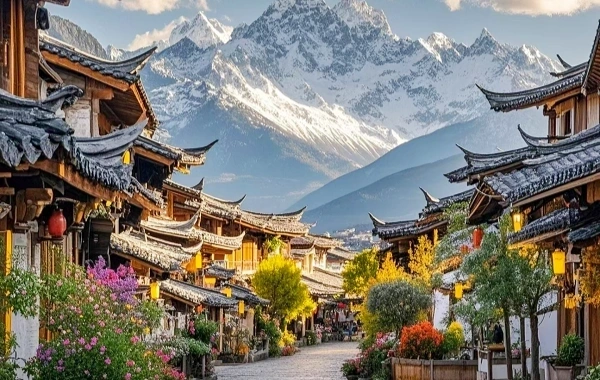
Moxi Ancient Town: A Time Slice of Ancient Town
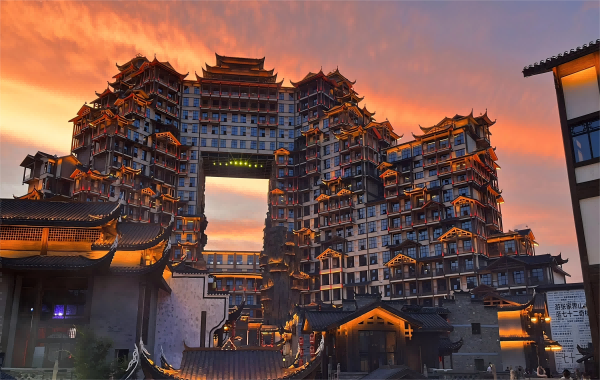
The entrance of Hailuogou - Moxi Town, was an important post station on the "Tea Horse Ancient Road" back then. Nowadays, the ancient town still retains the ancient architectural style of the Ming and Qing dynasties, with bluestone roads, French churches (Moxi Catholic Church), and Tibetan style residences coexisting, emitting a blend of diverse cultures. The ancient town is also an important historical node of the Red Army's Long March. The famous "Moxi Conference" was held here, and Comrade Mao Zedong stayed here, adding a heavy red memory to the ancient town.
Photography tips:
The best glacier panoramic camera position is on the aerial cableway or observation deck of Camp 4, which can include the Great Ice Waterfall and the Gongga Mountains.
To shoot at Rizhao Jinshan, it is necessary to check the sunrise time in advance and arrive at Camp 3 or 4 half an hour early, using a tripod and telephoto lens.
The Chengmen Cave is suitable for capturing the texture details of glaciers and the texture of blue ice.
The hot springs at Camp 2 are suitable for shooting fantastic scenes of "glaciers+hot springs+forests" in the same frame. It is recommended to go there during winter when there is snow.