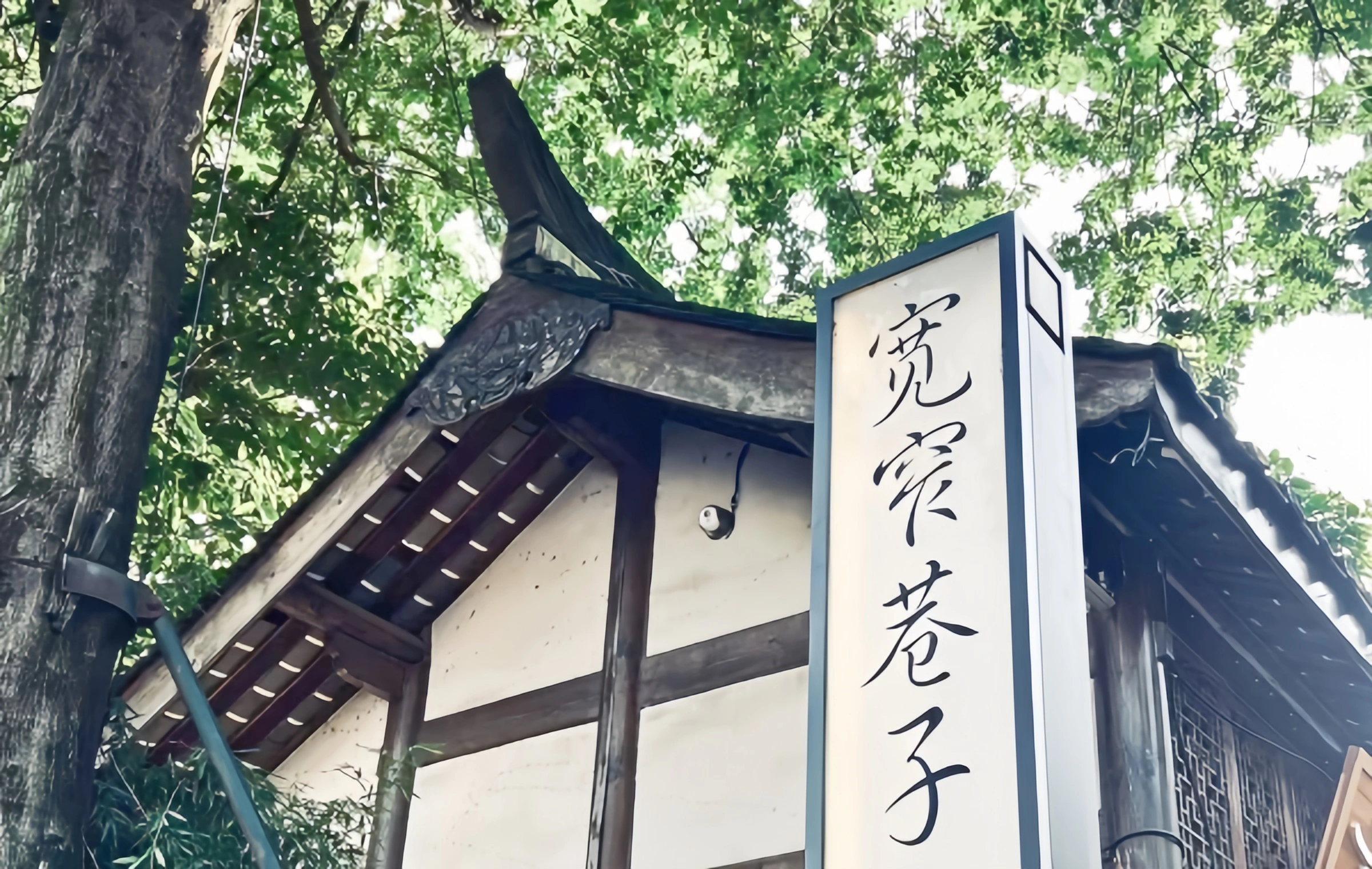
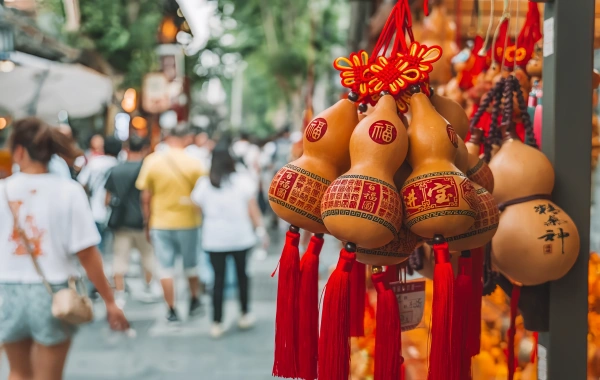
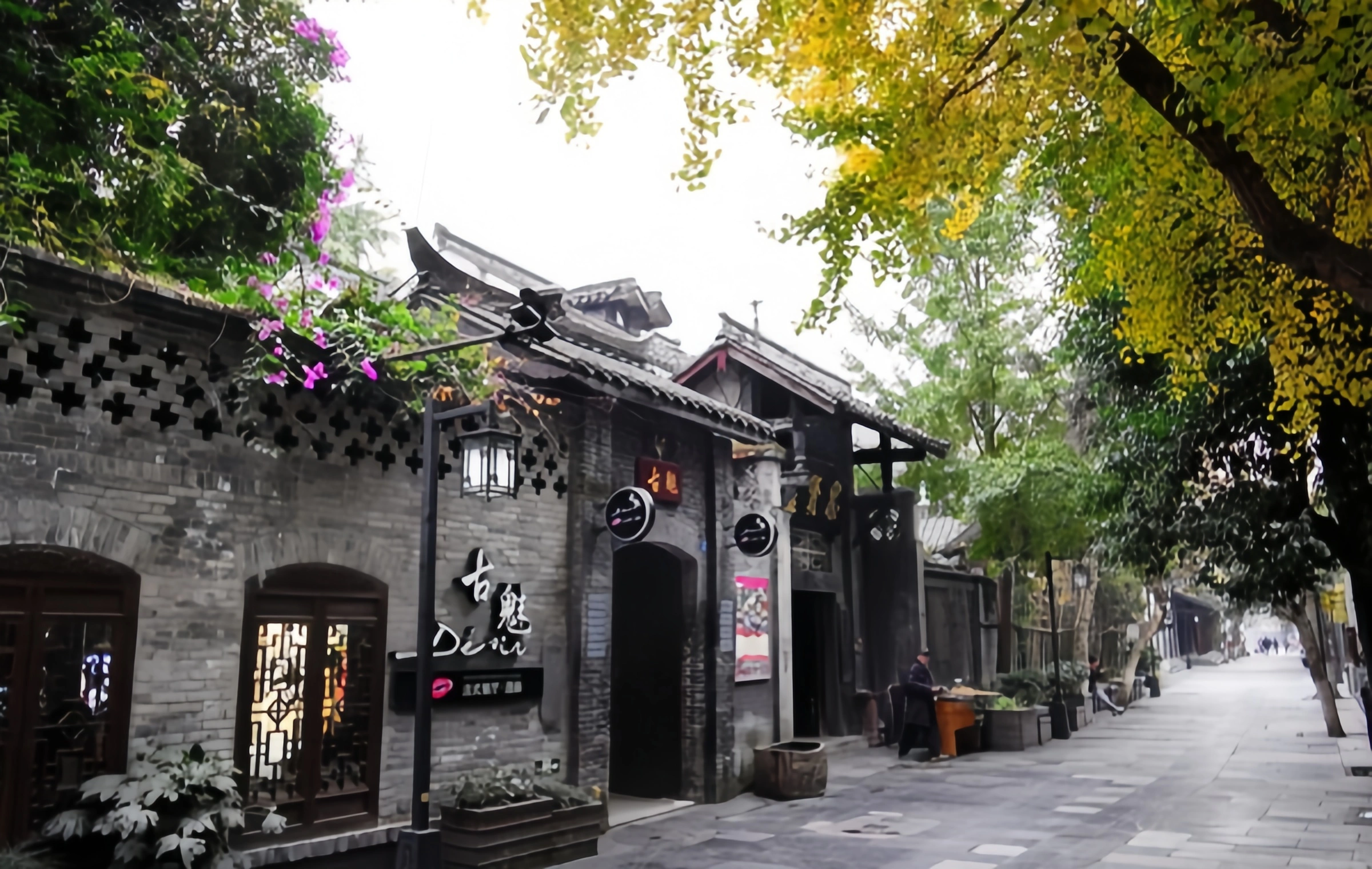
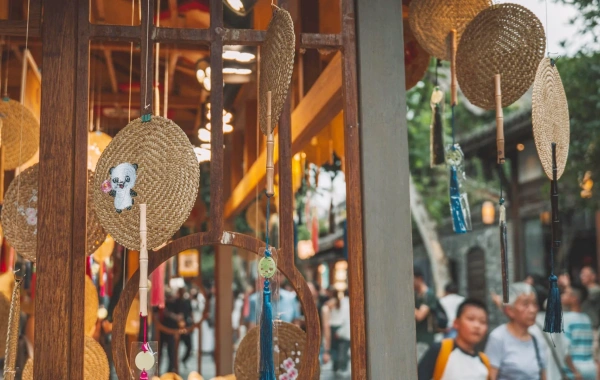
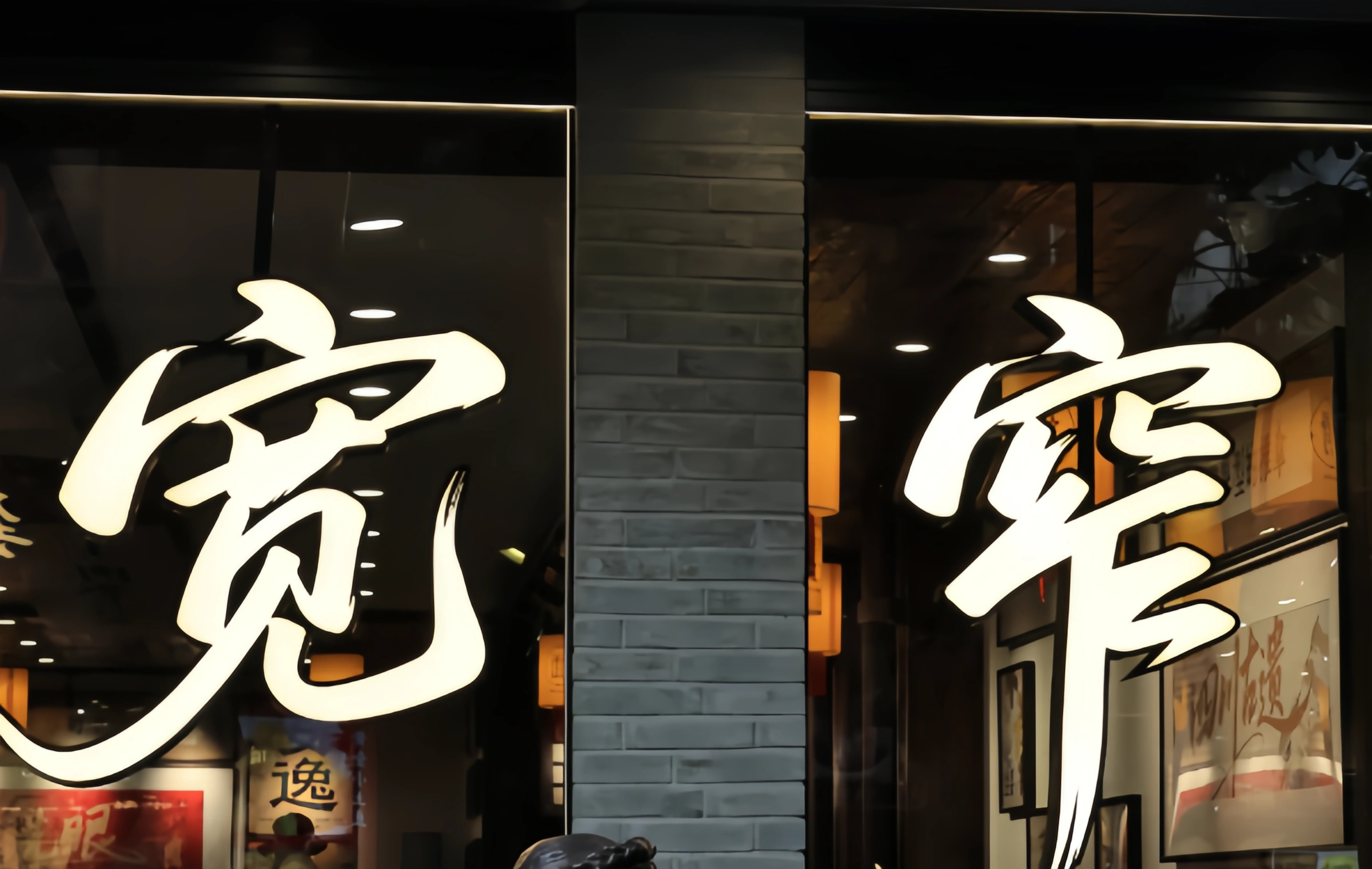
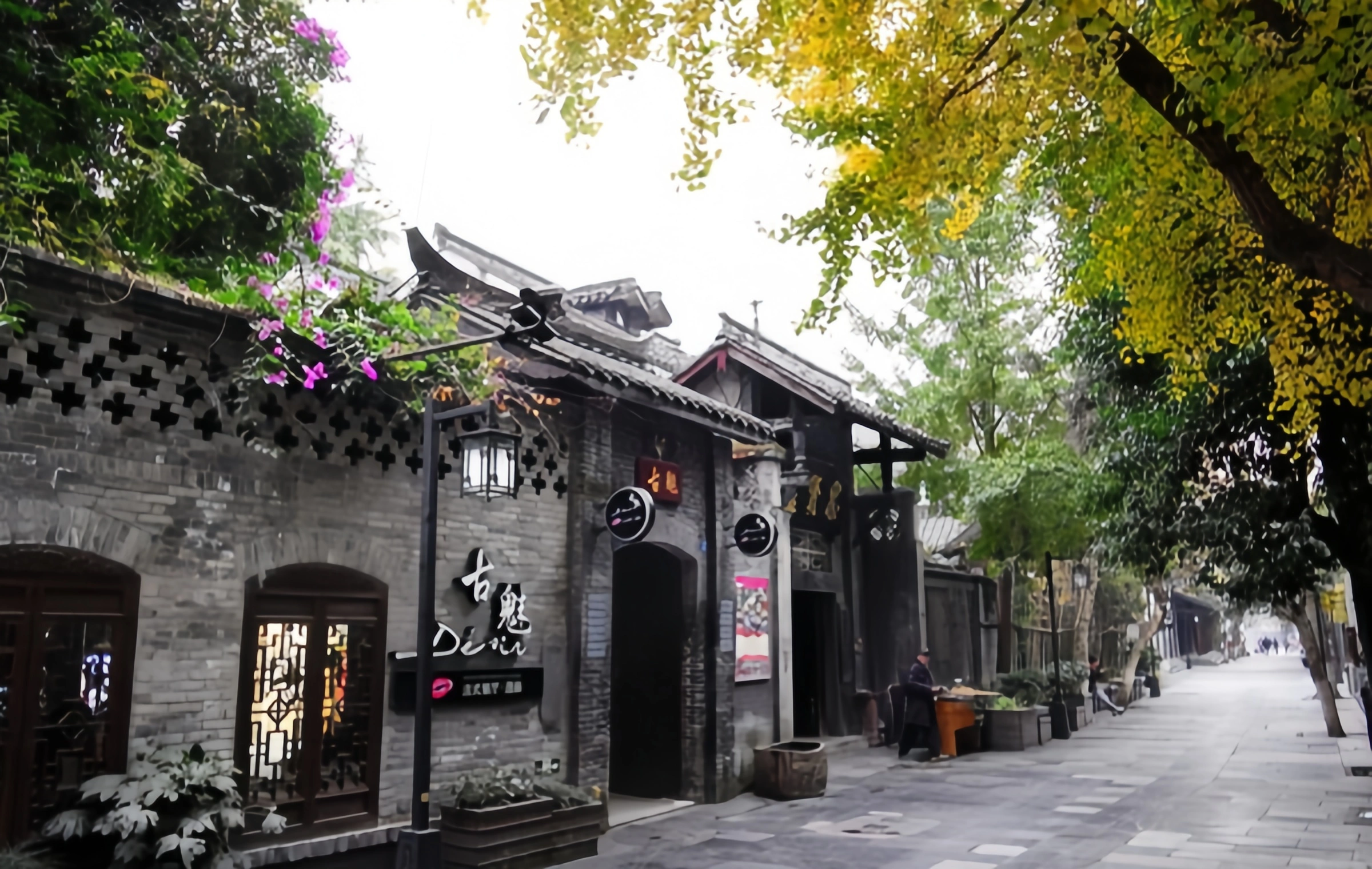
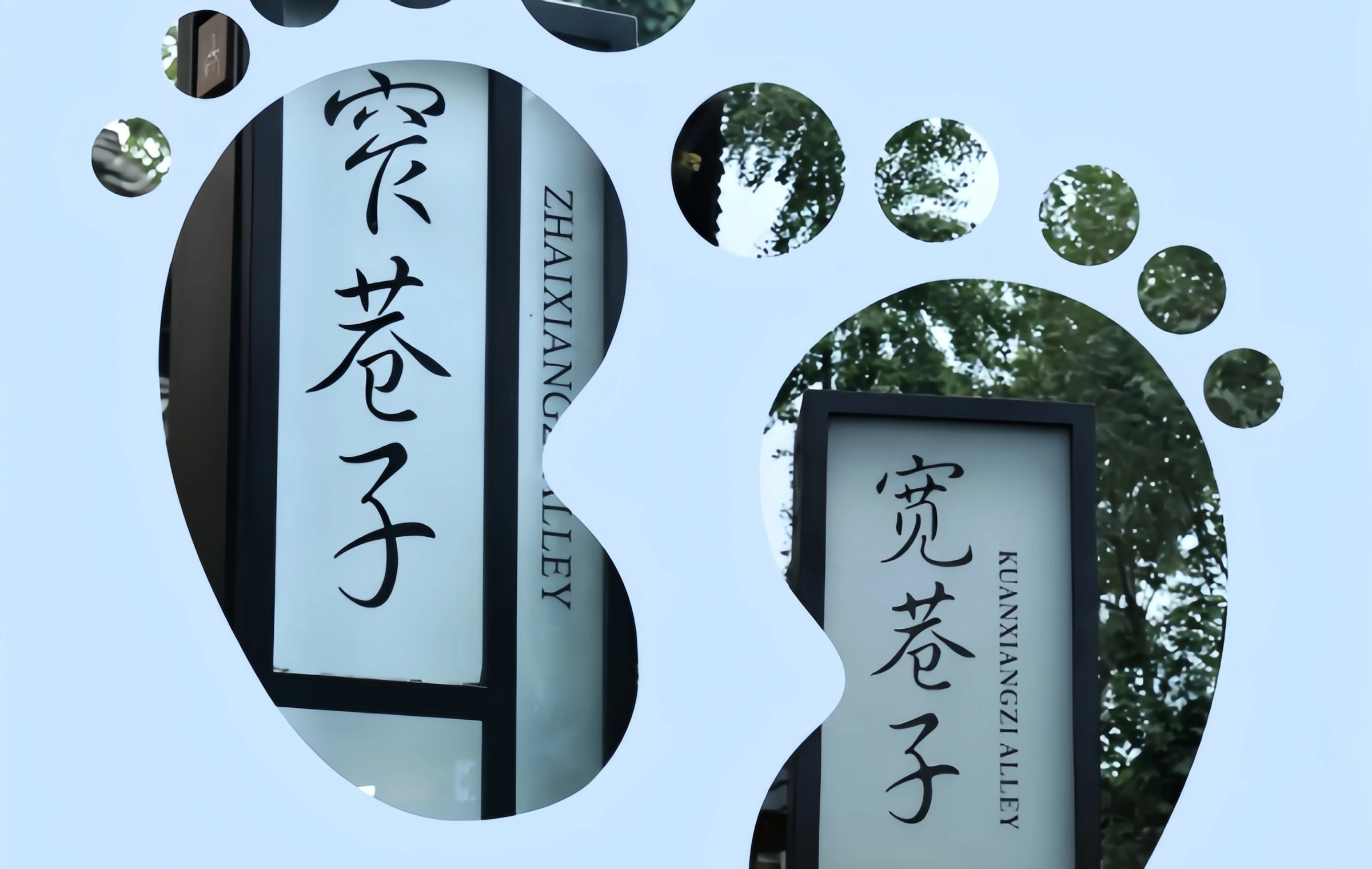
The charm of Kuanzhai Alley lies in its open-air, living museum. Every brick and tile here is engraved with history, and the flowing vitality of life fills it with warmth.
Landscape Relics - Time imprints between bricks, stones, plants and trees
The "natural" landscape of Kuanzhai Alley is a "second nature" crafted by three hundred years of human labor and time, with every blade of grass and every tree telling a story.
Street Texture: Dialogue between Northern Hutongs and Western Sichuan Courtyards
The three alleys have a total length of only a few hundred meters and a width of about 3 to 4 meters, retaining the spatial form of northern alleys, but also becoming more approachable due to the integration of Western Sichuan residential buildings. Strolling through it, one can clearly feel the ancient street and alley pattern in the shape of "fish bones", which is the final witness to the Qing Dynasty's plan of "Changshun Street as a centipede body, with streets and alleys on both sides like a hundred feet".
Siheyuan Luo: The Integration of Northern and Southern Architectural Aesthetics
The quadrangle houses here not only maintain the square and rigorous style of Beijing quadrangle houses, but also integrate the characteristics of Western Sichuan residential houses such as perforated wooden structures, small blue tiles, and low platform foundations. The ratio of courtyard to house area is about 1:3, slightly smaller than northern courtyards and more suitable for the local climate. Upon careful observation, one can also discover Western architectural elements such as brick door heads and Roman columns, making it a miniature book of architectural history.
Ancient and Famous Trees: "Few Cities, Abundant Shades" by Ye Shengtao
There are numerous towering trees with lush branches and leaves preserved in the alley. As the writer Ye Shengtao praised in his 1945 work "On the Trees in Chengdu": "The trees in the Shaocheng area are really lush, almost houses are hidden in the bushes. These ancient trees provide shade to the streets and alleys, silently narrating the history and vitality of the neighborhood.
Humanistic Scene - Living Chengdu Flowing in the Alley
The soul of this place lies not only in the architecture itself, but also in the vivid and perceptible everyday life and cultural creations passed down from generation to generation.
Three alleys, three Chengdu lifestyles
Kuanxiangzi - "Leisure Life": It gathers the most well preserved old buildings and presents the leisurely lifestyle of old Chengdu. There are boutique hotels and old tea houses hidden here, with a slow pace that is suitable for a peaceful experience.
Narrow Alley - "Slow Life": focusing on brand commerce and exquisite catering, with a blend of Chinese and Western architectural styles. Here, you can find a caf é or bookstore to savor the "slow afternoon and the pause of time".
Jingxiangzi - "New Life": themed around fashion and youth, it gathers bars and modern art. On one side is the traditional street surface, and on the other side is the famous brick cultural wall, vividly showcasing Chengdu's folk customs and historical changes through the use of old bricks and relief art from various dynasties.
Intangible Cultural Heritage Craftsmanship: Inheritance at Fingertips
Kuanzhai Alley is a gathering place for intangible cultural heritage. Tourists can witness the silver flower silk inheritors transforming silver silk into exquisite handicrafts and appreciate ancient techniques such as Shu embroidery, bamboo weaving, and sugar painting. In cultural and creative spaces such as "Tianfu Dewu x Yaohua 1938", traditional techniques are cleverly integrated into modern design, giving ancient intangible cultural heritage a new lease on life.
Tie Ma Shi: A Landmark Through Time and Space
On the old wall at the entrance of No. 32 narrow alley, about 1.2 meters above the ground, there is a weathered and mottled horse tie stone embedded. This is a rare physical evidence of the Manchu Mongolian cavalry culture in the Shu region, silently telling the story of the alley's past as a Qing Dynasty garrison.
Photography tips:
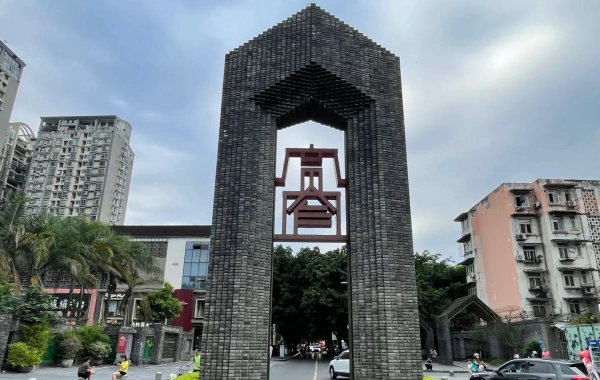
The best panoramic plane is in front of the memorial archway at the entrance of Kuanxiangzi Alley, and the depth of the blue tile and white wall is captured with a wide-angle lens.
The best light and shadow machine is located on the old wall of the wide alley, where the afternoon sun shines through the leaves to create mottled light and shadow, which is highly artistic.
The best humanistic camera is located on the brick cultural wall of Jingxiangzi, where a telephoto lens can capture the historical details of the reliefs.
The best night scene camera position is in the evening when the lights are on, with red lanterns reflecting the dark tiles. You can use a tripod to slow down and capture the colorful alleys.