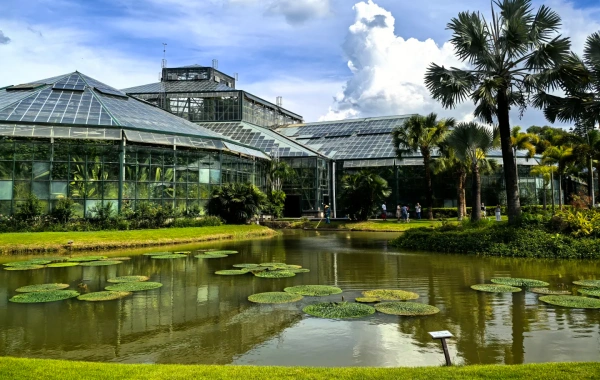
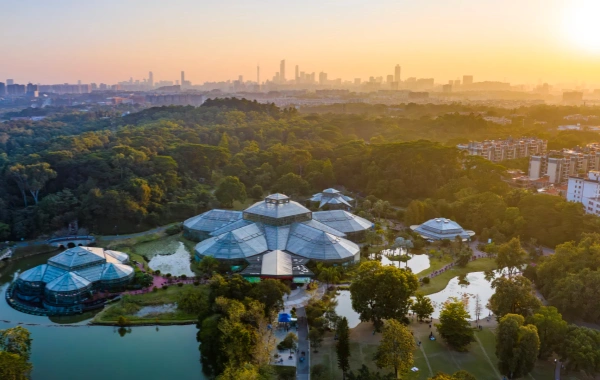
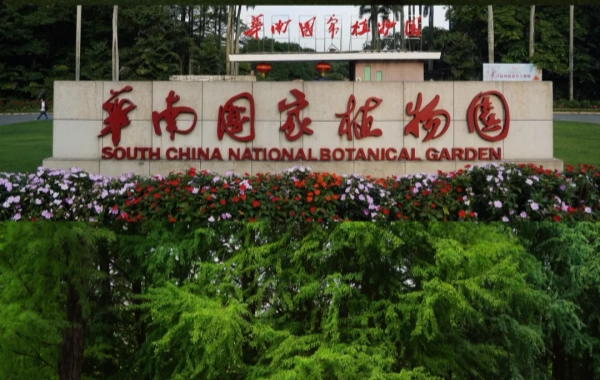
The South China Botanical Garden is breathtaking because it perfectly blends a collection of plant wonders from around the world with ingenious garden design. It is both a serious gene bank of species and a stunningly beautiful landscape garden.
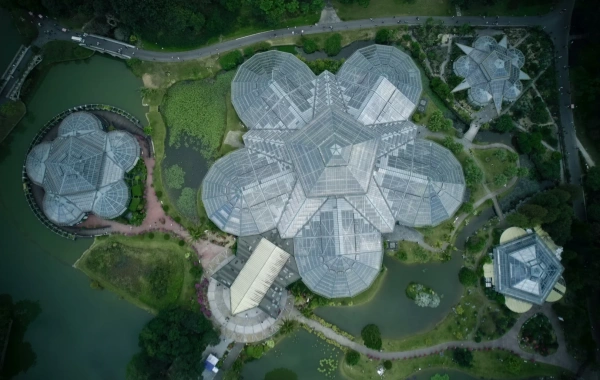
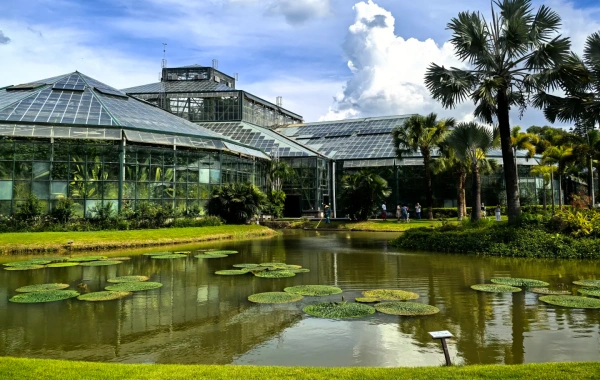
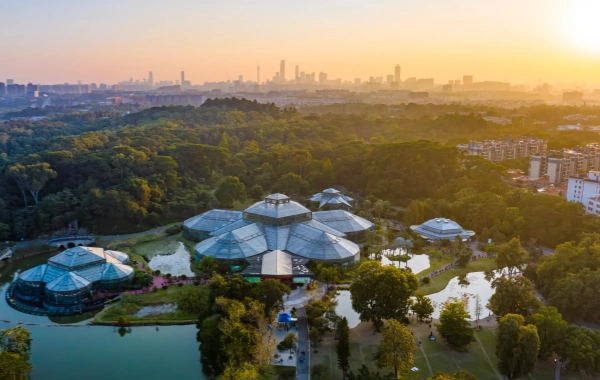
Nature's Creation—A Planetary Microcosm Within a Greenhouse Cluster
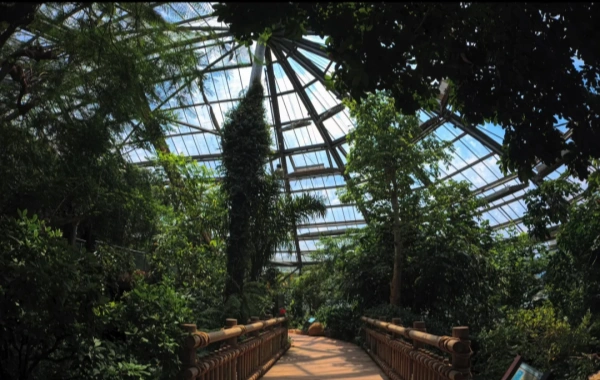
Walking through the four greenhouses is like embarking on a global plant adventure that spans different climate zones.
Tropical Rainforest Greenhouse – An Arena for Life: Stepping inside, you are instantly enveloped by humid air and lush greenery. Towering Hopea trees reach for the clouds, their massive buttress roots spreading like walls; banyan trees' aerial roots form forests on their own; and aerial gardens grow epiphytically on their branches. This space simulates the complete vertical structure of a tropical rainforest, from canopy to ground cover, vividly showcasing life's fierce competition and boundless creativity for sunlight and water.
Desert Plant Greenhouse – The Ultimate Art of Survival: Encountering diverse desert inhabitants in arid and scorching environments. Towering pillars several meters high exude grandeur, while the adorable golden barrel cactus is round and spherical. There are also Lithops, which appear as stones yet can bloom. These plants store water through their fleshy stems and leaves, and their degenerated leaves reduce evaporation; every inch of their form is an epic of survival against the harsh environment.
Alpine/Polar Plant Greenhouse – Resilient Little Giants: In this cool climate, unique plants from high-altitude regions thrive. Most are low-growing, close to the ground to withstand strong winds; their leaves are often covered in downy hairs for insulation and moisture retention. Here, you can see precious alpine rhododendrons and gentians, and experience the splendor and resilience of life blooming under harsh cold and intense ultraviolet radiation.
The Exotic Flowers and Fruits Greenhouse – A Garden of Plant Wonders: This is a "creative workshop" for the shapes of flowers and fruits. You'll see slipper-shaped orchids, giant arum lilies (corpse-scented arums) that emit a unique scent, and various brightly colored and uniquely shaped carnivorous plants, such as pitcher plants and Venus flytraps, which cleverly obtain nutrients from barren soil.
Humanistic Ingenuity: The Artistic Conception of Longdong Qilin and Specialized Gardens
Apart from the greenhouse, the garden embodies the wisdom of classical Chinese garden design, which states that "though made by man, it appears as if created by nature."
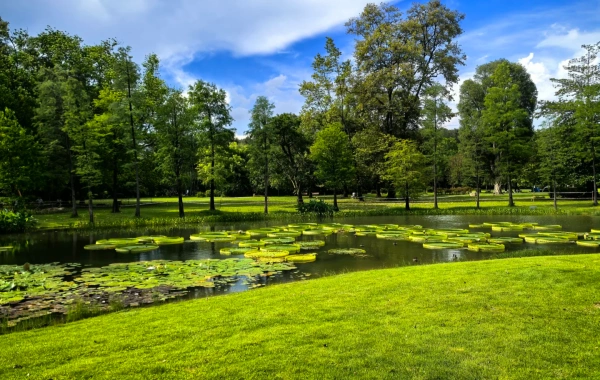
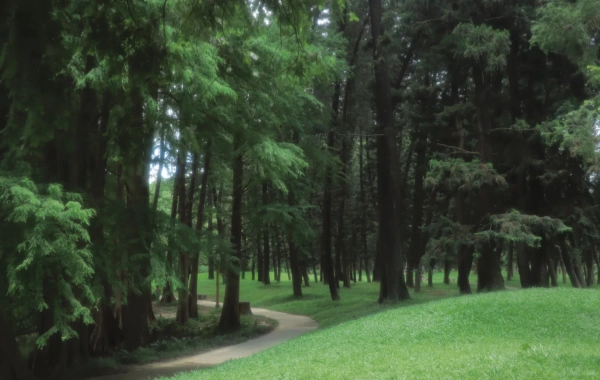
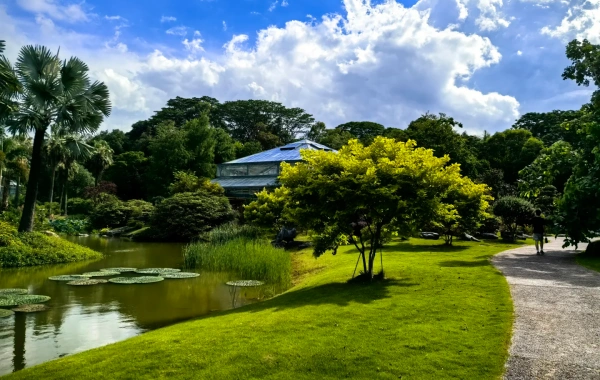
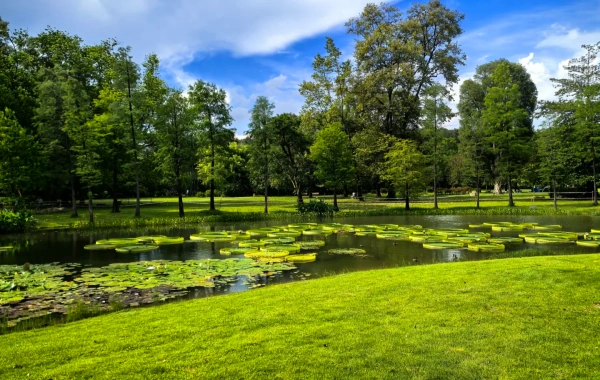
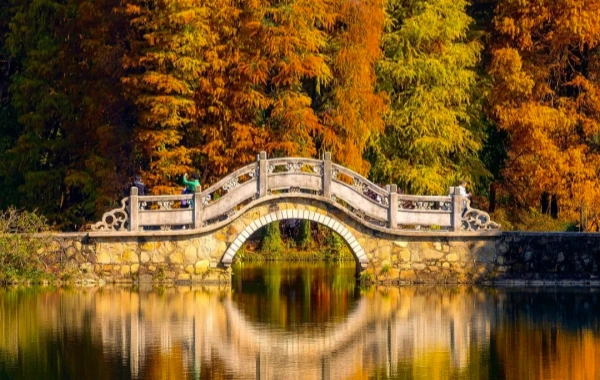
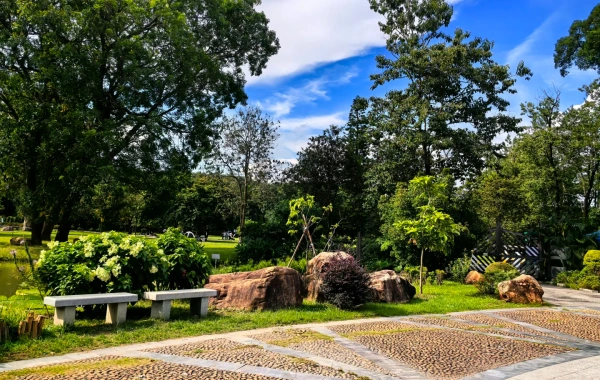
Longdong Qilin – A pinnacle of Lingnan garden design: This iconic landscape of the South China Botanical Garden was once named one of the "Eight New Scenic Spots of Guangzhou." It's not merely a simple act of planting trees, but a meticulously designed landscape painting. A crystal-clear lake, like a mirror, surrounds bald cypress, water pine, and other trees, its colors changing with the seasons: lush and verdant in spring and summer, transforming into vibrant reddish-brown in autumn and winter, reflected in the water like a dream. Winding paths and rustic pavilions dot the landscape, offering ever-changing views and fully embodying the essence of Chinese landscape painting.
Themed Gardens – A Systematic Natural Classroom: Dozens of themed gardens, each with its own unique characteristics, serve as living teaching materials for learning about plants.
Magnolia Garden: It has collected many precious magnolia plants. In early spring, magnolias and Michelia champaca bloom in competition, and their fragrance is intoxicating.
Ginger Garden and Orchid Garden: Showcasing tropical plants, the ginger garden features various shapes of canna lilies and closed-sheath ginger; the orchid garden is quiet and elegant, bringing together various native and tropical orchids.
Medicinal Botanical Garden: Turning the wisdom of the "Compendium of Materia Medica" into reality, visitors can learn about hundreds of authentic Lingnan medicinal herbs such as Polygonum multiflorum, Morinda officinalis, and Pogostemon cablin.
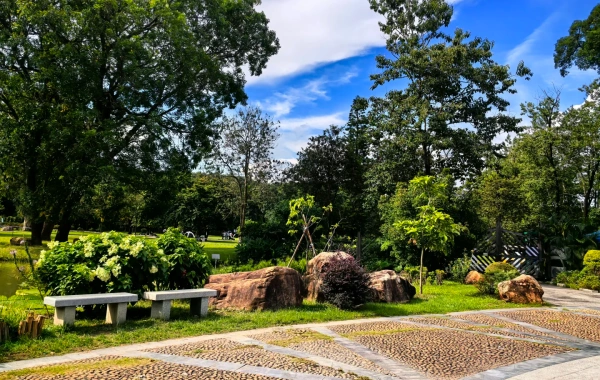
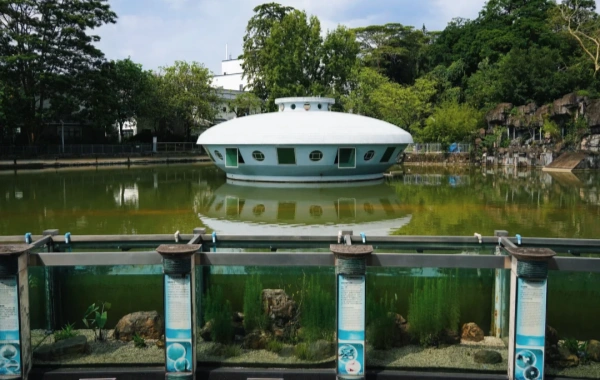
Urban landscape ecological park: It simulates ecosystems such as lakes, wetlands and forests, and is a good place to observe wild animals such as birds and insects, reflecting the concept of modern ecological restoration.
> Travel Tips:
The best time to photograph "Longdong Qilin" is in the early morning or evening, when the light is soft, the lake is calm, and the reflections are clearest. It is especially beautiful when the colors are vibrant in autumn and winter.
When shooting inside a greenhouse, be aware of glass reflections, get as close to the plants as possible, and use a large aperture to blur the cluttered background.
Stay informed about seasonal flowers: Enjoy azaleas and wisteria in spring; lotus and crape myrtle in summer; osmanthus and hibiscus in autumn; and plum blossoms and camellias in winter – each season has its own protagonist.
Bringing binoculars and a macro lens will help you discover more plant details and birds in the forest.