The charm of the Zhongshan Memorial Hall lies not only in its commemorative significance, but also in the fact that it is itself an unparalleled work of art. The wonders here are half embodied in the ingenious architectural design and half flowing from the solemn and profound historical and cultural heritage.
Architecture as Creation - The Perfect Fusion of Eastern Rhythm and Western Technology
The architecture of the memorial hall itself is a visual and engineering wonder.
Grand Form: The Eastern Essence of the Octagonal Pavilion
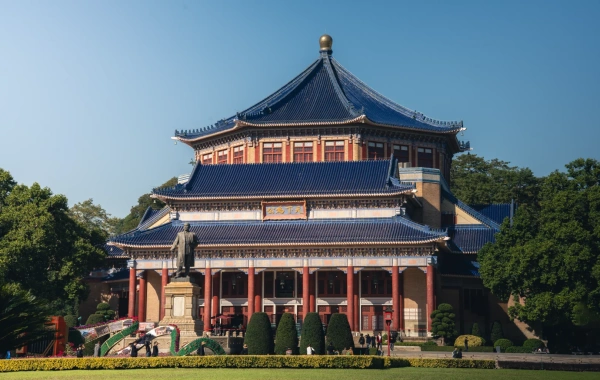
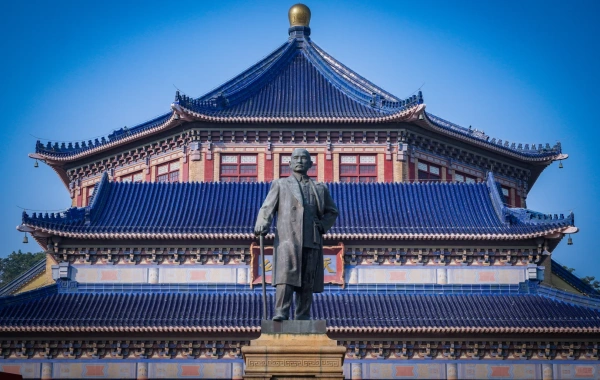
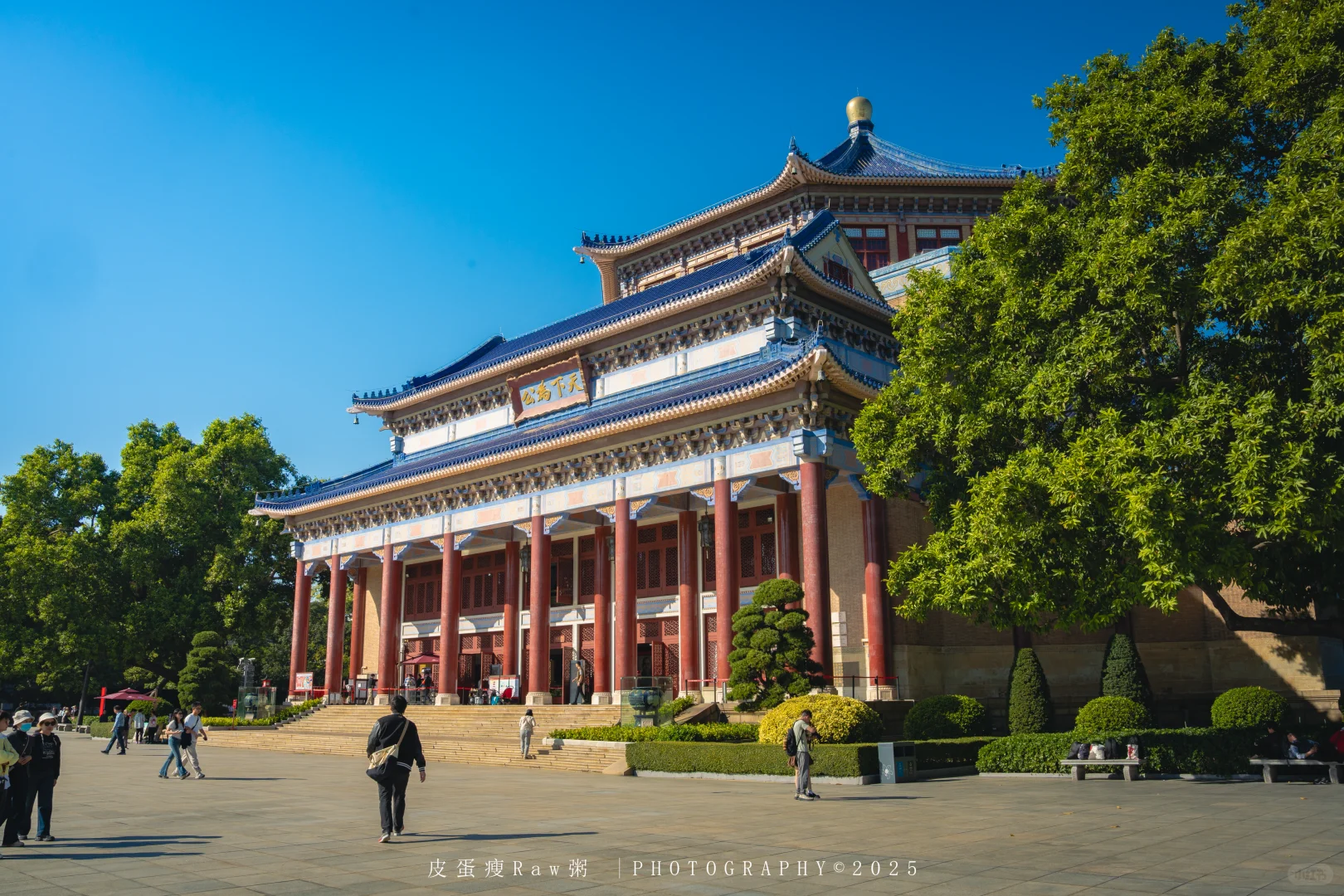
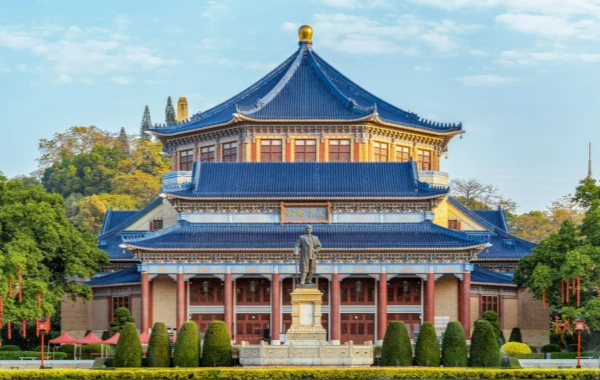
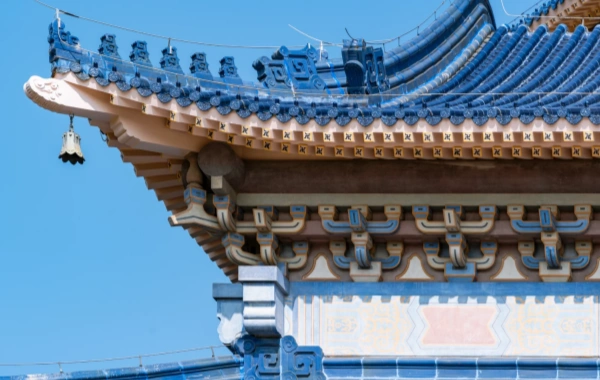
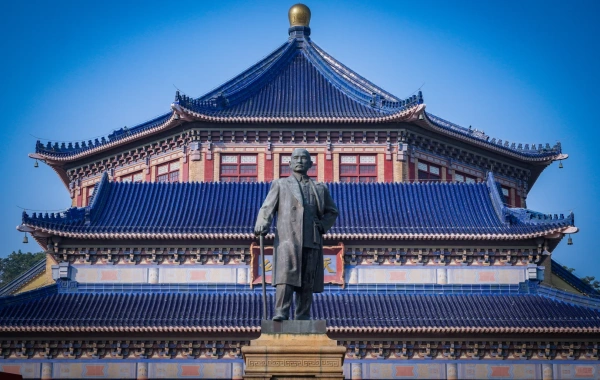
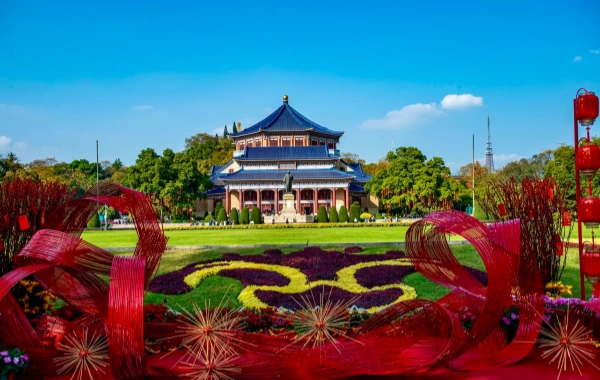
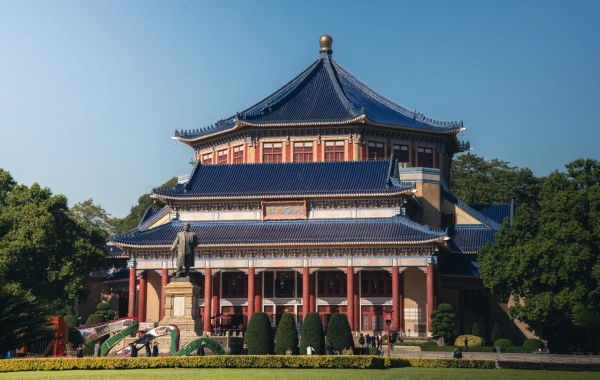
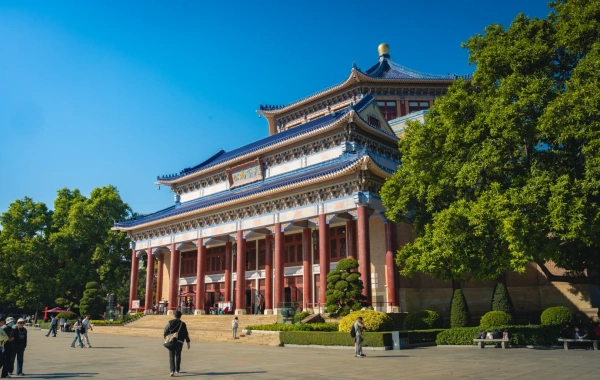
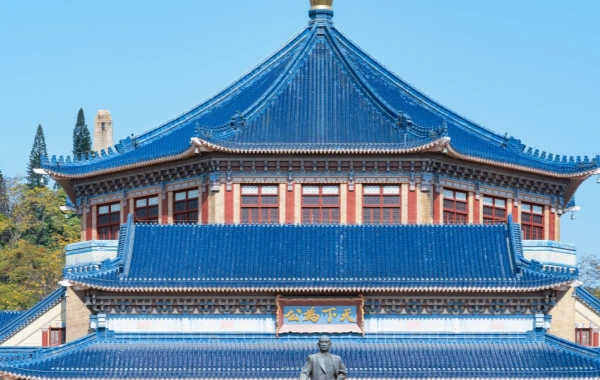
The memorial hall adopts the traditional Chinese octagonal palace-style architecture, symbolizing the broad-mindedness of "all directions paying homage and the entire world converging into one". The blue glazed tiles with gable roofs shine brightly under the sunlight, and the layering of the roof lines is elegant and smooth, fully showcasing the dignity and grandeur of ancient Chinese architecture. From a distance, it looks like a majestic crown, located on the central axis of the city, and connected with the Sun Memorial Tower on Mount Zhongshan, creating a continuous and powerful momentum.
Supporting Pillars: The Art of Seeing Without Stilts
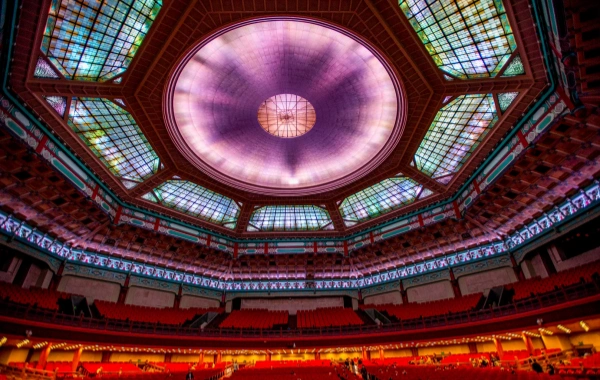
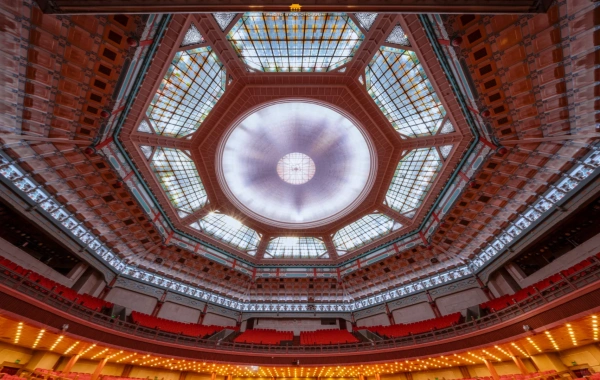
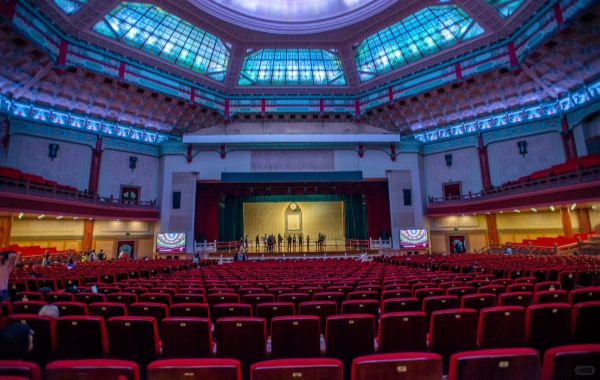
Entering the main building, the most astonishing thing is that there are no columns blocking the view in the 71-meter-span huge space. This is thanks to the architect's use of the most advanced steel structure technology at that time, hiding four large-span steel trusses within the octagonal walls to form a huge indoor space, ensuring that no matter where you sit, your view can smoothly reach the stage and the podium. This "seeing things but not seeing columns" design was a world-class architectural innovation at that time.
Crescent Moon Top: Resonance Under the Stars
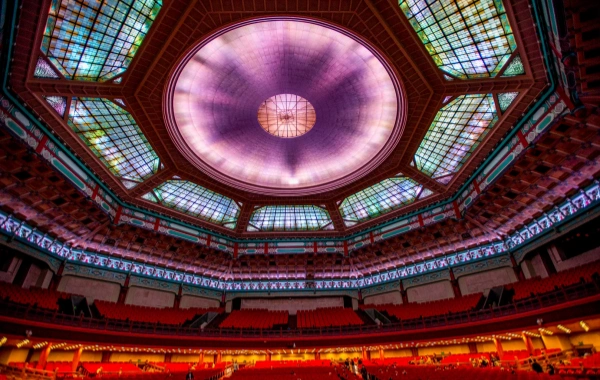
Looking up at the 49-meter-high circular dome, it is adorned with painted glass windows featuring the pattern of blue sky and white sun. When sunlight passes through, the entire hall is bathed in a soft and sacred light. The acoustic design of the dome is extremely exquisite. Even in the era without electronic amplification equipment, it can achieve perfect natural amplification, and is hailed as "one sound surrounds, the echo lingers".
Humanistic Craftsmanship - Revolutionary Epics and National Spirit in the Details
Every decoration and display tells a story of history and ideals.
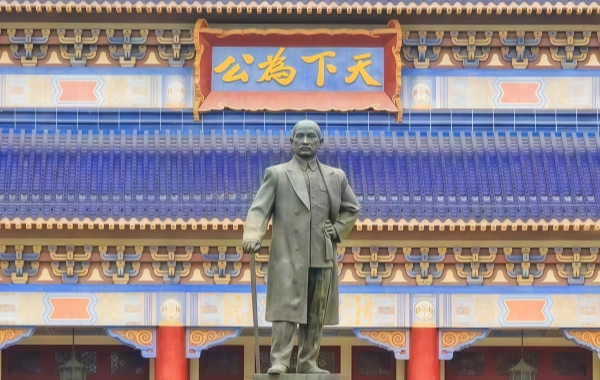
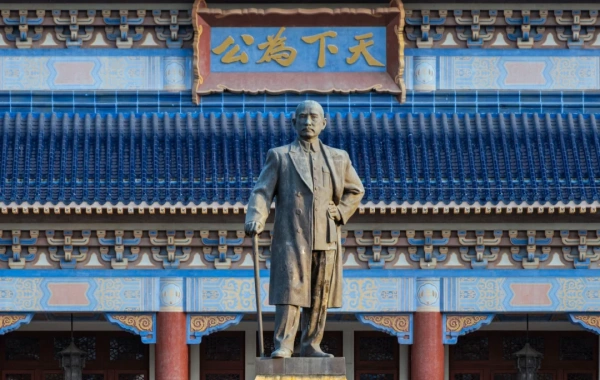
The bronze statue of Sun Yat-sen: Standing in the center of the square in front of the Memorial Hall, the full-body bronze statue of Sun Yat-sen, dressed in traditional long robes and jackets, with his left hand crossed over his waist and his right hand extended forward, has a determined expression and deep gaze, as if still advocating for the future of the country. This is the core focus for paying homage and taking photos.
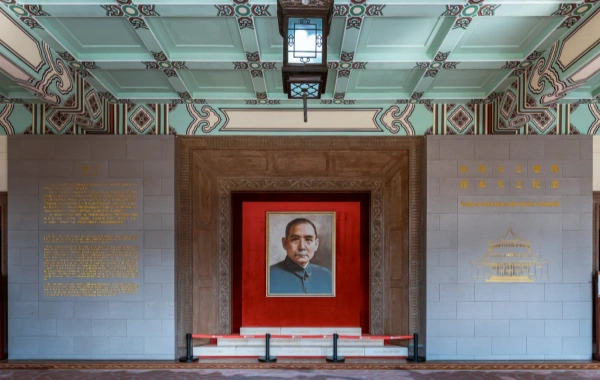
The "All for the Public" plaque and the Prime Minister's Will: Above the stage in the hall, there hangs a huge plaque written by Sun Yat-sen himself, "All for the Public", which is his lifelong political ideal. On the back of the stage, the full text of the Prime Minister's will is embedded, with each word carrying great weight, and it is the core text for understanding his revolutionary thoughts.
Three Outstanding Aspects of Architectural Decoration:
1. Cloud and Crane Pillars: On both sides of the front of the hall, there are two cloud and crane patterned pillars that are several meters tall, with exquisite carvings. They not only have traditional Chinese characteristics but also exude a solemn air of the new era.
2. Blue and White Porcelain Railings: The railings of the second floor corridor inside the hall are made of specially made blue and white porcelain from Jingdezhen, with a white background and blue patterns, which are warm and elegant, adding a delicate artistic touch to the grand space.
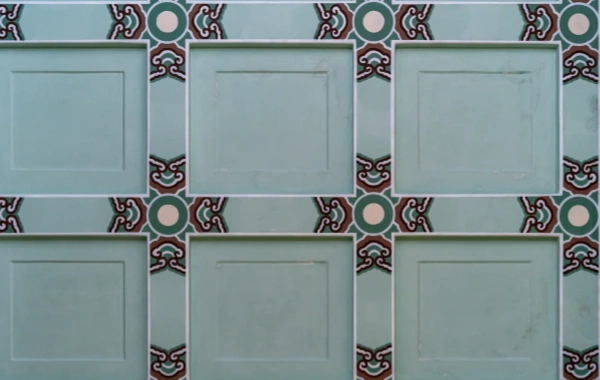
3. Red, Yellow, and Blue Paintings: The painted patterns on the beams and ceilings are mainly in the traditional Chinese colors of red, yellow, and blue, featuring patterns such as plum blossoms and cotton trees (the city flower of Guangzhou), symbolizing firmness and heroic spirit, with a strong ethnic style.
Centuries-old Ancient Trees and Gardens: In the park of the Memorial Hall, there are lush green trees. Two huge cotton trees and jasmine trees have a tree age of over three hundred years. They have witnessed the entire history from the Training Bureau to the current Memorial Hall. In spring, the cotton trees bloom like torches, and in summer, the jasmine trees exude a refreshing fragrance. The garden and the architecture complement each other beautifully.
Photography Tips:
The best panoramic shooting position is in the square opposite the main entrance of the memorial hall. This allows you to include the entire building facade and the bronze statue in the frame. Especially at sunset, the lighting is excellent.
For shooting the dome and stage inside the building, it is recommended to use a wide-angle lens. Be sure to maintain silence.
The garden scenes can capture the partial composition of ancient trees, red walls, and blue tiles, creating a poetic atmosphere.
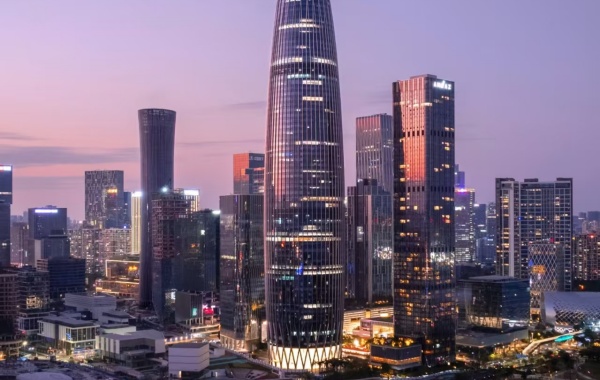
When using a drone for flight, it is necessary to submit a pre-application. From the air, you can observe the relationship between the octagonal layout and the city's central axis, which is extremely impressive.