Nature's Creation - A Seascape on the Cliff
Before even stepping into the dome, the natural environment in which the observatory is situated is itself an ultimate visual feast.
Azure Seas and Crimson Cliffs: A Geographical Poem in Symphony of Mountains and Sea
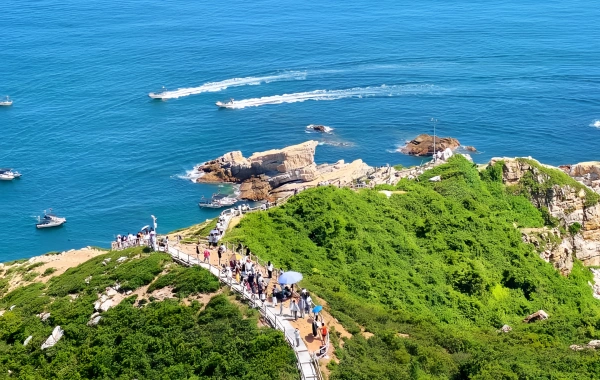
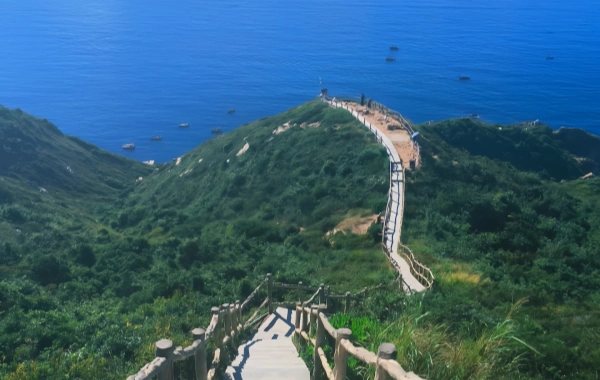
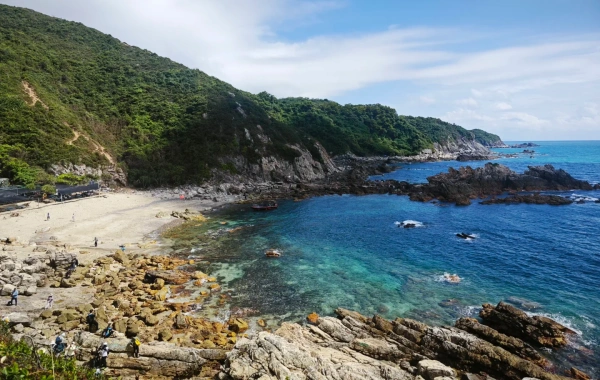
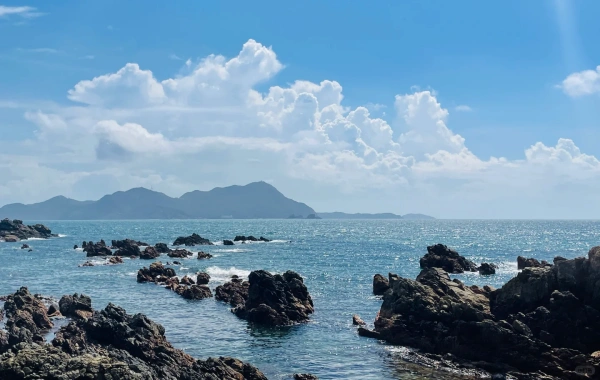
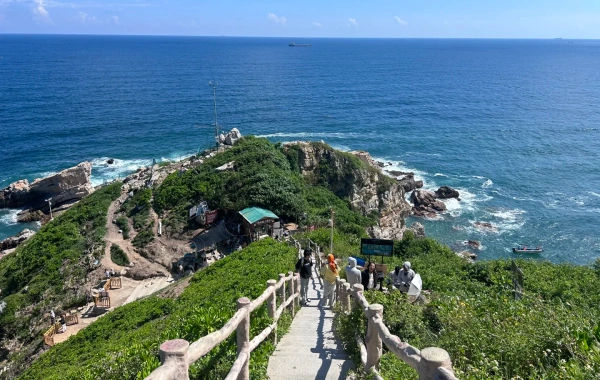
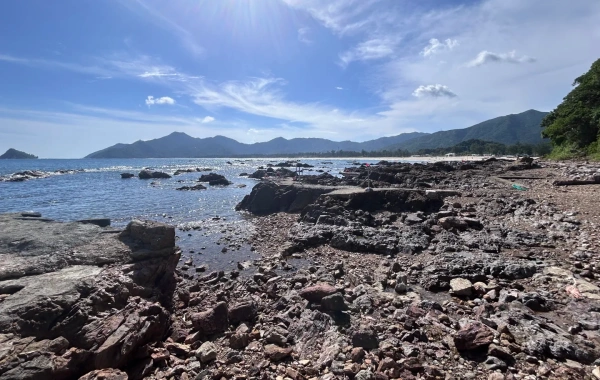
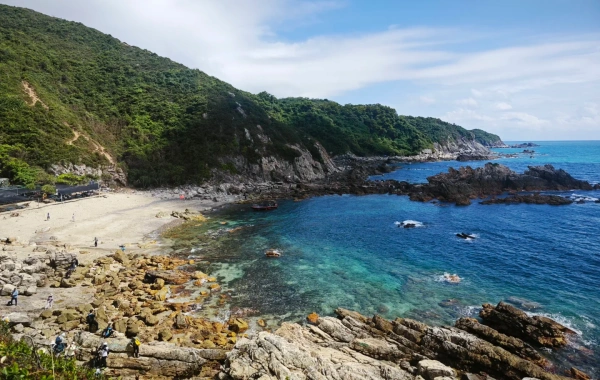
The winding mountain road and trails leading to the observatory are themselves scenic corridors. Standing on the viewing platform, one can enjoy a 270-degree panoramic view of the rolling mountains and meandering coastline of the Dapeng Peninsula. Directly in front lies Xichong Beach, hailed as "Shenzhen's most beautiful," its silver sands shaped like a crescent moon embedded in the azure sea, offering a breathtaking view of its four-kilometer-long coastline. Turning back, peaks such as Qiniang Mountain appear and disappear amidst the clouds and mist. This magnificent scene, where mountains, sea, sky, and observatory blend seamlessly, displays distinct colors under a clear sky, while in the mist it resembles a fairyland—a unique combination of landscapes in Shenzhen.
Astronomy and Meteorology: The Ever-Changing Stage of the Sky
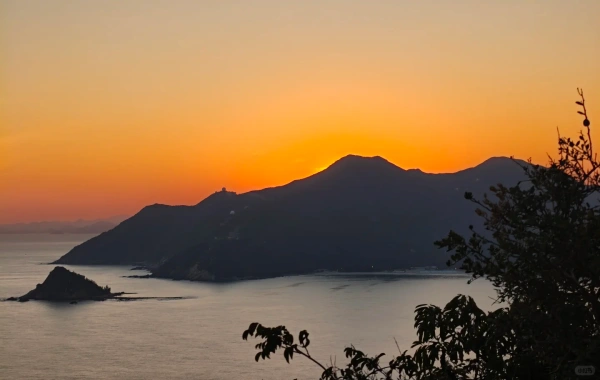
Located on a coastal mountain, this area boasts exceptionally rich meteorological landscapes. In the early morning, one can witness the sunrise over the sea, with the rosy glow painting the clouds and sea red. After rain, a magnificent sea of clouds often rises from the valleys, engulfing the foothills and making the observatory appear like an island in the clouds. On clear nights, it serves as a window to escape urban light pollution, with countless stars visible far beyond the city, and the faint band of the Milky Way clearly discernible on summer and autumn nights. This place is not only a stargazing spot but also an excellent natural classroom for observing the ever-changing weather.
Humanistic Craftsmanship: A Scientific Outpost for Exploring the Universe
The core appeal of an observatory lies in its sophisticated instruments pointing to the heavens and the mission of exploration they carry.
Observation Dome and Specialized Equipment: "Eyes" Gazing into Deep Space
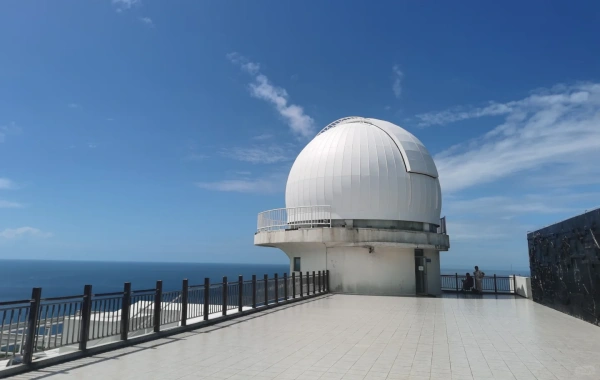
- Astronomical Dome: The white spherical dome is the standard symbol of astronomy and the emblem of an observatory. The dome can rotate 360 degrees, and its skylight can be opened to ensure that the telescope is pointed in any direction in the sky.
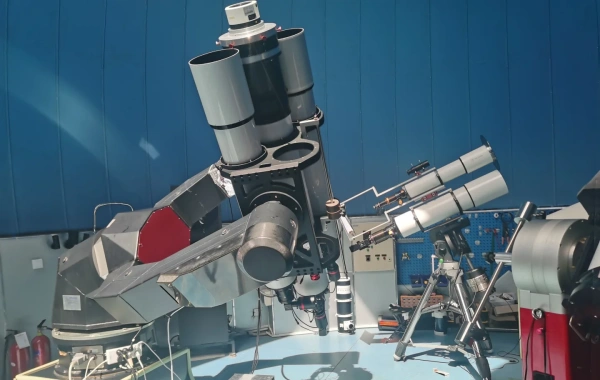
- Professional-grade optical telescopes: The station is equipped with popular science-grade optical telescopes with apertures of tens of centimeters. Under the operation and explanation of professionals, visitors can witness firsthand the rugged details of lunar craters, the elegant posture of Saturn's rings, Jupiter's cloud belts and its moons, and even distant nebulae and galaxies, turning pictures in books into a real and breathtaking experience.
Science exhibition hall and interactive experience: Decoding space of cosmic knowledge
The indoor science exhibition hall systematically showcases basic astronomical knowledge, China's aerospace achievements, and the observation results of the Shenzhen Astronomical Observatory through pictures, models, and interactive multimedia equipment. Here, visitors can learn about the life cycle of stars, the mysteries of the solar system, and hypotheses about black holes. They can also experience "moonwalks" or "galaxy collisions" through interactive installations, making profound astronomical knowledge vivid and interesting. It is perfect for families with children and science enthusiasts to engage in in-depth learning.
Photography Tips:
Panoramic view of the sea and sky: Use a wide-angle lens to take photos on the viewing platform, capturing the observatory building, the winding coastline and the sea in the same frame. The best time for photos is at sunrise and sunset.
Astronomical photography: A tripod and a large aperture lens are required. Turn off all unnecessary lighting equipment before shooting. You can try using the observatory dome as the background to shoot star trails or the Milky Way.
Taking photos through the telescope eyepiece: Point your phone or camera lens at the telescope eyepiece and try to photograph bright celestial objects such as the Moon and Saturn (this requires extreme stability).
Precautions: During observation and photography, please be sure to follow the instructions of the staff and avoid any strong light (such as direct flashlight or constantly lit mobile phone screen) that may interfere with the observation of others.