Jichang Garden: A heart imprint of the Jiangnan landscape spanning five hundred years

Jichang Garden: A heart imprint of the Jiangnan landscape spanning five hundred years

Overview: A frozen melody of mountains and waters
Jichang Garden is a classical garden of the Jiangnan style with an area of only about fifteen mu. It is the only private garden in the Jiangnan region that has remained unchanged for five hundred years and is hailed as one of the "Four Great Gardens of Jiangnan" and a model of villa gardens at the foot of the mountains in China.

A quick overview of key highlights
Identity Tag: One of the Four famous Gardens in the south of the Yangtze River/A family garden that has remained unrecognizable for five hundred years
Core Experience: Listen to the celestial music in the Eight Sounds Stream, observe the reflections in the Brocade Ripples, and understand the Zen meaning at the Fish Threshold
Suggested Tour: The essence tour lasts about 2 to 3 hours. 
Address: Inside Huishan Ancient Town Scenic Area, No. 2, Huihe Road, Liangxi District, Wuxi City, Jiangsu Province

  • Jichang Garden: A heart imprint of the Jiangnan landscape spanning five hundred years-1
  • Jichang Garden: A heart imprint of the Jiangnan landscape spanning five hundred years-2
  • Jichang Garden: A heart imprint of the Jiangnan landscape spanning five hundred years-3
  • Jichang Garden: A heart imprint of the Jiangnan landscape spanning five hundred years-4

Origin: From Fenggu Xingwo to Jichang Shanshui

Furong Ancient Town

Poetry and books Passed down through Generations: The Garden Epic of the Qin Family
The story of Jichang Garden is an epic closely tied to the bloodline of the prominent Qin family in Wuxi. In the 15th year of the Zhengde reign of the Ming Dynasty (1520), Qin Jin, a descendant of the renowned poet Qin Guan of the Northern Song Dynasty and an old minister who had served three dynasties, built the "Fenggu Xingwo" on the former site of two monks' quarters of Huishan Temple, taking the meaning of "phoenixes resting in the valley", thus initiating the family's garden-building chapter.

The true spiritual core of the garden was established by Qin Yao, a descendant of the Qin Jin family. During the Wanli period, Qin Yao was dismissed from his post and returned to his hometown due to being implicated in the turmoil in the imperial court. He devoted all his depression and broad-mindedness from the ups and downs of his official career to the mountains and waters, carried out large-scale renovations of the garden, and took the poetic sentiment of the calligraphy sage Wang Xizhi, "Take joy in benevolence, wisdom and happiness, and express the Yin of mountains and waters," to change the name of the garden to "Jichang Garden." Since then, the two characters "Jichang" have not only become the name of the garden but have also been elevated to the supreme ideal of Chinese scholars in pursuit of spiritual freedom and the integration with nature.

Immortal Legend - Five Hundred Years of Protection and Royal Praise
The astonishing aspect of Jichang Garden lies in the five-hundred-year-long protection passed down from generation to generation by the Qin family. The family adheres to the ancestral precept of "cultivating the mind through poetry and books, and maintaining the business through filial piety and fraternal duty". Even when the garden faced damage and crisis due to war and institutional changes, the descendants of the Qin family always worked together and invested heavily in restoration, ensuring the continuity of its cultural heritage. During the Yongzheng period of the Qing Dynasty, the garden once had no official position. It was not until Qin Huitian, a descendant of the Qin family, passed the third place in the imperial examination and submitted a petition that it was returned. The ancestral hall was then renovated to become a spiritual center for uniting the clan members.

This persistence even touched the supreme ruler of the empire. Emperors Kangxi and Qianlong of the Qing Dynasty each made six southern Tours and visited Jichang Garden a total of nineteen times, setting a record for the most visits by Qing emperors to a single garden. Emperor Kangxi highly praised its "mountain scenery and stream light", and Emperor Qianlong even inscribed "Jade and gold ðª - ¢", and directly stated," Among all the scenic spots in the Jiangnan region, only the Qin Garden on Huishan Mountain is the most outstanding. Because of his extreme love for it, Emperor Qianlong ordered painters to copy the garden scenes and built a "Harmonious Garden" in the Summer Palace in Beijing, which made the garden-making art of Jichang Garden influence the creation of imperial gardens.

> In-depth Understanding: Explore More Mysteries of Chinese Classical Gardens >> [Suzhou Humble Administrator's Garden] [Yangzhou Ge Garden]

Must-see Wonder: The Resonance of craftsmanship and celestial music

Furong Ancient Town Furong Ancient Town Furong Ancient Town Furong Ancient Town Furong Ancient Town

The Charm of Nature - Skillfully borrowing the naturally formed landscape painting
Although Jichang Garden was created by humans, it pursues the realm of "as if created by nature" in every aspect. Its core charm lies in the ultimate refinement and ingenious application of natural elements.
The Dynamic Spring: The Celestial Melody of the Eight Sounds Stream
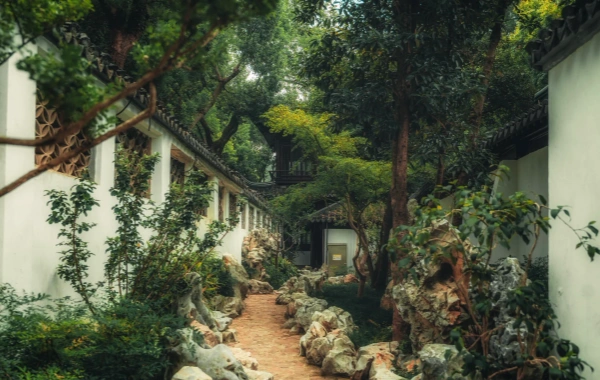
If Jichang Garden is said to have a soul, it must be Bayin Gorge. This is not an exaggeration but a real auditory wonder. The garden designer utilized the underground flow of Huishan, known as the "Second Best Spring in the World", to guide it through a narrow rain-shaped path built with yellow stones. The water plunges and weaves through the meandering rock walls, colliding with the rocks and generating clear sounds of various textures such as gold, stone, silk and bamboo, as if it were a symphony composed by nature. Walking through it, the vision is limited by the depth of the stone path, but the hearing is infinitely magnified. The sound of water changes with each step, which can be regarded as the peak work of using soundscapes in Chinese classical gardens.
Huijing Zhiyi: The reflection frame of Jinhuiyi
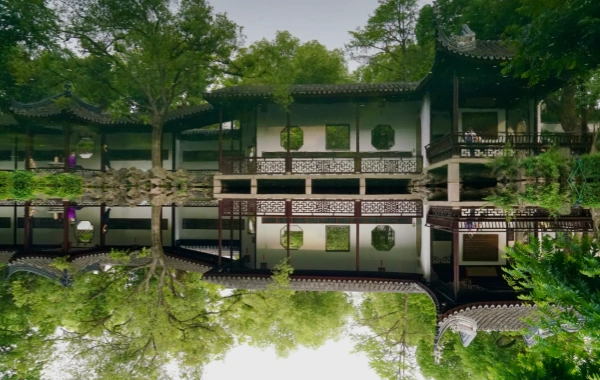
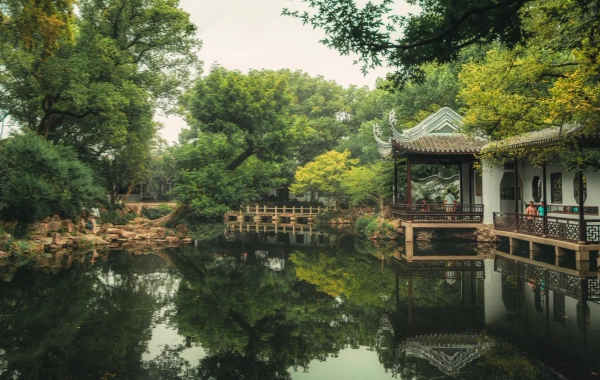
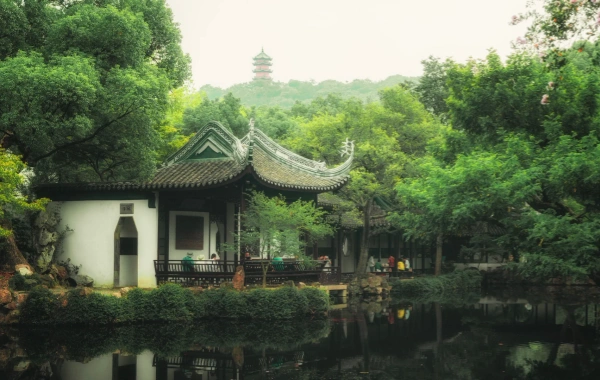
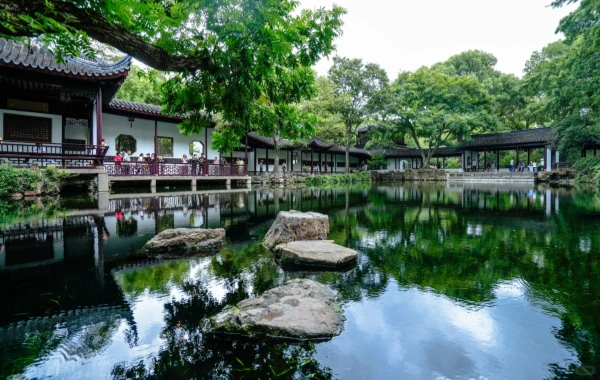
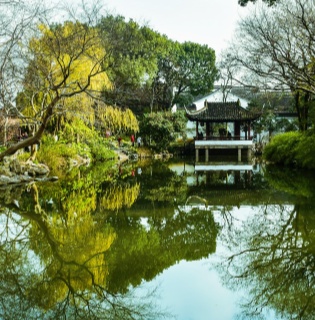
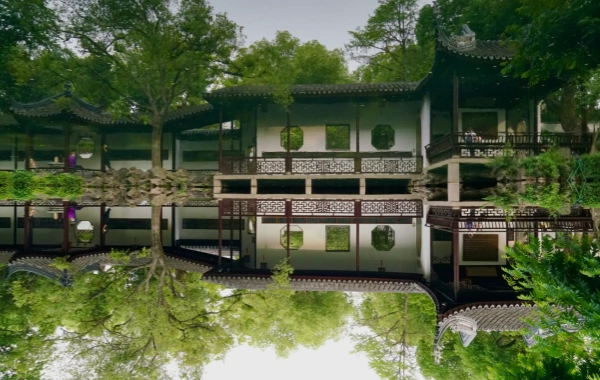
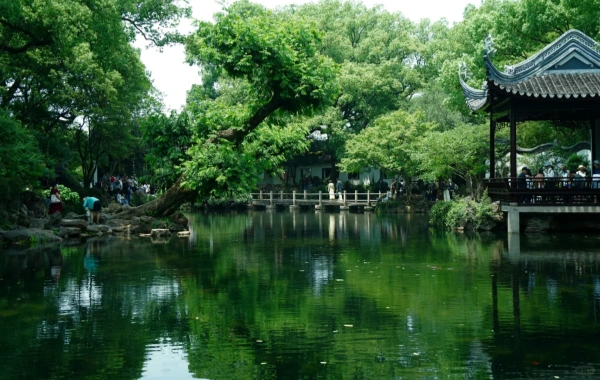
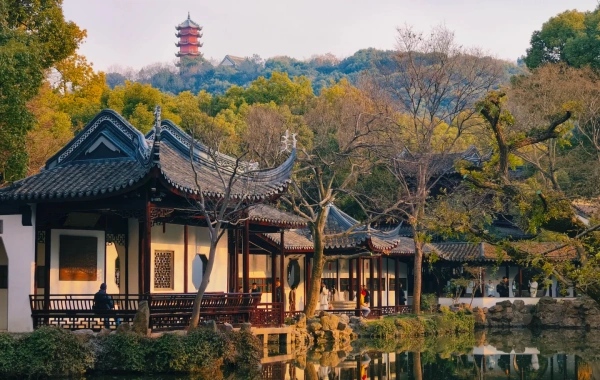
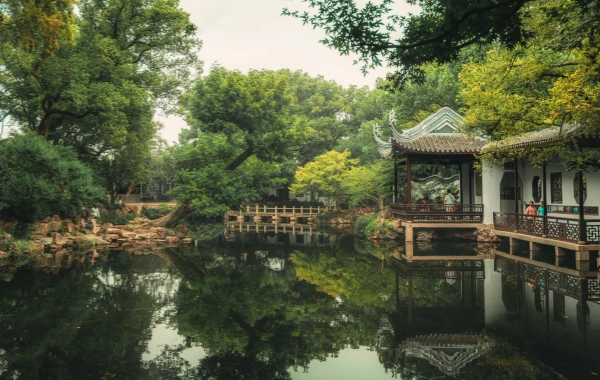
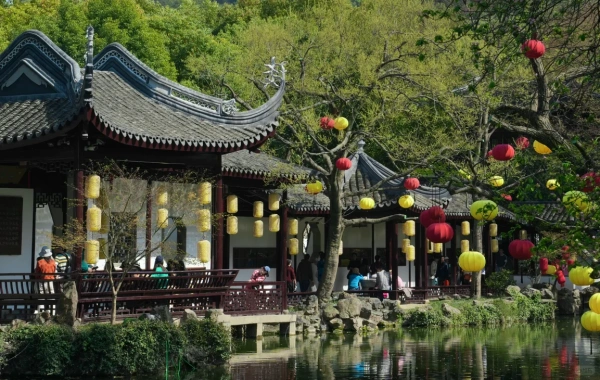
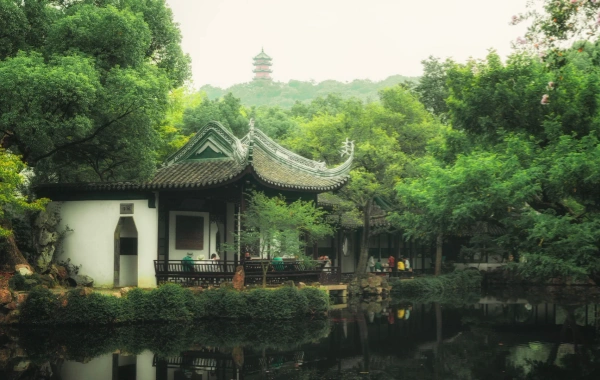
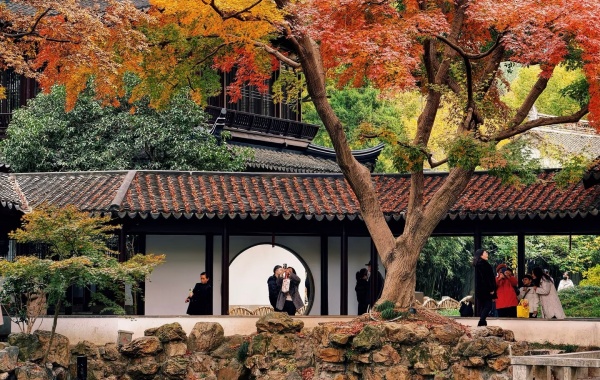
The core of the water feature in the garden is Jin Hui Yi, a pool of clear water like a horizontally lying magic gourd, encapsulating the essence of the entire garden. Its charm lies in the "convergence" : it combines the real clouds in the sky, the shadow of the Dragon Light Pagoda on Xishan Mountain, the posture of ancient trees by the pond, and the reflections of pavilions, terraces, corridors and terraces. Standing at the Zhiyu Threshold or the Hanbi Pavilion and looking out, what comes into view is not a stagnant pool but a three-dimensional landscape painting that is constantly flowing and changing. The design also embodies ecological wisdom. Through the cycle of "open injection and covert drainage", the pool water does not overflow during the rainy season and does not dry up during the dry season, nourishing all living things in the garden.
The extended vein: The seamless integration of artificial hills and real mountains
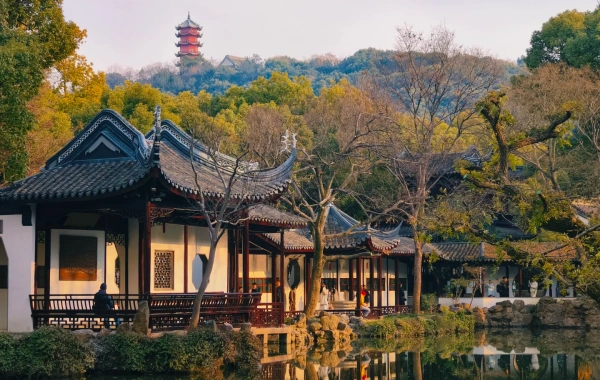
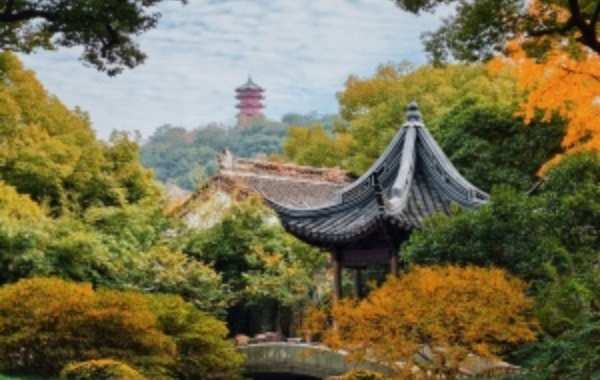
Jichang Garden is located west of Huishan Mountain. When the garden was built, no attempt was made to separate it; instead, the remaining branches of Huishan Mountain were "borrowed" into the garden. The rockery built on the west side of the garden, with its direction, texture and vegetation, is in line with the true mountain Huishan behind it, as if it were a natural extension of the true mountain into the garden. Meanwhile, on the east side, it ingeniously leads the line of sight to the Xishan Mountain and Longguang Pagoda outside the garden. This technique of "one garden ingeniously borrowing two mountains, and the two mountains reflecting one garden" breaks the physical boundaries of the garden and creates an infinitely profound artistic conception within a small space.

The structure of humanity: An architectural poem that carries history
Every building in the garden is not an isolated scenic spot, but a node of narrative and lyricism.
- Nine Lions Terrace: The first shock that catches the eye upon entering the park. The rockery made of Taihu stones is shaped like a group of lions crouching and playing, with a grand and imposing appearance and exquisite details. Its inspiration comes from the "Nine Lions" painting by the Yuan Dynasty painter Ni Zan. Upon closer inspection, the lion shapes are ever-changing and far more than nine, which is in line with the philosophy that "nine is the ultimate number, endless" [citation].
- Zhi Yu Jian: A square pavilion protruding from the water surface of Jin Hui Yi, named after the allusion in "Autumn Waters" of Zhuangzi: "You are not a fish, how can you know the joy of a fish?" Leaning against the "Beauty's Bench" railing and watching the fish in the pond leisurely is the best spot to experience the owner's affection for nature and the philosophy of life.
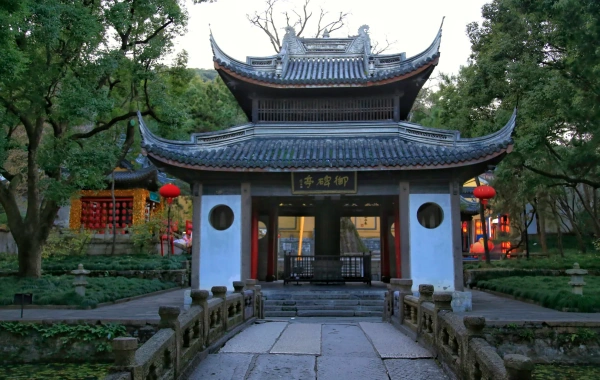
The Seven-Star Bridge and the Hanbi Pavilion: The Seven-star Bridge is a seven-stone slab bridge laid flat on the water surface. Its charm lies in its "low and flat" nature, almost touching the water, and walking on it feels like taking a gentle step on the water. The Hanbi Pavilion on the east side of the bridge stands majestically by the water, together with the ancient camphor trees and the shadow of the pagoda, forming a classic scene of Jiangnan.
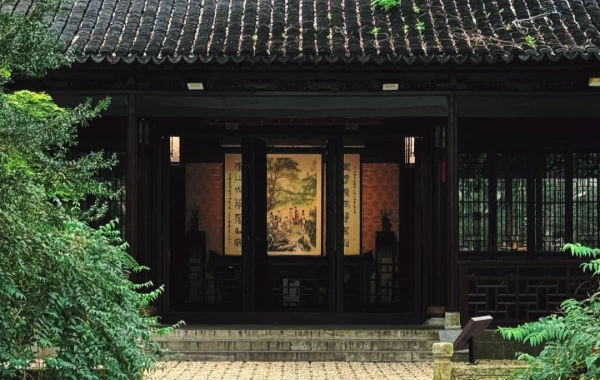
- Bingli Hall and Woyun Hall: Bingli Hall is a garden within a garden, elegant and exquisite. It was once an important part of the family ancestral hall garden. The Woyun Hall was the place where Emperors Kangxi and Qianlong rested. In front of the hall, three 400-year-old camphor trees stand in a "pin" shape, symbolizing the Qin family's supreme pursuit of virtue and also witnessing the legendary intersection of emperors and gardens.

Photography Tips:
The best spot for borrowing a view is at the high point on the west side of the garden. You can use a telephoto lens to compress the Longguang Tower and the foreground within the garden (such as treetops and eaves) into the same frame.
The south bank of Jinhuiyi is a classic Angle for capturing the Seven-star Bridge, Hanbi Pavilion and their complete reflections. The best time for light and shadow is in the early morning or at sunset.
The light inside the Eight Sounds Stream is dim, making it suitable for shooting slow-flowing water and creating a silky texture. It is important to ensure the stability of your tripod.
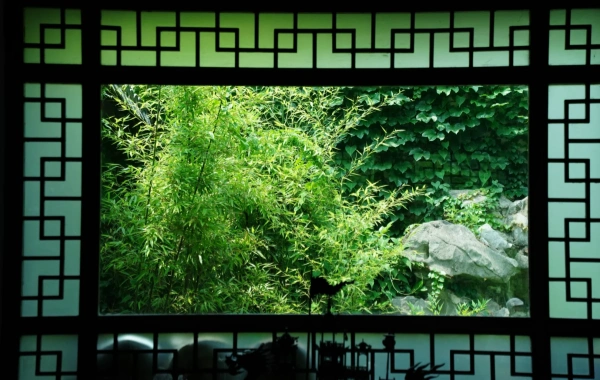
Using the window frames and door openings of the Zhiyu threshold as the picture frames, the composition and shooting of the pool scene are highly classical and charming.

Core Experience: An immersive guide to classical garden life

Furong Ancient Town Furong Ancient Town Furong Ancient Town Furong Ancient Town Furong Ancient Town

Four must-do things to unlock the code of garden aesthetics
1. Listen to the celestial music of the Eight Sounds Gorge once
Method: Slow down your pace. It's best to walk quietly alone or with a couple of friends. Stop at different sections, close your eyes and listen to the subtle changes produced by the sound of water colliding with the stone walls and the curves.
Deep Experience: Try to understand how the ancients regarded natural sounds such as "the sound of wind, water, insects and birds" as part of garden music.
2. Trace the footprints of Emperors Kangxi and Qianlong once
Key: Search for the stone tablet inscribed with the imperial brush. In the garden, pay attention to the plaque inscribed by Emperor Kangxi with the words "Mountain Scenery and Stream Light" and the plaque inscribed by Emperor Qianlong with the words "Jade and Gold ðª - ¢", and feel the emperors' affection for this garden
Associative experience: Standing in front of the Woyun Hall, imagine the scene when Emperor Kangxi asked about the age of the ancient tree here in the past. When we went to the Summer Palace in Beijing later, we compared and observed the Funny Garden, completing a dialogue across space about gardens.
3. Draw a composition of your borrowed scenery
Location: Multiple places within the park. Try to capture this classic example of borrowing scenery by the Jin Hui Yi Lake, with the distant Dragon Light Tower as the focus of the picture, using the pool as the mirror and the branches as the frame, and record it with a camera or a paintbrush.
Philosophical reflection: Understanding that "borrowing scenery" is not merely a garden-making technique, but also an Oriental wisdom that breaks through limitations and integrates all things.
4. Comprehend Zhuangzi's debate on the joy of fish
Location: Zhiyu Barrier. Sitting in the pavilion, watching the koi fish swimming freely, I relive the debate between Zhuang Hui and others. This is not merely about watching fish; it is a philosophical reflection on cognition, happiness and the freedom of life, and it is the highest level of spiritual experience provided by the garden.

Suggested tour route
One-day "Garden Essence" Tour (In-depth Visit to Jichang Garden and Huishan Ancient Town)
Arrive at Huishan Ancient Town at 9 a.m. → Visit Jichang Garden (Key points: (Ba Yin Stream, Jin Hui Yi, Zhi Yu Jian, Qi Xing Bridge, Xun Fang Yu Bi, about 2.5 hours) → At noon, taste the local specialties of Wuxi in the ancient town (Hui Shan Oil Pastry, Braised Pork ribs) → In the afternoon, visit Hui Shan Temple and the Second Best Spring in the World (a famous spring rated by the tea sage Lu Yu and the inspiration for Abing's "Moon Reflected on the Second Spring") → Stroll along the ancestral hall street of the ancient town Experience the weightiness of the "Open-air museum" → End the tour before dusk.
IntoTravelChina Tips: This itinerary is rich in cultural connotations. It is recommended to learn about the relevant historical background in advance or use a guided tour service for the best experience.

Two-day "In-depth Cultural Tour of Wuxi" (Highly Recommended)
Day 1: Arrive in Wuxi in the morning and check into the hotel. → In the afternoon, visit the Huishan Ancient Town Scenic Area (including Jichang Garden, Huishan Temple, and the Second Spring in the World) in a concentrated manner to deeply experience the ancestral hall culture and garden art. → In the evening, head to Nan Chang Street and take a night tour of the ancient Canal to experience the night view where modernity and classicism blend.
Day 2: In the morning, head to Yuantouzhu to appreciate the vast atmosphere of Taihu Lake that encompasses both Wu and Yue (it's perfect for cherry blossom viewing in spring). In the afternoon, visit the Wuxi Museum to gain a systematic understanding of the city's history and Wu culture, or experience the unique charm of a Jiangnan garden renowned for its water features at Linyuan. In the evening, return with a rich cultural harvest.
IntoTravelChina's advantages: We can book the most suitable accommodation for you, arrange the connection of all activities, and provide detailed cultural and tourism route maps and professional tour guide reservations.

Professional Guide: IntoTravelChina can offer you a private customized itinerary, including a dedicated tour guide, transportation and activity arrangements, allowing you to enjoy a deep and worry-free trip. >> [Consult for Customization Now]

Travel Guide: Transportation, Seasons and Tips

Furong Ancient Town Furong Ancient Town

How to Get There: A Seamless Connection Guide
Jichang Garden is located in the Huishan Ancient Town Scenic Area on the west side of Wuxi City center, with convenient transportation.
From all over the country: Take the high-speed rail to Wuxi Railway Station (recommended) or Wuxi East Railway Station. Wuxi Railway Station is closer to Huishan Ancient Town. It takes about 15 minutes by taxi to get there.
Starting from the urban area of Wuxi: Take Metro Line 4 to Huishan Ancient Town Station. After exiting the station, you will reach the entrance of the ancient town Scenic area. It takes about 10 minutes to walk to Jichang Garden. The bus can also take you directly to the "Huishan" Station.
- By car: Use your navigation to "Huishan Ancient Town Parking Lot". The scenic area provides a parking lot, but during peak season, parking Spaces are tight. It is recommended to arrive early or choose public transportation.

Best visiting time
Jichang Garden is suitable for all seasons, with different weather conditions at dawn and dusk. It is especially beautiful in spring and autumn.
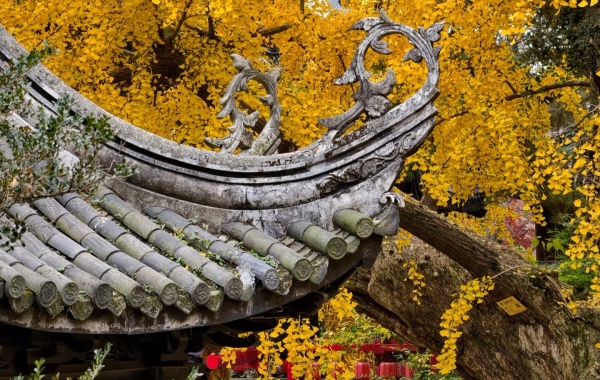
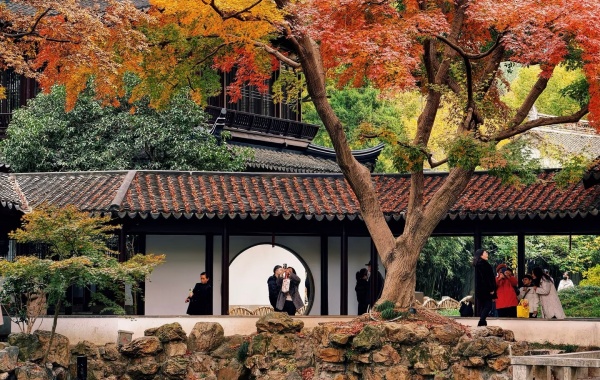
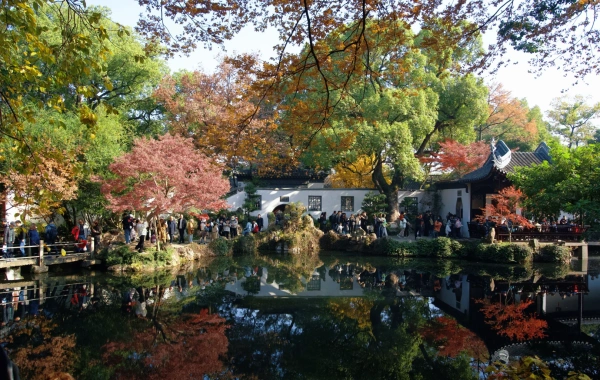
- Spring and Autumn golden seasons (March to May, September to November) : The climate is the most comfortable. In spring, the garden is full of fresh greenery and vitality. In autumn, the red maple leaves and yellow apricots are reflected in the ripples of brocade, creating a riot of colors like brocade. It is the most poetic season.
- Summer Tranquility Season (June to August) : The park is filled with towering ancient trees, and the Eight Sounds Stream is especially cool, making it an ideal place to escape the summer heat and calm the mind. But it is necessary to pay attention to mosquito prevention.
- Winter Quiet Season (December to February) : There are few tourists. If it snows, ancient trees and pavilions are covered with snow, presenting a unique cold and aloof charm. It is an excellent time for photography and seeking tranquility.

Tickets and practical information
- Ticket: Jichang Garden is included in the combined ticket for the "Huishan Ancient Town Cultural Relics and Historic Sites Area". The combined ticket is priced at approximately 80 yuan (online advance booking may offer discounts), including core attractions such as Jichang Garden, Huishan Temple, and the Second Spring in the World. The Huishan Ancient Town Historical and Cultural Block itself is open to the public for free.
Opening hours: 8:00-17:30 (subject to the latest announcement of the scenic area).
- Tourist Tips:
It is recommended to set aside at least two hours for visiting Jichang Garden. A hasty visit will prevent you from grasping its essence.
2. The scenic area provides guided Tours, which are crucial for understanding the history, philosophy and garden-making techniques behind the gardens.
3. Wear comfortable flat shoes. Most of the paths in the garden are paved with stone slabs and have rockeries.
4. Take good care of cultural relics. Please do not touch steles or break flowers and trees.
>>[Click to contact IntoTravelChina Travel Consultant]

Join hands with IntoTravelChina to embark on your exclusive Jiangnan elegance collection

Furong Ancient Town

The story of Jichang Garden is about the five-hundred-year cultural heritage of a family, about the spiritual pursuit of Chinese scholars to "find solace in nature", and also about the peak of ancient garden-making art. IntoTravelChina is dedicated to creating in-depth, personalized and worry-free Chinese cultural travel experiences. Our travel experts can help you
Tailor-made itinerary: Based on your interests in history, architecture and philosophy, we will design a culturally in-depth route that includes Jichang Garden and its surrounding attractions.
One-stop service: Handle ticket reservations, professional tour guide arrangements, special accommodation (such as boutique inns within the ancient town), transportation connections and cultural experience activities.
Exclusive Experience: Arrange intangible cultural heritage handicrafts (such as Huishan clay figurines), lectures by garden experts, guidance on the best photography time, etc.

Let your visit to Jichang Garden be more than just a cursory glance, but a spiritual practice that engages in dialogue with history, philosophy and aesthetics.
Start planning your journey right away
Welcome to contact our professional travel consultants. We will provide you with a customized itinerary plan and quotation within 24 hours. [Click to contact IntoTravelChina Travel Consultant]

Recommended Tours

Top 3 tours chosen by most customers to explore in the best way. Check the detailed itinerary, or tailor your own trip now with us.

Zhangjiajie Tour
5-Day Suzhou & Hangzhou & Shanghai Tour

5 Days  |  Shanghai-Xitang-Suzhou-Hangzhou

Zhangjiajie Tour
3-Day Shanghai to Suzhou Trip

3 Days  |  Shanghai-Xitang Ancient Town-Suzhou

Zhangjiajie Tour
4-Day Shanghai and Nanjing Trip

4 Days  |  Shanghai-Nanjing

What Our Clients Say?

Based on 10,000+ traveler reviews

...
Daniel Dorothea
Canada
Reviewed on April 29,2025
Shopping on Nanjing Road in Shanghai was just amazing! It's truly the "First Commercial Street of China", where tradition and modernity blend perfectly. You can find awesome souvenirs and experience the trendy vibes in cool stores. The neon lights at night are just spectacular, shining bright like Times Square in New York. The food here is incredible too. I had a feast for my taste buds. Shanghai, I'll definitely be back!
Destination(s): Shanghai
Date of Experience: May 08,2024
...
...
Elvis Eva
Canada
Reviewed on June 20,2025
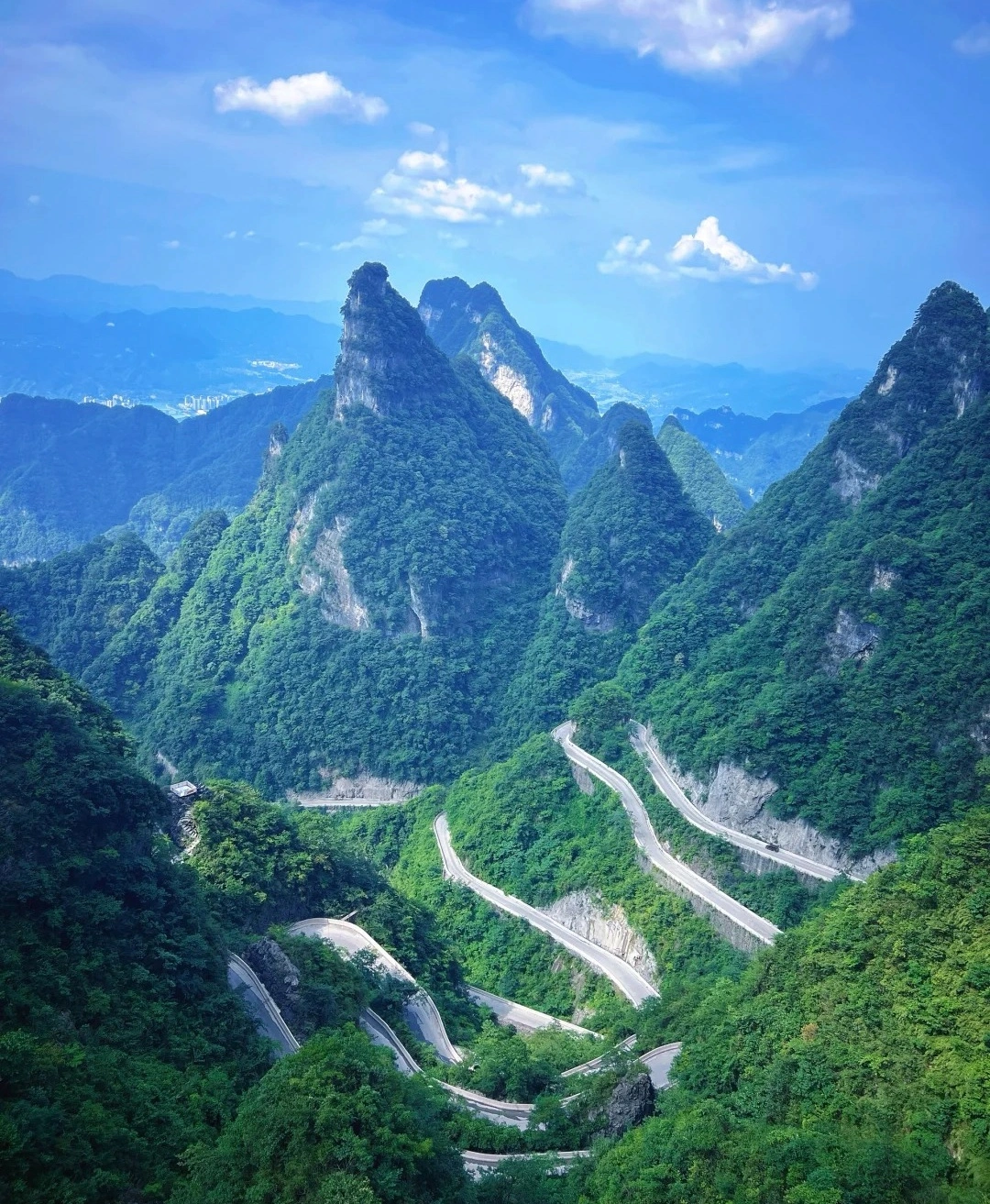
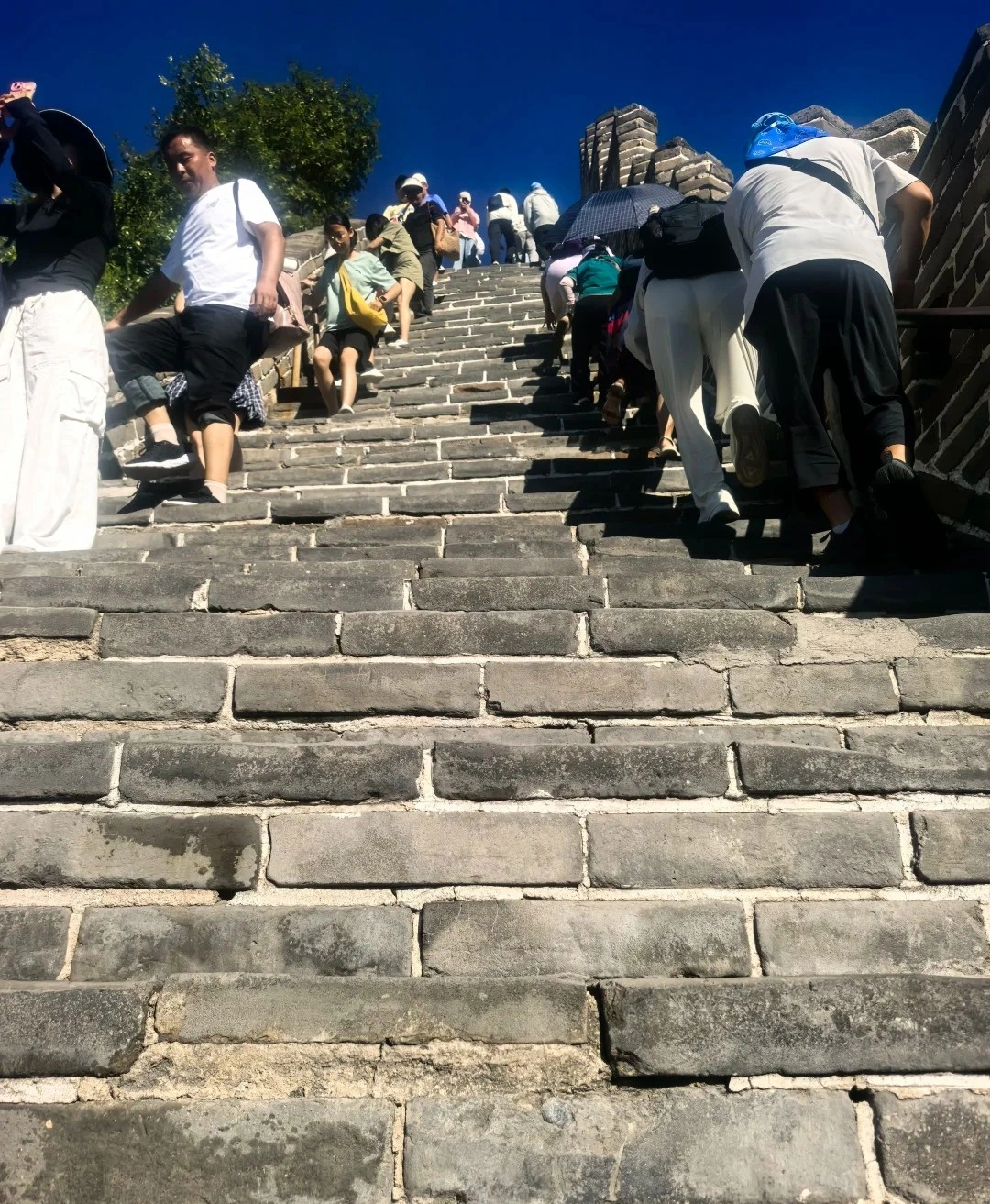
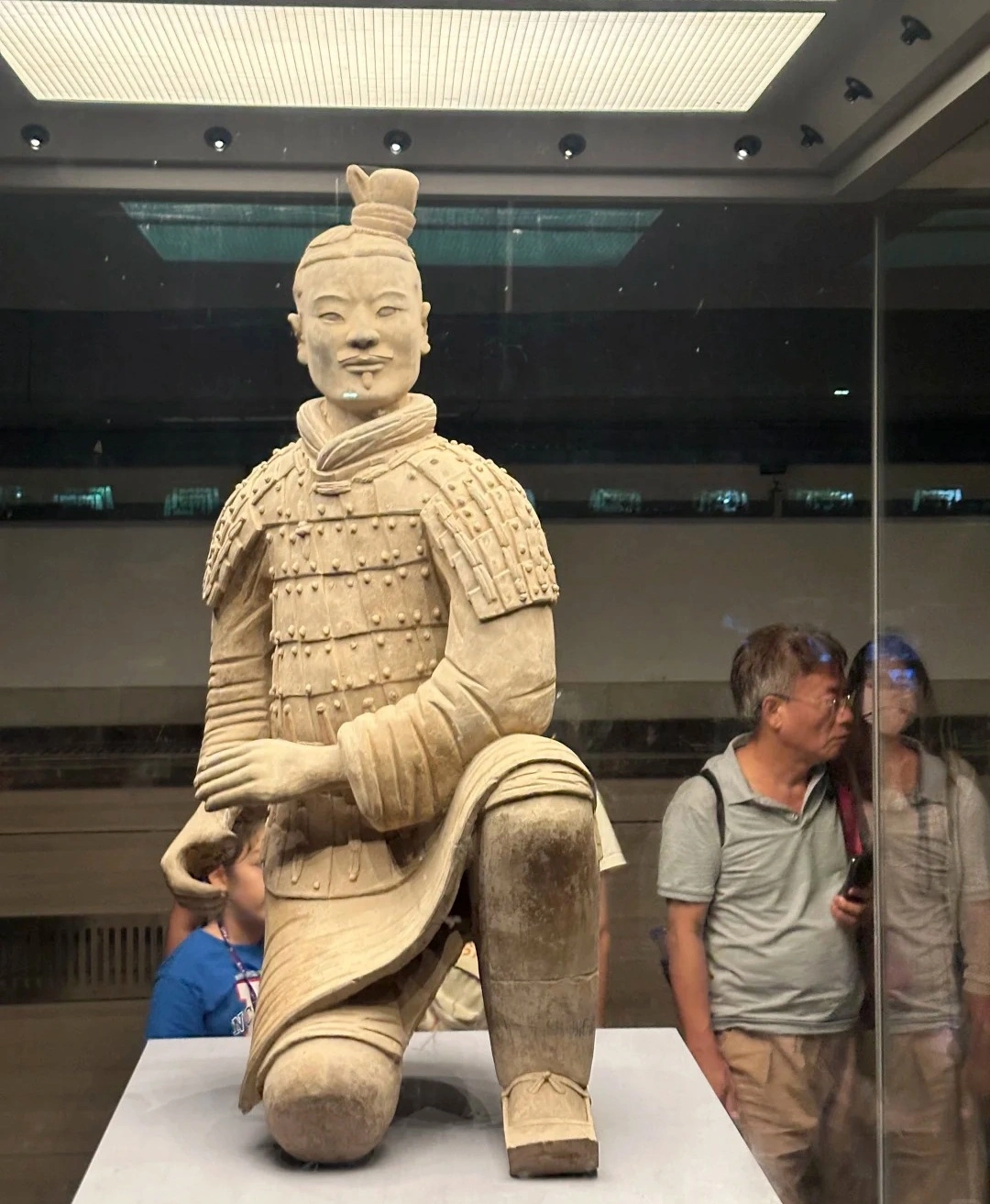
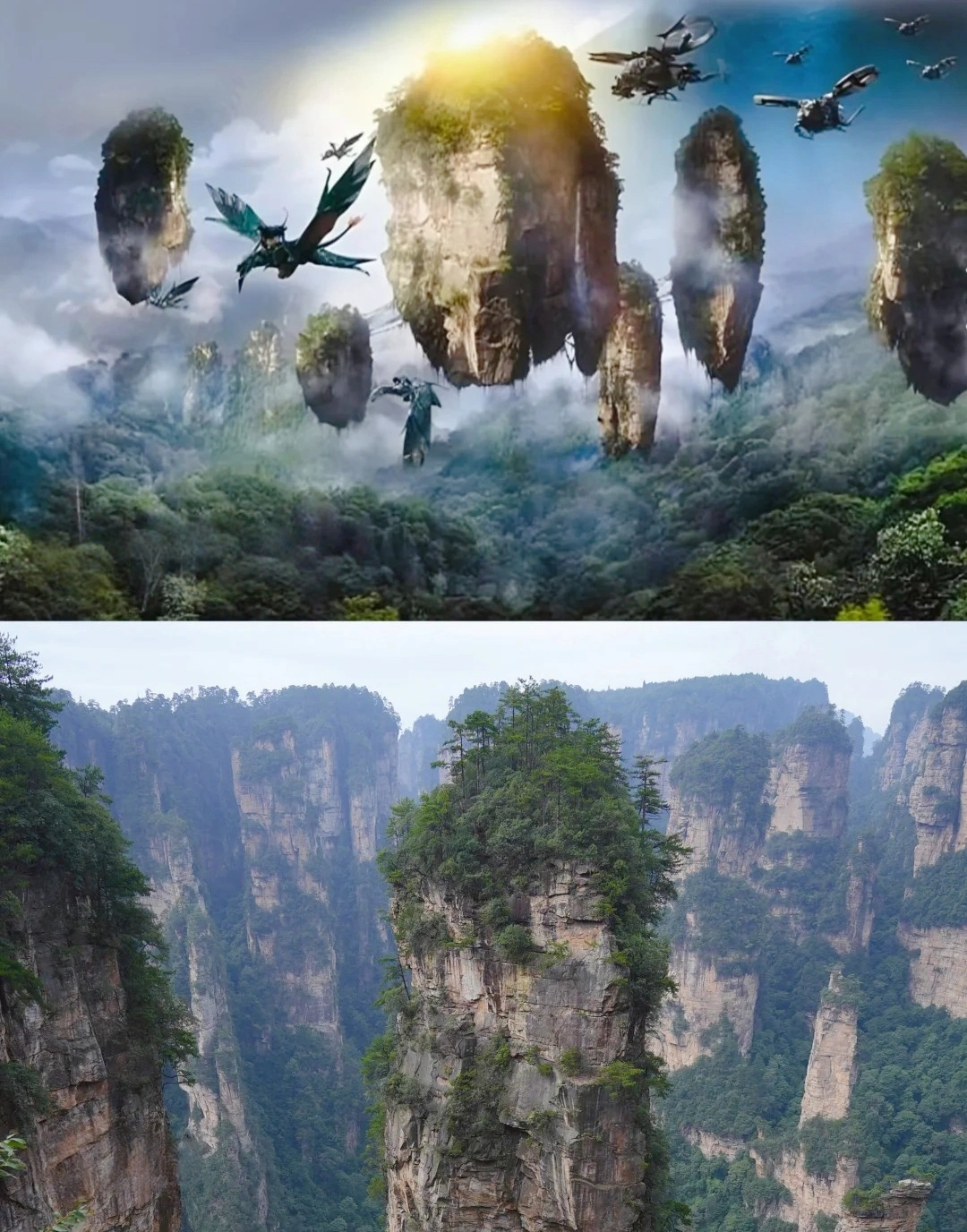
As a solo traveler from Canada, I was nervous about navigating China alone—but this 11-day tour was PERFECT! From hiking the Great Wall at sunrise (Day 3) to gasping at the Terracotta Army (Day 5), every day delivered ‘pinch-me’ moments. The real showstopper? Zhangjiajie’s Avatar Mountains (Day 7)! Our guide made the stone pillars come alive with stories. Massive thanks for handling all logistics—bullet train tickets, entry passes, car! And the 4-star hotels surprised me.
Destination(s): Beijing Xian Zhangjiajie Shanghai
Date of Experience: June 02,2025
... ... ...
...
Simon
America
Reviewed on May 29,2025
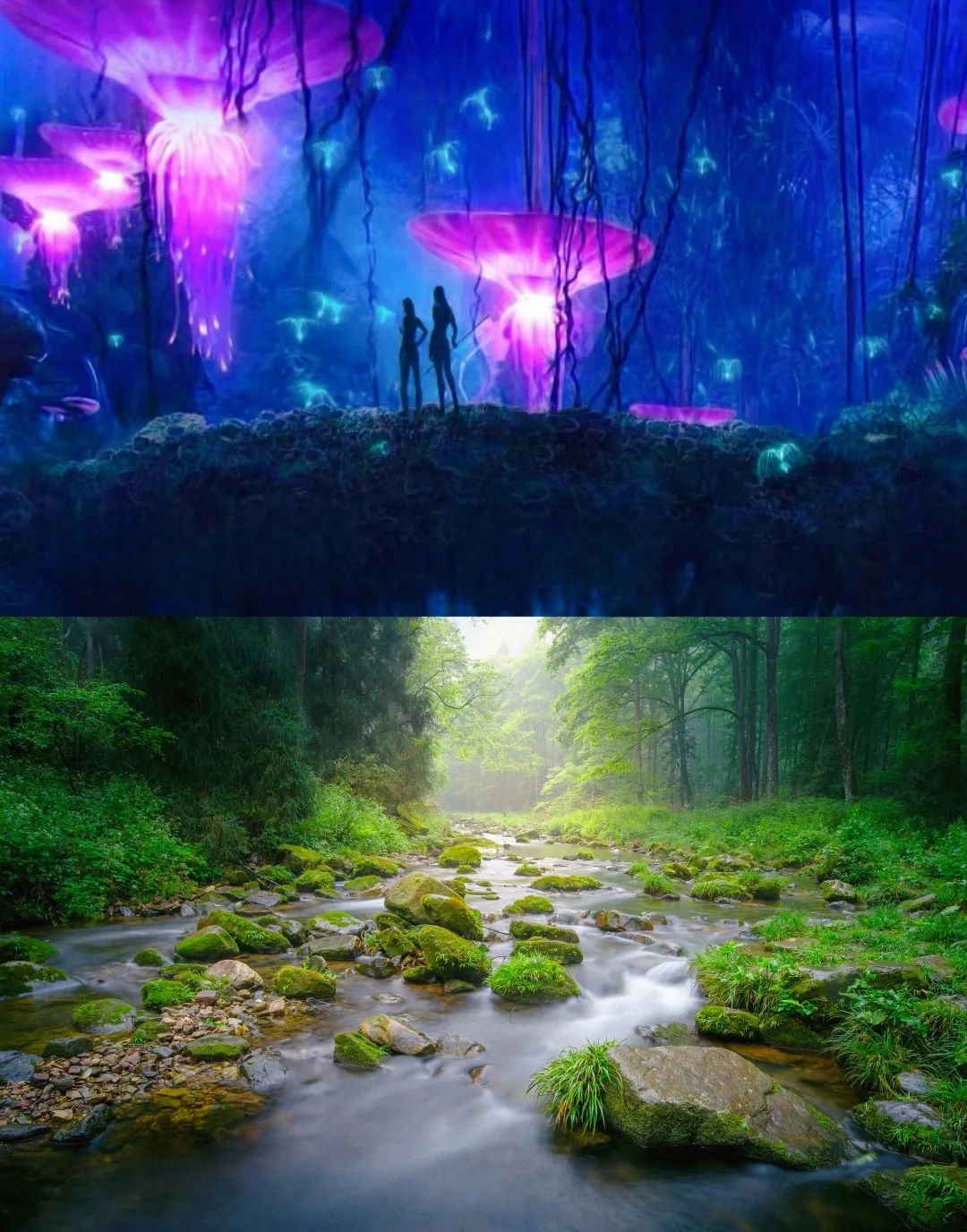
Our 2-day Zhangjiajie tour was beyond spectacular! As someone who’s visited Beijing and Shanghai for work, this trip revealed China’s wild, magical heart. Day 1 in Zhangjiajie National Forest Park felt like stepping onto Pandora—I’m a huge Avatar fan, and Yuanjiajie’s floating peaks left me breathless. The misty pillars and lush valleys like pure movie magic! Then came Fenghuang Ancient Town, we eat dinner beside the thundering waterfall. It seems Unreal! The night views of stilt houses glowing over the river were straight from a fairy tale. For fellow Avatar lovers and adventure seekers: Don’t miss this bucket-list experience! 10/10 would return. A Well-Traveled Film Buff, May 2025
Destination(s): Zhangjiajie
Date of Experience: May 08,2025
... ...

Ask a Question

Question Summary (100 characters)
Details (optional) (2,000 characters)
Name
Country
Email