The Grandeur of the Ruins—A Dynastic Array on the Gobi Wasteland
The landscape of the Western Xia Imperial Tombs constitutes a magnificent narrative woven from the elements of earth, sky, and history.
Silent Imperial Tombs: The Nine "Pyramids of the East"
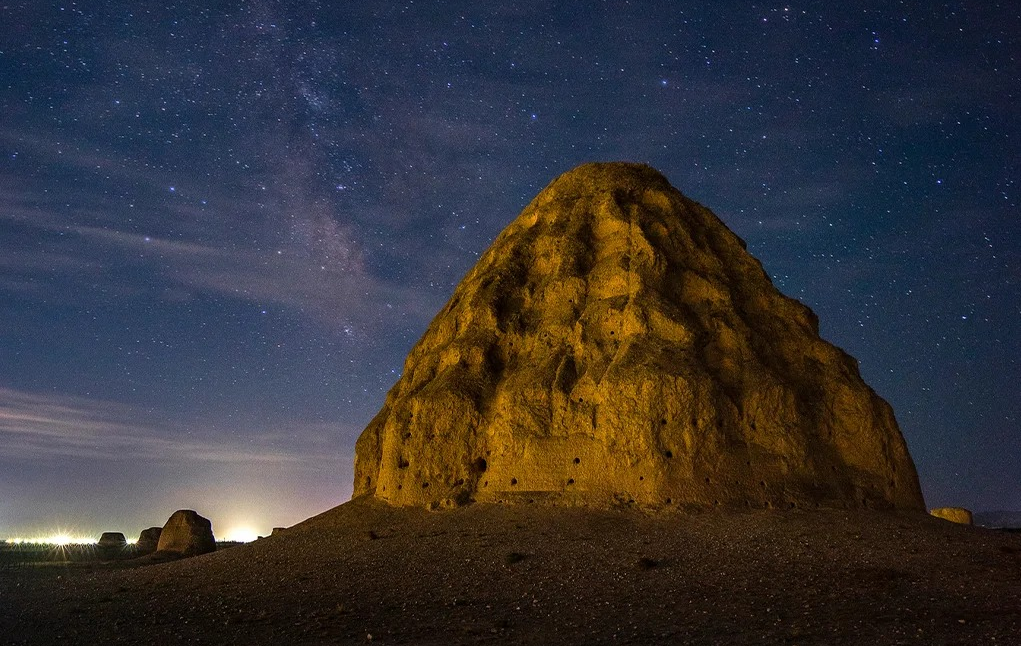
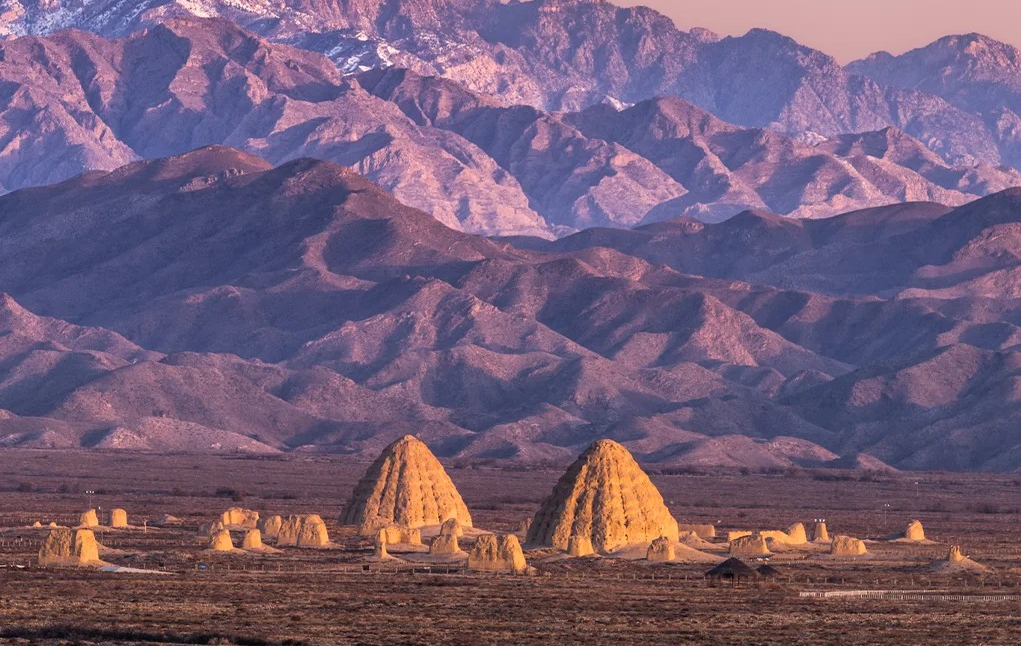
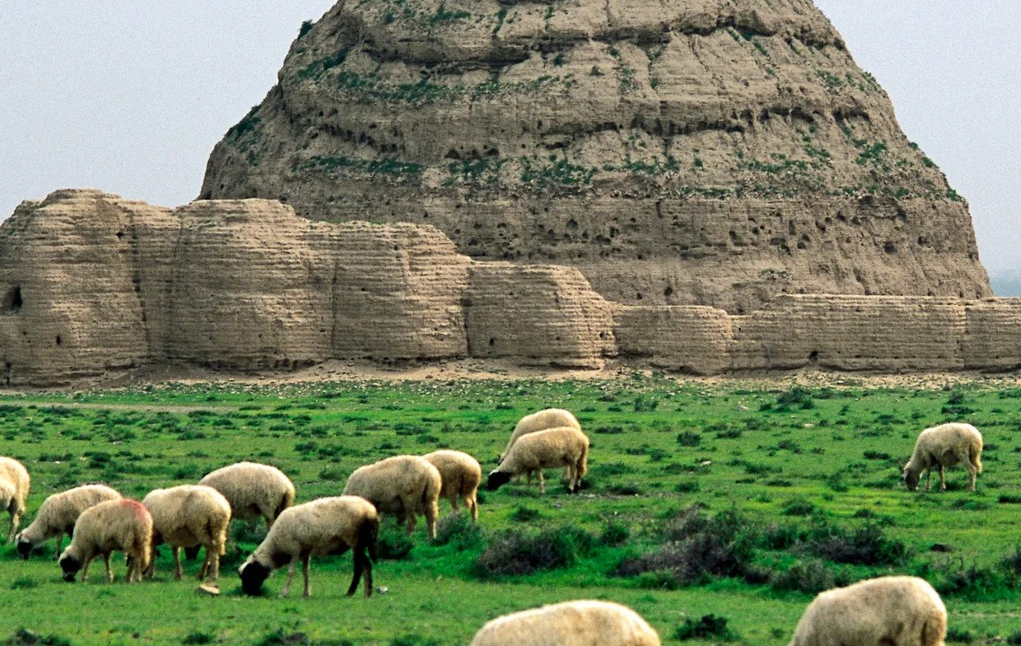
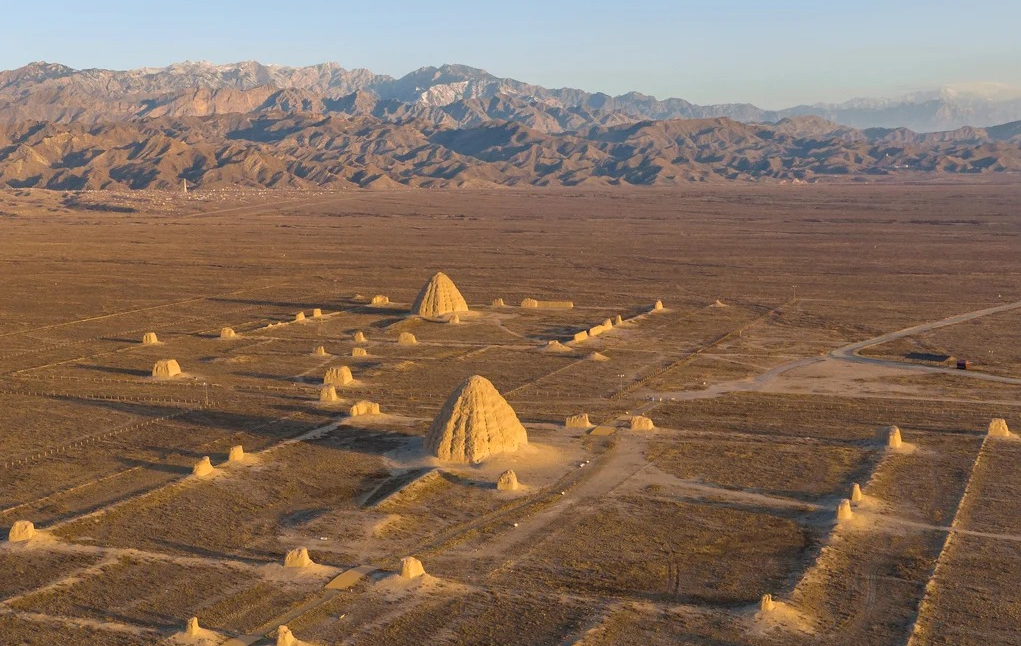
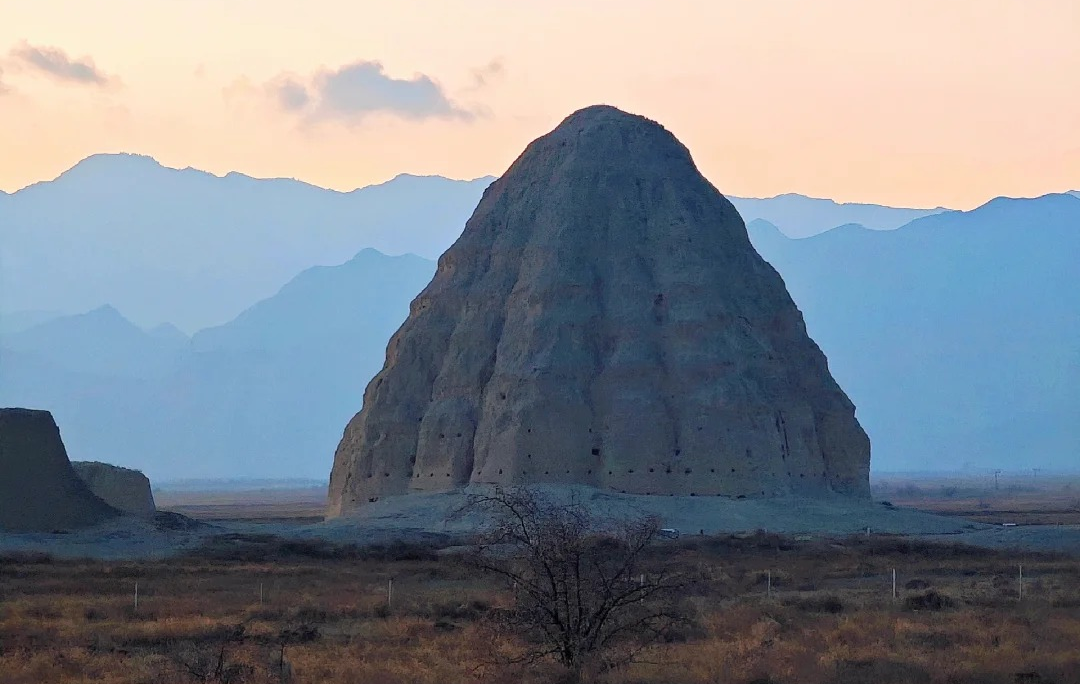
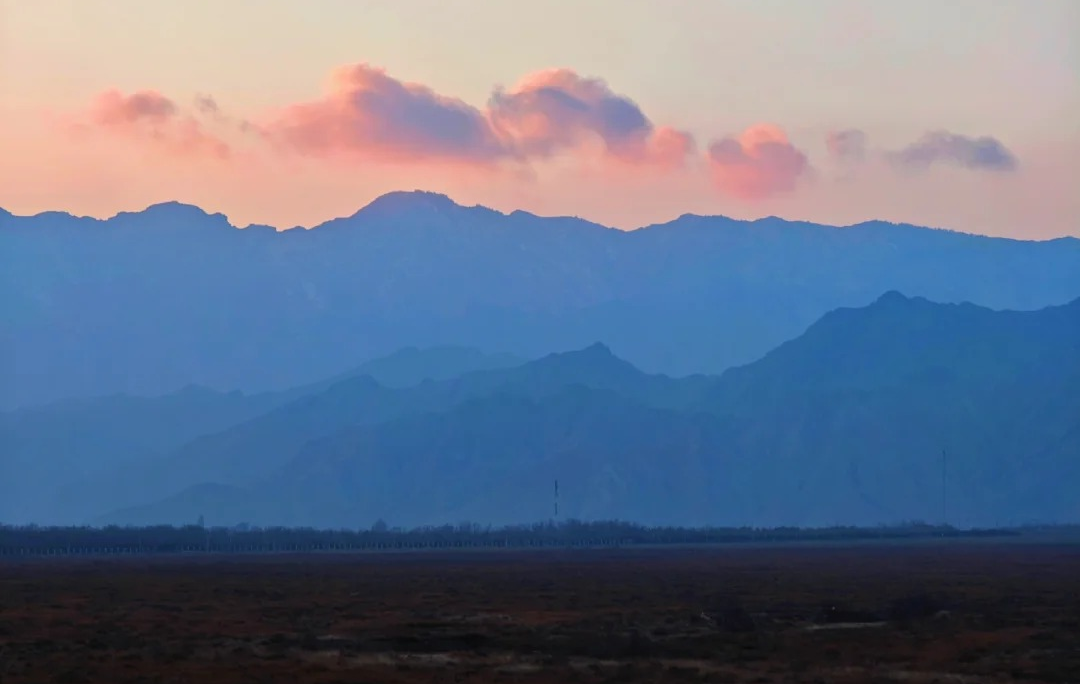
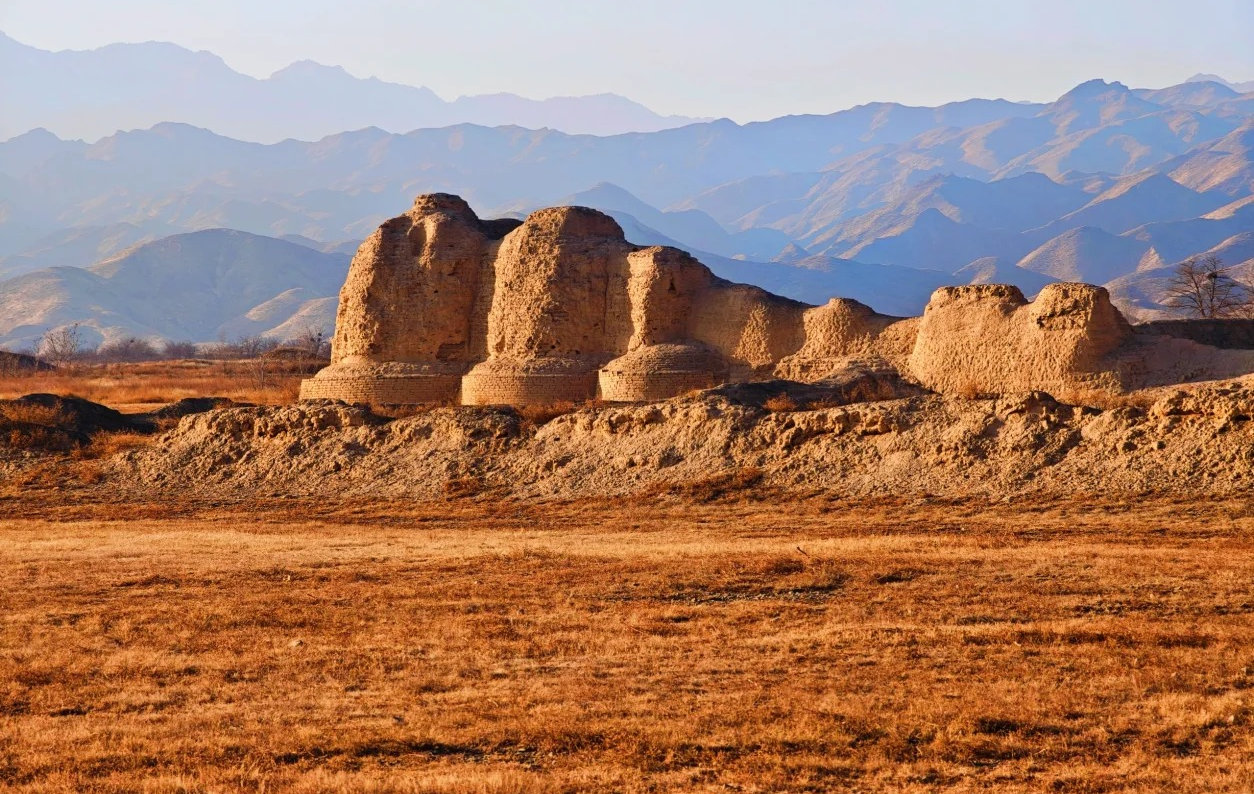
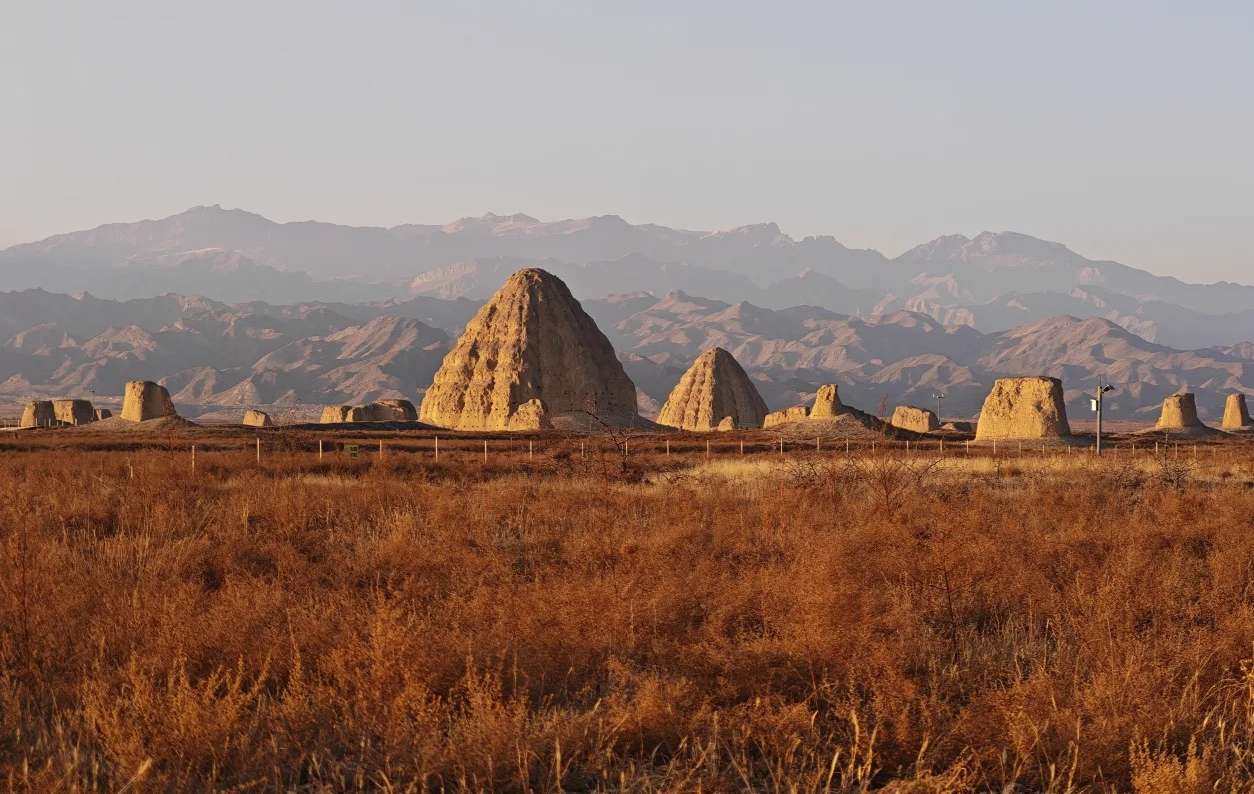
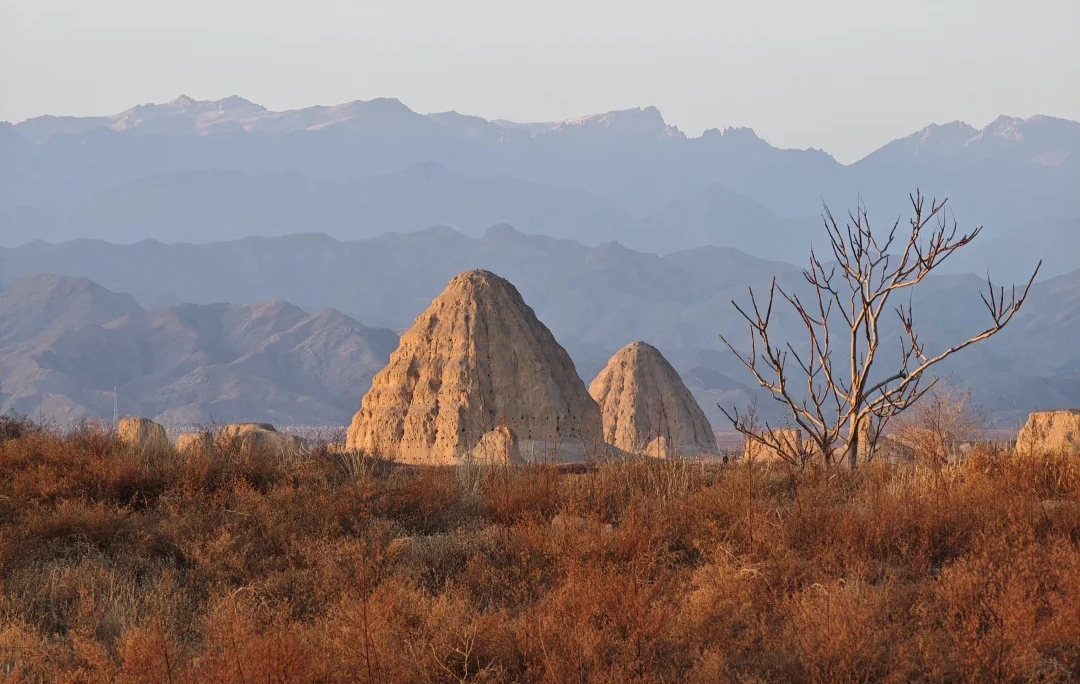
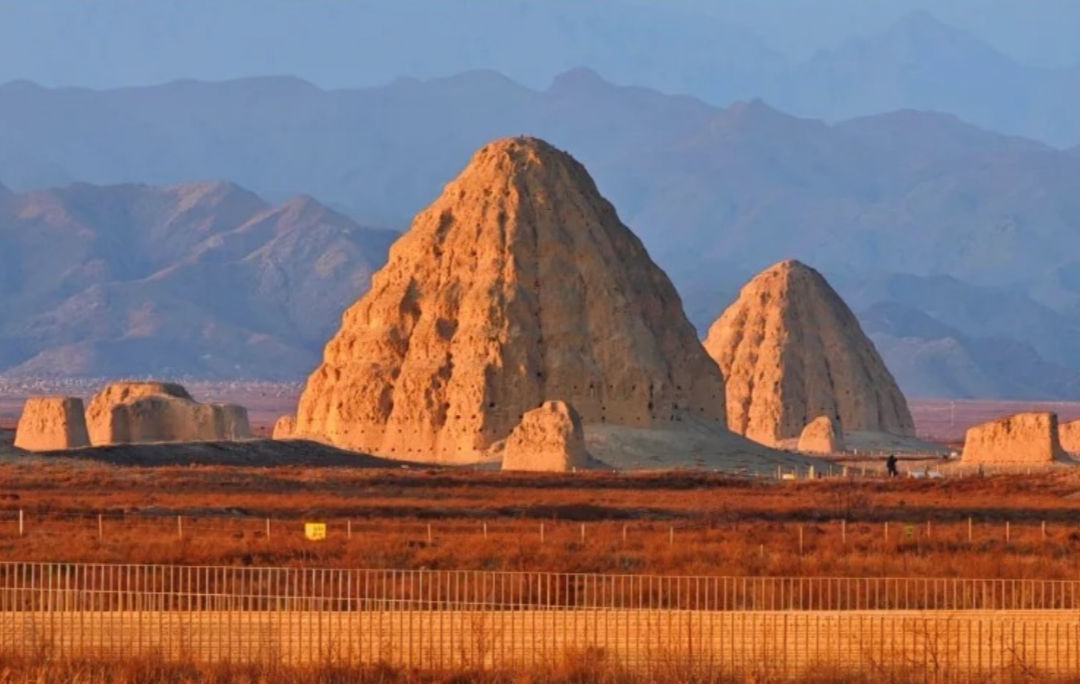
The nine imperial tombs are arranged in a north-to-south alignment, following the contours of the Helan Mountains. With their backs resting against the towering Helan range and their gaze directed eastward toward the Yinchuan Plain and the Yellow River, this layout—characterized by "backing onto mountains and facing water"—perfectly embodies the principles of Feng Shui (geomancy) that governed ancient Chinese imperial burial sites. Each imperial mausoleum faces south from a north-facing orientation and assumes an elongated rectangular layout. Together, they form independent, self-contained architectural complexes—comprising Quetai (watchtowers), stele pavilions, Yuecheng (crescent-shaped outer enclosures), and Neicheng (inner mausoleum cities)—on a scale comparable to that of the Ming Tombs. Notably, the surviving remnants of some mausoleum towers still reach heights of up to 28 meters—a level of grandeur rarely seen among the imperial tombs of any Chinese dynasty throughout history. After enduring a millennium of wind and rain, the pagodas once clad in shimmering glazed tiles have transformed into imposing, monumental mounds of rammed earth. They stand in silent solitude against the vast expanse of the Gobi Desert, bearing witness to the former glory and turbulent vicissitudes of a bygone dynasty.
A Tour of the Three Core Mausoleums
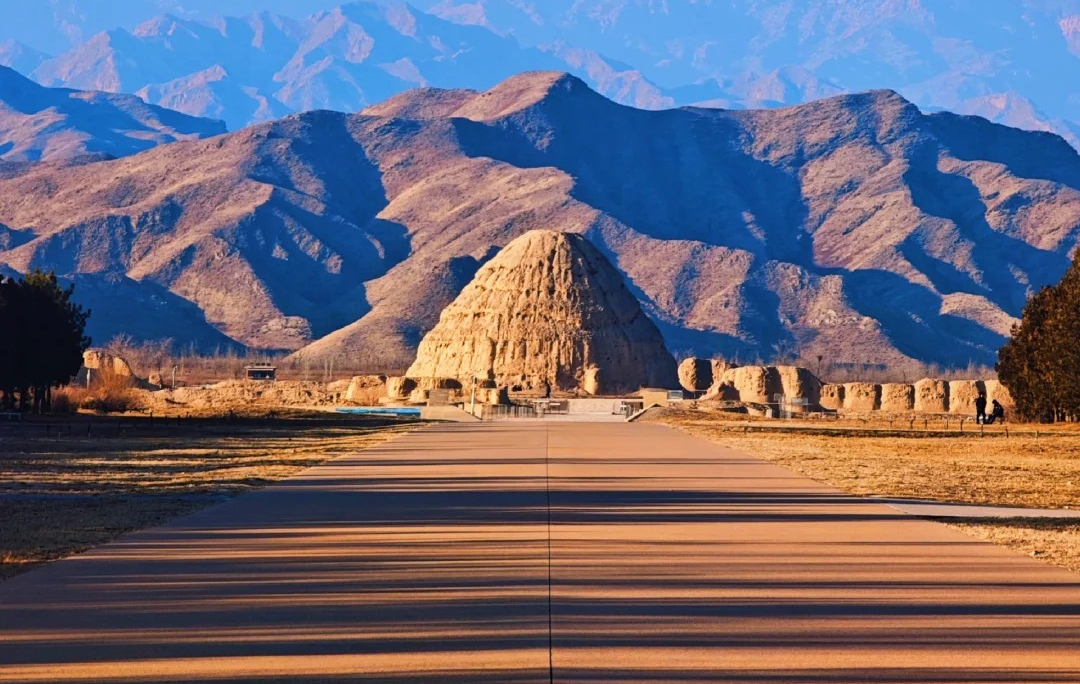
- Mausoleum No. 3 (Tailing): The final resting place of Li Yuanhao, the founding emperor of the Western Xia Dynasty. Situated in the southeastern sector of the mausoleum complex, it covers an area of approximately 150,000 square meters and stands as the largest and best-preserved imperial tomb within the entire site. As you stroll through the grounds, core architectural elements remain clearly discernible—including the towering pagoda-style burial mound (standing at a residual height of about 20 meters), the contours of the Yuecheng enclosure, the foundations of the sacrificial hall, the sacred perimeter walls, and the corner towers. It serves as the premier vantage point for understanding the architectural layout and design principles of the Western Xia imperial tombs. Precious artifacts unearthed during archaeological excavations in 2000—such as the Kalaviṅka (a Buddhist deity depicted as a bird with a human face)—serve as tangible proof of the Western Xia rulers' profound and devout adherence to Buddhism.
- The Twin Mausoleums (Mausoleums No. 1 & 2): Located at the southernmost extremity of the complex, these two imperial tombs—identical in architectural style—stand side-by-side. Covering an area of approximately 160,000 square meters, the site exudes an air of majestic grandeur and features remarkably well-preserved ruins. This rare "twin mausoleum" configuration has sparked countless conjectures regarding royal funerary rites and the protocols of dynastic succession; indeed, the identities of the tombs' occupants remain a subject of intense debate and scholarly inquiry to this day. Standing between the twin mausoleums—with the Helan Mountains serving as a majestic backdrop and the Gobi Desert stretching out beneath—one finds the perfect vantage point for capturing sweeping panoramic photographs of this historic archaeological site.
- Mausoleum No. 4 (Anling): The tomb of Emperor Yizong (Li Liangzuo). Situated at the foot of the Helan Mountains, the site is flanked by mountains on its eastern, western, and northern sides and encompasses an area of 100,000 square meters. Its central burial mound consists of a five-tiered, octagonal structure of rammed earth, standing at a residual height of 15 meters. In contrast to the pristine preservation of the Tailing Mausoleum, Mausoleum No. 4 bears more visible traces of erosion by time; this "beauty of imperfection" offers a unique perspective for observing the foundational structural elements of the Western Xia tombs.
Light and Shadow on the Gobi: The Best Moments for Viewing
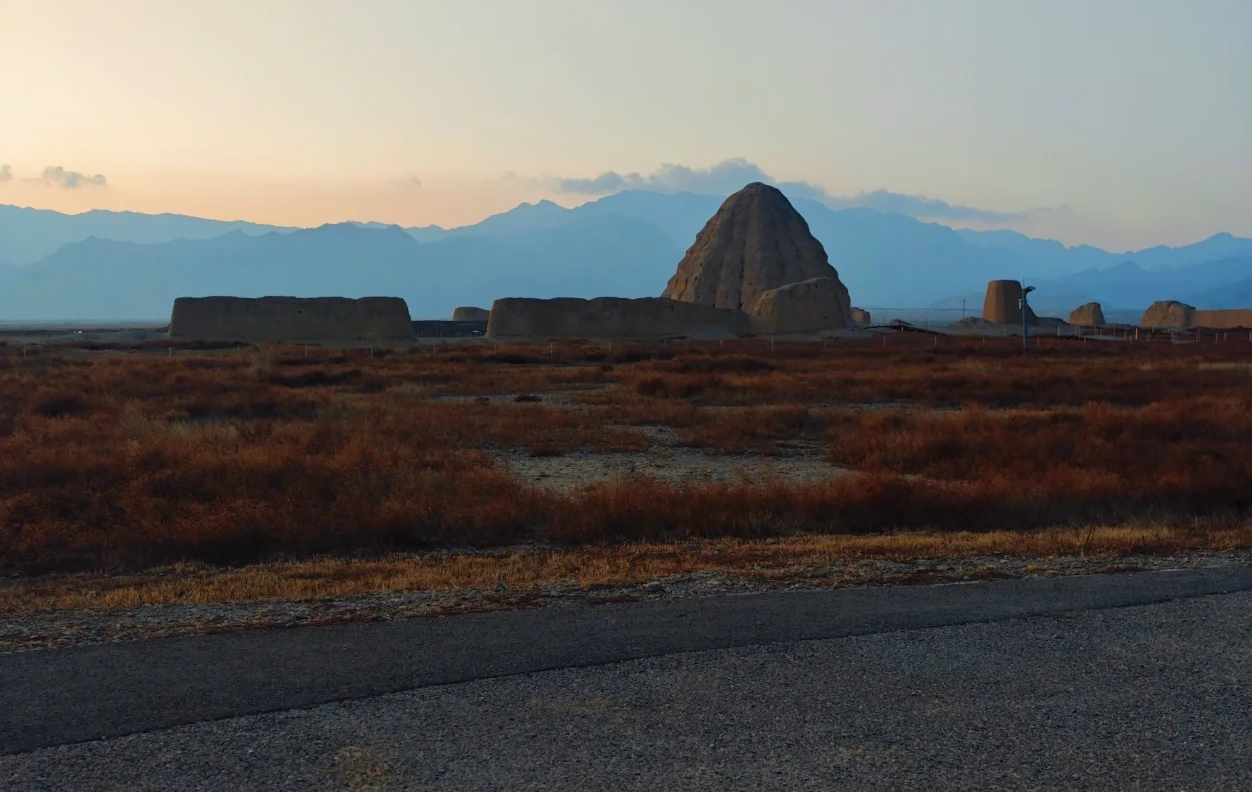
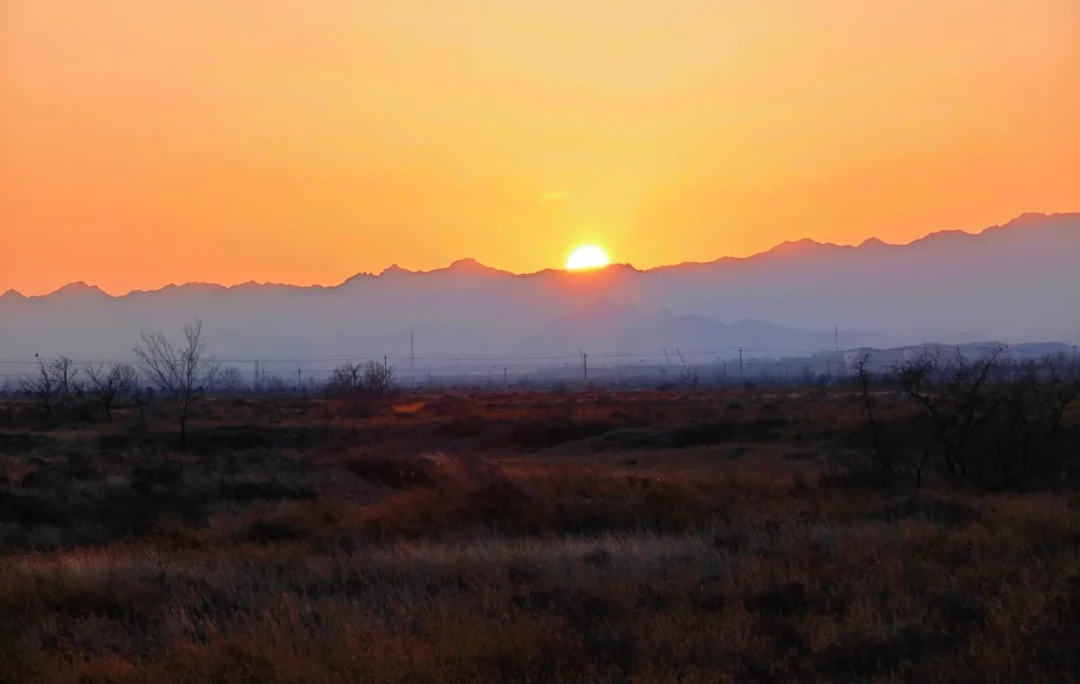
The shifting interplay of light beneath the Helan Mountains imbues the Western Xia tombs with a distinctly different character. At dawn, as the sun rises, the first rays of light gild the edges of the rammed-earth mausoleum towers, while the entire site remains shrouded in a tranquil, ethereal mist. At dusk, as the sun sets, the fading light bathes the entire ruins in a warm amber glow; the silhouettes of the towers merge seamlessly with the contours of the Helan Mountains, creating a visually stunning spectacle. Photography Tip: Use a telephoto lens to compress spatial depth, effectively layering the multi-tiered towers against the backdrop of the Helan Mountains; conversely, a wide-angle lens is ideal for capturing expansive compositions featuring the towers, the Gobi landscape, and the vast sky.
> Photography Secrets: The area in front of the sacrificial hall foundation at Mausoleum No. 3 offers the best vantage point for capturing a panoramic view of the towers. From the southeast side of the "Twin Mausoleums," you can frame both towers together with the Helan Mountains in a single shot. The hour leading up to sunset—when the light is softest—is the "golden hour" for capturing silhouettes of these "Pyramids of the East." Drone flight is permitted (though prior registration at the scenic area's administration office is required), allowing you to capture epic, bird's-eye views of the imperial mausoleum array.
The Code of Civilization: The Western Xia Museum and Its Treasures
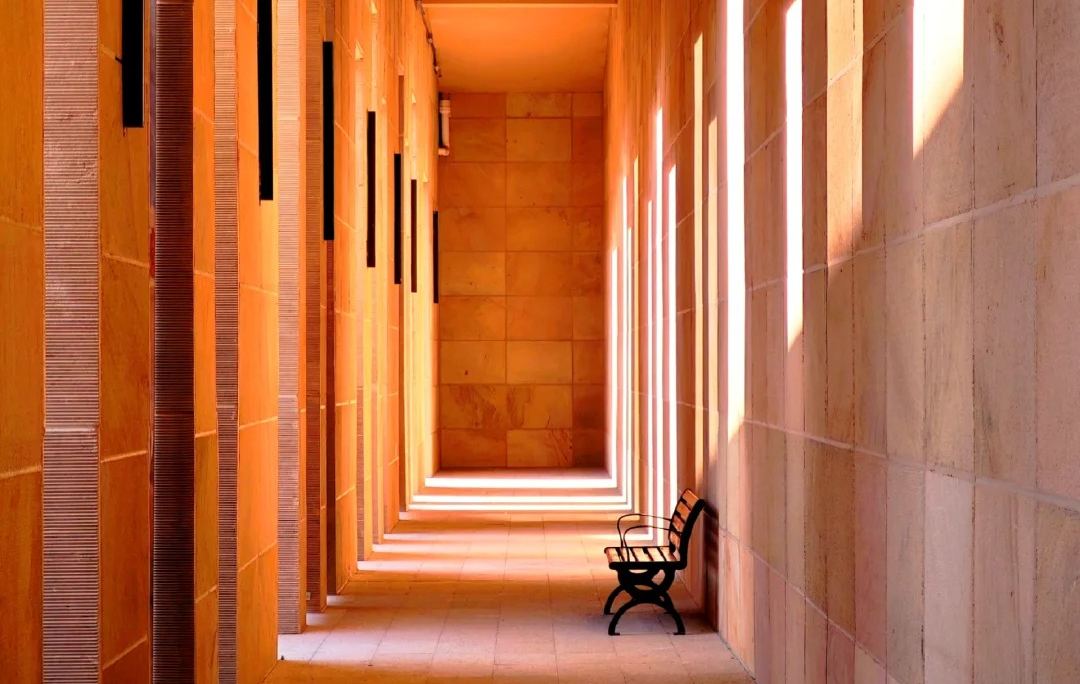
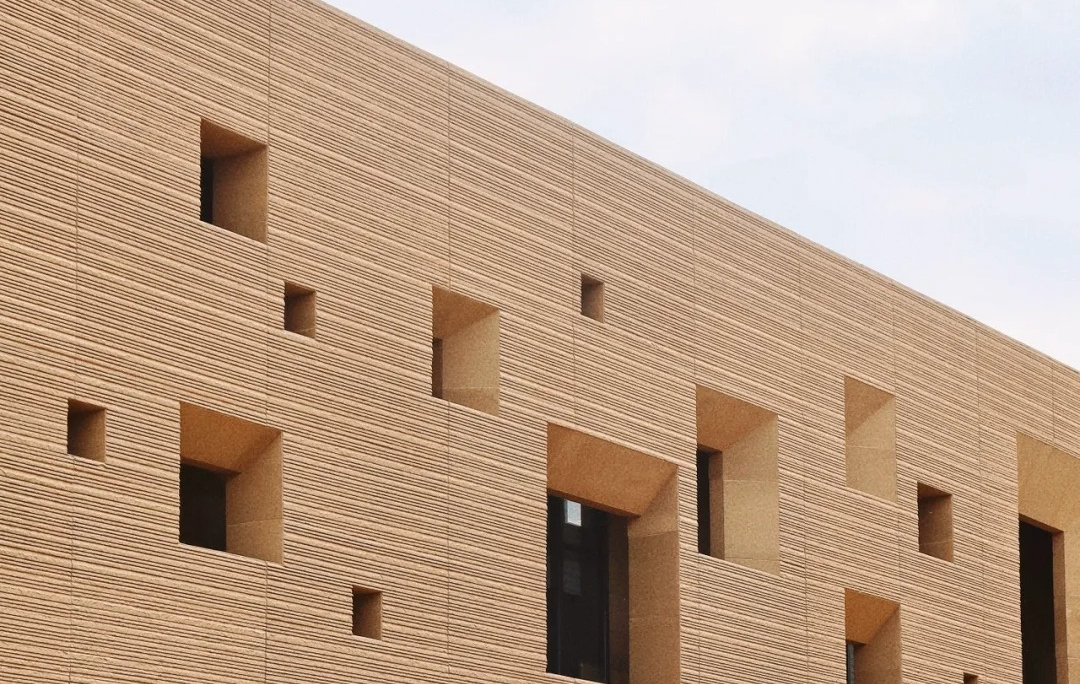
If the ruins site can be regarded as the "skeleton" of the Western Xia Dynasty, then the Western Xia Museum serves as the key to deciphering its "soul." The new museum building, which opened to the public in 2019, boasts a total floor area of 9,000 square meters and stands as a specialized thematic museum built in direct proximity to the Western Xia Mausoleums site.
The museum's core exhibition is organized into six distinct sections: Western Xia History, Western Xia Culture, Western Xia Religious Art, Western Xia Socio-Economics, The Western Xia Mausoleums, and Conservation & Heritage. Together, these sections showcase nearly 5,000 artifacts, encompassing a diverse range of items such as thangkas (scroll paintings), historical documents, clay sculptures, bronze and iron implements, textiles, and ceramics. Must-See Museum Masterpieces
- Gilded Bronze Ox: With its vivid form and lifelike appearance, this piece is hailed as the pinnacle of Western Xia bronze casting art; its craftsmanship represents a new level of refinement built upon the traditions of the Central Plains.
- Dragon-Carved Baluster: Unearthed in 1974 at Tomb No. 6, the column features shallow relief carvings on three sides depicting coiling dragons playing with a pearl. Swirling clouds envelop the scene, rendering it remarkably lifelike; it stands as an exceptionally precious example of stone carving art among Western Xia architectural components.
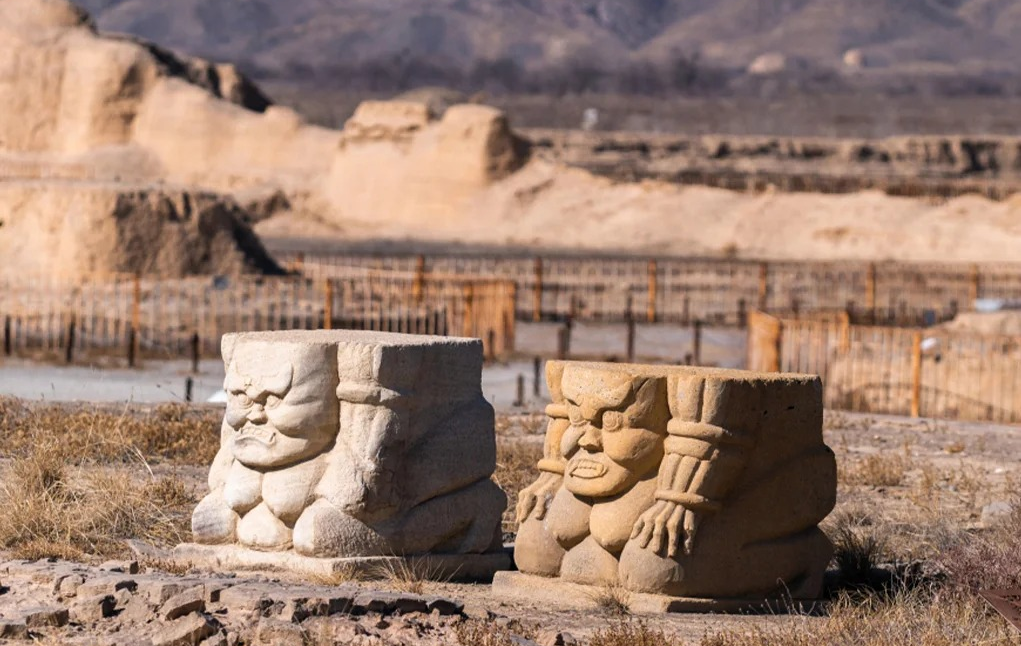
- Stone Carving of a Lishi (Strongman) Pedestal: Crafted from red sandstone, this piece features a fully three-dimensional sculpture of a female figure. Employing exaggerated artistic techniques to capture the imposing power of a weight-bearing strongman, it vividly reflects the unique stylistic flair of Western Xia stone carving art.
- Glazed Chiwen and Kalaviṅka Figures: These architectural decorative components bear witness to the Western Xia people's devout faith in Buddhism, while also confirming that Western Xia architectural techniques—though inheriting the traditions of the Tang and Song dynasties—ultimately evolved into a distinct style of their own.
The museum offers free guided tours at scheduled times every day at 8:30 AM and 9:30 AM. We recommend setting aside at least one hour for your visit to "build up your background knowledge" in preparation for your subsequent exploration of the actual ruins.